
 2 hours ago
7
2 hours ago
7
A major water‑supply emergency in Puerto Rico has escalated, with the National Guard activated to support distribution efforts amid widespread service interruptions.
The activation comes as repairs to the key pipeline supplying the San Juan metropolitan region only allow a gradual restoration of service after days of outages.
“After several days of continuous work, we have completed a complex repair and have already begun the process of recovering the system,” said the executive president of Puerto Rico Aqueduct and Sewer Authority, Luis R. González Delgado, but he warned that sudden pressure changes could trigger new breaks.
More than 120,000 customers remain affected, facing low pressure, inconsistent flow, and uncertainty over when stable access will return. Officials say half of the impacted customers may regain service within 24 hours, but full stabilization will take longer, especially as drought conditions and extreme heat intensify strain on the system.
Newsweek has reached out to PRASA, the Puerto Rico National Guard, the office of Puerto Rico Governor Jenniffer Gonzalez, the Municipality of Bayamón, and the National Weather Service in San Juan for comment.
What Triggered The Puerto Rico Water Crisis?
The rupture of the 72‑inch Superaqueduct line in Bayamón—with breaks at three separate points—triggered the island’s latest water crisis. PRASA confirmed that concrete reinforcement with accelerants was applied overnight to stabilize the repair, allowing the system to reopen slowly to avoid further damage.
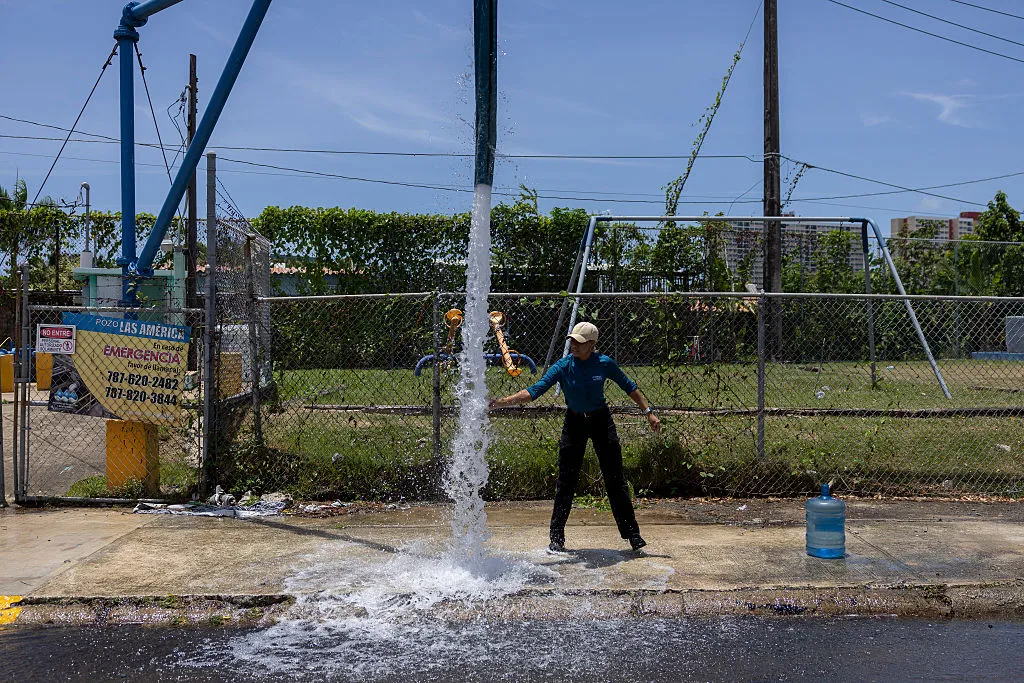
Officials acknowledged that the event underscores decades of deferred maintenance and the fragility of the island’s primary water‑distribution backbone. González Delgado said PRASA will launch an “aggressive agenda” of inspections and long‑overdue maintenance beginning in July.
National Guard, Municipalities Mobilize for Emergency Distribution
With thousands still without reliable access, PRASA is keeping mitigation plans active and coordinating with municipalities, the National Guard, the Department of Housing, the Department of the Family, the Tourism Company, AMA, and other agencies to deliver drinking water to affected communities.
The agency emphasized that distribution support will continue until the system stabilizes, especially for vulnerable households with children, older adults, or bedridden residents.
Drought Conditions and El Niño Raise New Concerns
Meteorologists warn that the crisis is unfolding just as a moderate drought begins affecting the southern and southwestern regions of Puerto Rico. According to Ernesto Morales, Warning Coordination Meteorologist at the National Weather Service, rainfall deficits and soil dryness have already prompted drought reclassification. "Any kind of rain is well-received... but we aren't waiting for any significant amounts [of precipitation]," he said in Spanish to a local outlet.
A strong El Niño event is expected to weaken tropical waves and reduce rainfall through much of the season, raising the risk that current shortages could extend into the next dry period.
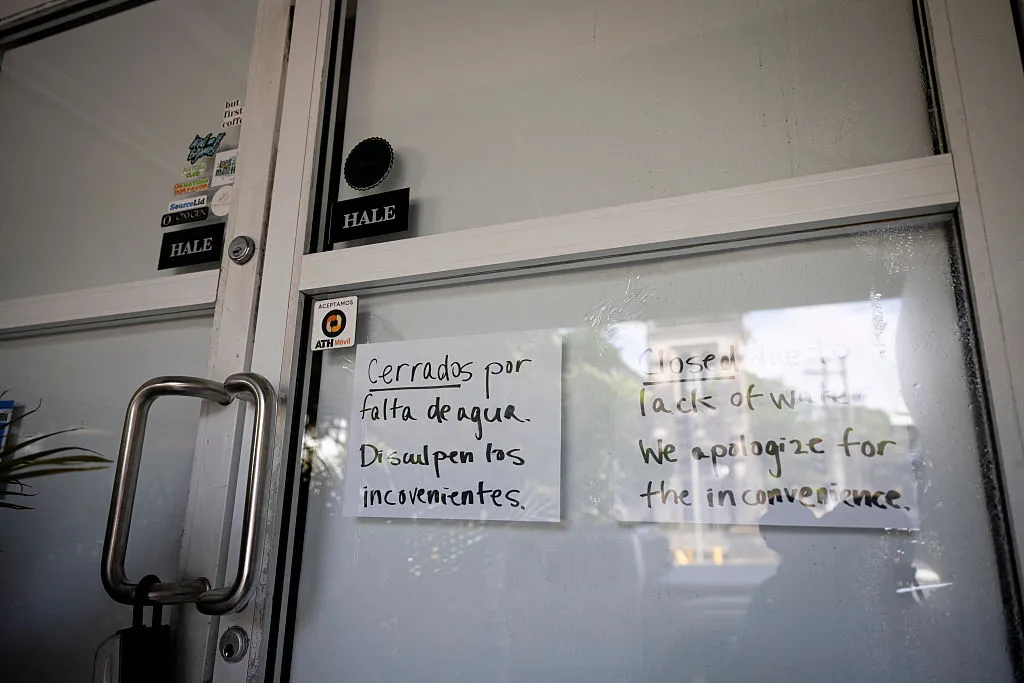
Extreme Heat and Sahara Dust Add Pressure to Public Health
The island is also experiencing early‑season heat, with more frequent extreme‑heat advisories. Concrete structures retain heat well into the night, worsening indoor temperatures and increasing hydration needs—at a time when water access is unstable.
Upcoming surges of Sahara dust may further dry the atmosphere, suppress rainfall, and aggravate respiratory conditions.
Households Turn to Private Storage and Filtration Systems
As outages become more frequent, companies like WindMar Home report rising demand for cisterns, pressurization systems, and multi‑stage filtration. Water specialist David Fonseca Ríos noted that post‑interruption water often arrives turbid and may contain contaminants, prompting families to seek long‑term solutions. "We think that we're getting quality water when, in reality, we aren't."
WindMar’s offerings include FDA‑approved polyethylene tanks, 40‑gallon pressurizers, UV sterilization, and reverse‑osmosis systems designed to remove microplastics, heavy metals, and PFAS.
Climate, Infrastructure, and Public Health Collide
Between aging pipes, drought‑driven supply stress, extreme heat, and the arrival of sargassum and Sahara dust, Puerto Rico faces a convergence of environmental and infrastructure pressures.
Experts warn that without sustained investment and conservation measures, water insecurity could deepen through the summer.