 2 hours ago
8
2 hours ago
8
A fast-moving national redistricting fight hit a pause in Georgia this week, underscoring how courts—not just legislatures—are now shaping the congressional map.
While the push to redraw voting maps in Georgia would only take effect in 2028, it follows a national trend to reshape House maps ahead of the more pressing 2026 midterms.
Georgia Republicans declined to redraw congressional and legislative maps during a special session on Wednesday, citing legal uncertainty and the need for more public input.
“House Republicans will not be taking up congressional or legislative redistricting maps for the 2028 election cycle during this special session,” Jon Burns, the Republican state House speaker, said.
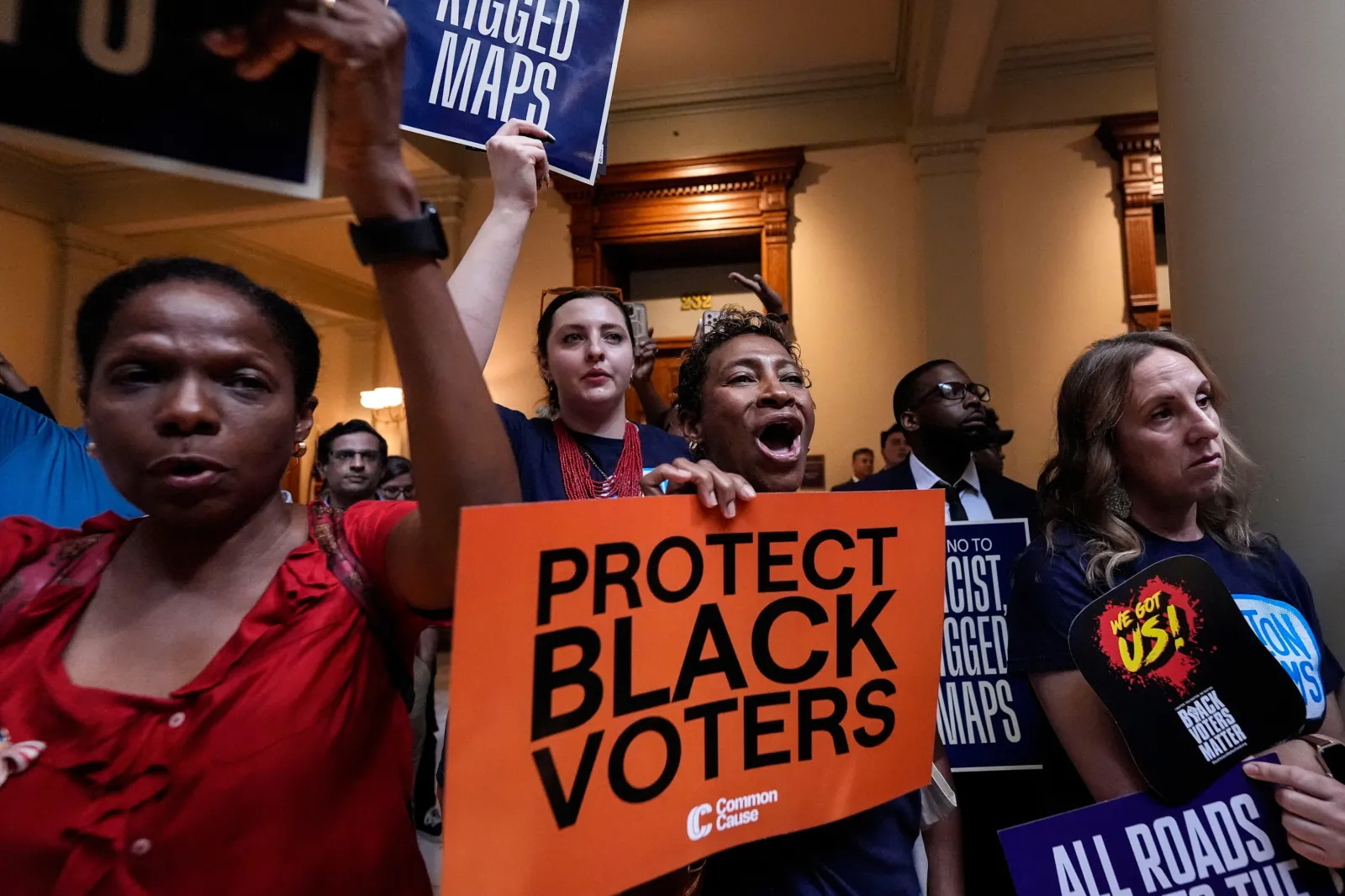
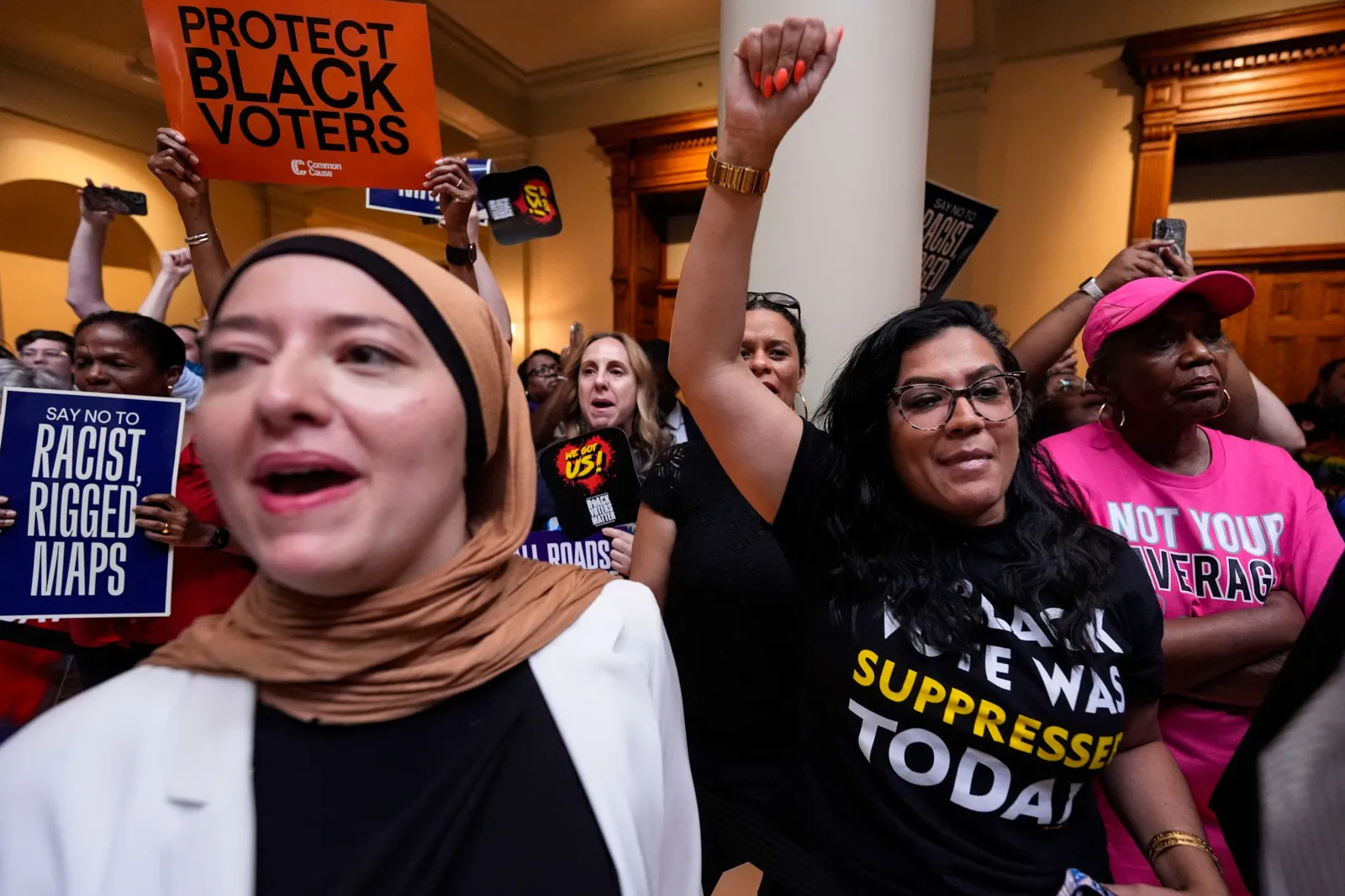
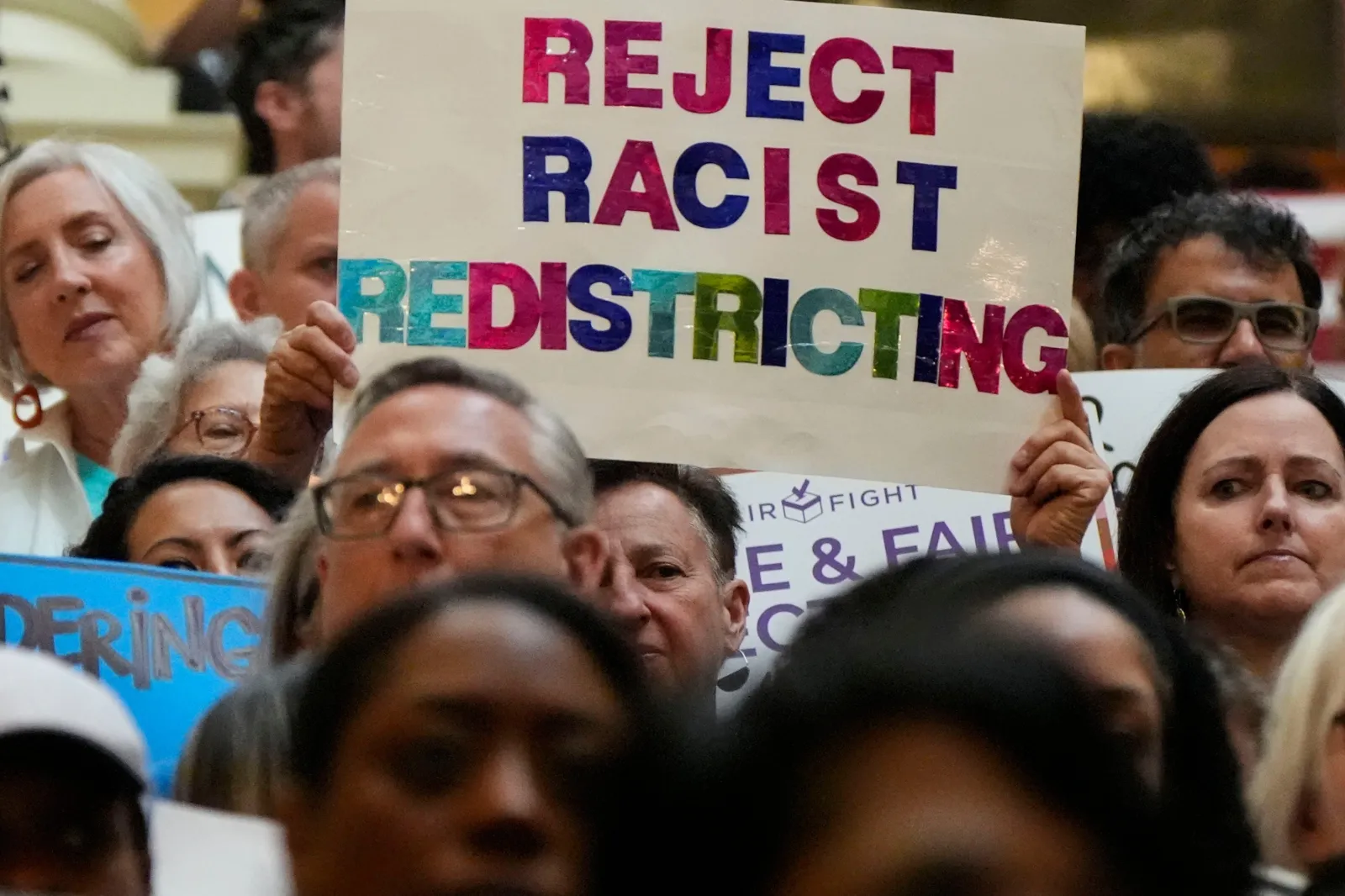
Protesters gathered at Georgia’s Capitol in Atlanta, often described as the cradle of the modern civil rights movement, as lawmakers prepared to redraw congressional maps that critics said would weaken Black voting power.
Demonstrations and civil rights leaders framed the push as part of a broader fight over representation following recent court rulings on the Voting Rights Act.
“They said protesting doesn’t work… this time, it did—for now,” said civil rights lawyer Gerald Griggs.
The decision freezes district lines in a key battleground state as both parties race to reshape maps before the 2026 midterm elections.
Georgia voters—and particularly minority communities in majority-Black districts—will continue voting under the 2023 court-ordered maps while national redistricting shifts elsewhere continue.
Key Points
- Georgia Republicans halted plans to redraw congressional maps during a June special session
- The state will continue using court-ordered 2023 maps that added majority-Black districts
- At least 10 states have already changed maps since 2025 in a rare mid-decade wave
- The Supreme Court’s April 2026 Louisiana v. Callais ruling narrowed how race can be used in redistricting
- Redistricting could shift multiple House seats, potentially influencing control of Congress
Why It Matters
Redistricting determines not just where lines are drawn, but who wins power. With the U.S. House narrowly divided, even a handful of seats influenced by new maps could decide control.
A recent Supreme Court ruling in Louisiana v. Callais narrowed the scope of the Voting Rights Act's use in redistricting, making it harder to require majority‑minority districts—the mechanism courts have used for decades to enforce minority voting protections—and giving states greater latitude in drawing electoral maps.
Georgia Hits Pause—For Now
The immediate upshot is simple: Georgia, a state central to both parties’ electoral strategies, is stepping back from a redraw.
Republican state House Speaker Burns said redistricting would not be taken up during the special session, arguing the process requires “ample opportunity” for input and deliberation.
That marked a sharp reversal from earlier expectations that lawmakers would revisit maps—potentially targeting majority-Black districts created under court order in 2023.
Those current maps were the product of prolonged litigation. A federal judge found earlier lines diluted Black voting power and ordered the creation of an additional majority-Black congressional district and several new legislative districts.
The revised maps took effect in 2024 and remain under appeal.
For now, those lines will stay in place through at least the 2026 cycle.
The existing map was designed—under court guidance—with the stated aim of better reflecting Georgia’s demographics. Leaving it untouched likely preserves at least one Democratic-leaning seat that could otherwise have been redrawn into a Republican advantage.
But the bigger story lies in why Georgia stopped.
The Legal Shockwave: Louisiana v. Callais
Lawmakers cited ongoing litigation and uncertainty following Louisiana v. Callais, the April Supreme Court ruling that reshaped how race can be considered in districting.
In a 6–3 decision, the Court struck down Louisiana’s congressional map as an unconstitutional racial gerrymander, ruling that compliance with the Voting Rights Act—which prevents racial discrimination in voting—did not justify the use of race as a primary factor in drawing districts.
The court effectively raised the bar, requiring stronger evidence of intentional racial discrimination for challenges of vote dilution.
That change has scrambled the legal landscape—and made immediate redraws politically risky.
A National 'Redistricting Arms Race'
Across the country, the Georgia pause contrasts with a surge of activity elsewhere.
What Democratic Georgia Senator Raphael Warnock has described as a “redistricting arms race” is now unfolding across the United States, with lawmakers warning the fight is spreading nationwide.
Since mid-2025, at least 10 states have redrawn congressional maps outside the normal census cycle—something that had been rare in modern U.S. politics.
Those states include:
- Republican-tilting redraws: Texas, Florida, Missouri, North Carolina, Tennessee
- Democratic countermoves: California
- Court-driven changes: Alabama, Louisiana, Ohio, Utah
Together, these efforts represent what experts call the largest coordinated mid-decade redistricting push in decades.
The catalyst was partly political. Since 2025, President Donald Trump has encouraged Republican-led states to redraw maps ahead of the 2026 midterms to defend a narrow House majority, prompting Democratic countermoves.
But the legal spark was Louisiana v. Callais. By narrowing the Voting Rights Act’s scope, the Supreme Court has likely opened the door to more aggressive redistricting strategies, particularly in Southern states.

What the Map Looks Like Now
For those tracking this evolving landscape, the country can broadly be understood in three groups:
1. States With New Maps Already In Effect
These are the most settled—at least for now. They have implemented new congressional maps, though some remain legally or politically contested:
- Alabama
- California
- Florida
- Louisiana
- Missouri
- North Carolina
- Ohio
- Tennessee
- Texas
- Utah
In many of these states, changes have already begun to reshape congressional seats, often favoring Republicans, though not exclusively.
Several, including Alabama, Louisiana, and Utah, have seen court-driven redraws or remain tied to ongoing legal disputes, while others, like Florida, have implemented new maps with lawsuits still pending.
2. States Still Facing Active Legal Battles
A smaller set of states remain clearly fluid, with litigation that could still affect current or future maps:
- Georgia
- Alabama
- Louisiana
- Florida
- Utah
In these cases, court rulings—either ongoing or anticipated—could still alter district boundaries before or after the 2026 elections. Redistricting challenges extend far beyond these states, with lawsuits filed across much of the country, underscoring the broader instability of the current cycle.
3. States Considering or Stalling Redraws
These are politically “live” but unresolved:
- Virginia
- Maryland
- Washington
- New York
- Wisconsin
Some have explored new maps through legislation or ballot measures, while others face stalled efforts or potential litigation pathways rather than active redraws.
Georgia now sits effectively in this category as well—a “pause state,” where political pressure to redraw districts has collided with legal uncertainty and legislative resistance.
What It Means for the 2026 Elections
The key question is: Does Georgia’s decision help Democrats?
On balance, slightly—but within a much larger national picture that still favors uncertainty.
Keeping the 2023 maps likely preserves districts designed to enhance minority representation, which tend to lean Democratic. Removing the immediate threat of a Republican-led redraw reduces downside risk for Democrats in the state.
However, Georgia alone will not decide the U.S. House.
Nationally, redistricting has already shifted the playing field. An NBC News analysis found Republicans could be “in position” to gain up to 16 House seats from new maps—though other estimates suggest a smaller, single-digit gain is more realistic.
At the same time, structural factors still dominate outcomes.
One forecasting model from the University of Virginia’s Center for Politics suggests Democrats remain competitive for control even after accounting for a Republican redistricting edge, driven by broader indicators such as the generic ballot, presidential approval, and midterm dynamics.
In other words, district lines set the stage, but voters still write the script.
Political Reaction and Strategic Calculations
Democrats were quick to frame Georgia’s decision as a victory—or at least a reprieve.
In a statement, Democratic Legislative Campaign Committee President Heather Williams said Republicans had “abruptly called off their unpopular plan to further rig maps and silence voters,” arguing the pause creates an opening to “build durable power” in the state.
She added that flipping key legislative seats in 2026 could reshape future redistricting, warning that “the threat of future GOP gerrymandering looms.”
Republicans, by contrast, have publicly emphasized process and timing. State leaders pointed to the need for public input and a better understanding of the Supreme Court ruling before redrawing lines.
That framing reflects a broader strategic tension: whether to move quickly and exploit legal shifts, or wait for clearer judicial guidance.
What Happens Next
Georgia’s decision to step back does not end the redistricting fight—it delays it.
The state is now part of a growing group waiting on the courts, even as others press ahead. And with appeals still pending over its current maps, another redraw before 2028 remains likely.
For now, though, the electoral terrain in Georgia is set—and in a cycle where every seat counts, even standing still can shift the odds.
Attention now turns to three questions:
- Will courts intervene again? Ongoing appeals in Georgia and elsewhere could still reshape maps late in the cycle.
- Do more states follow Georgia’s lead? Legal uncertainty may slow the redistricting wave in other battlegrounds.
- Can either party lock in an advantage? With Democrats targeting state legislatures and Republicans holding structural gains, the map remains unsettled.
What is clear is that this is not a typical cycle. Mid-decade redistricting—once rare—has become a central battleground for political power in the United States.