
 2 hours ago
8
2 hours ago
8
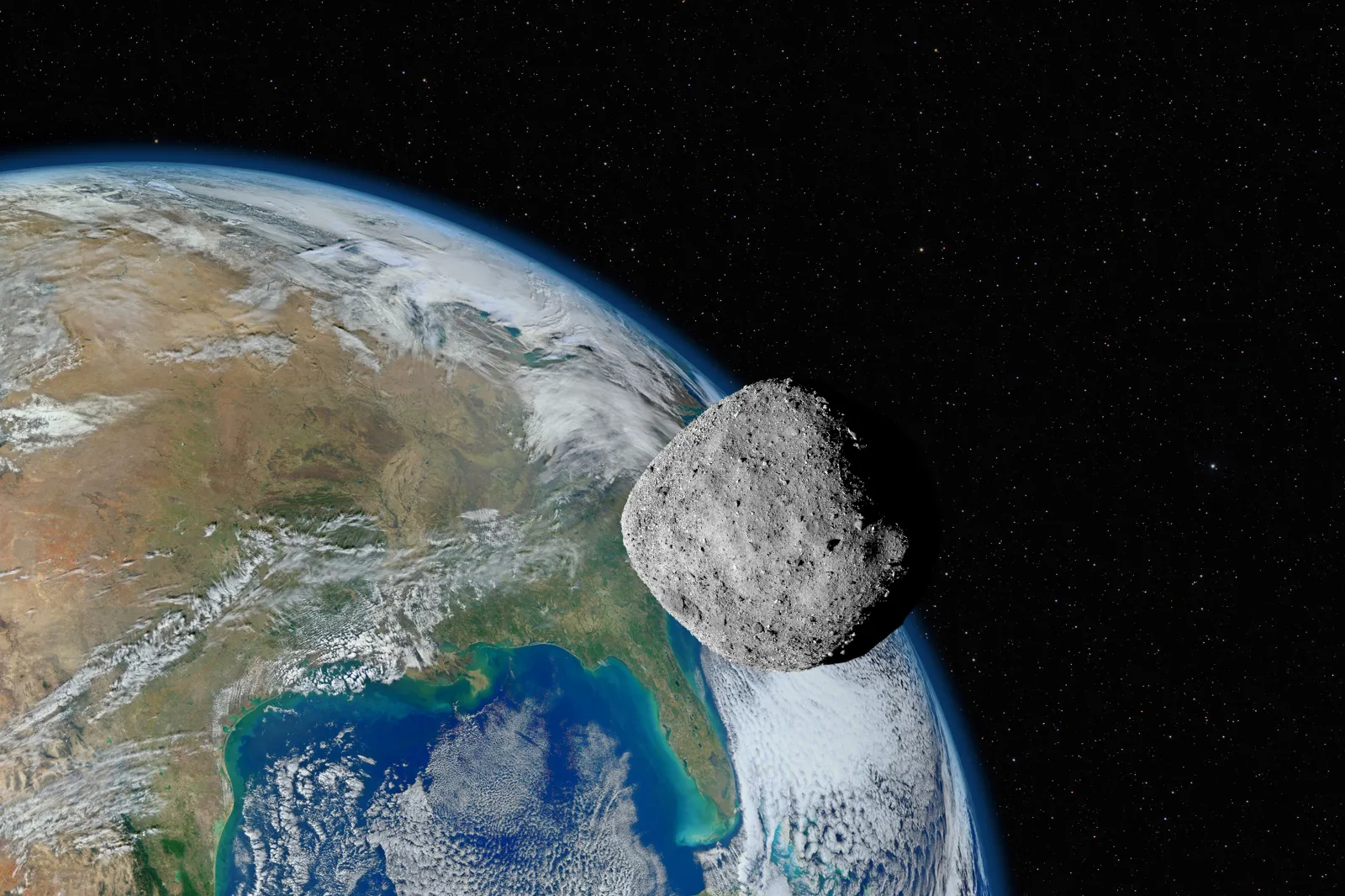
NASA is currently tracking a plane-sized asteroid set to zip past the Earth on June 18 at a whopping 8,768 miles per hour.
Known as 2003 LN6, the space rock is estimated to be about 98 to 223 feet (30 to 68 meters) across and will make its closest approach on Thursday, at a distance of 880,000 miles, according to NASA's Jet Propulsion Laboratory (JPL).
Where Is The Asteroid Now?
NEO Asteroid 2003 LN6 is currently located in the constellation Lyra, approximately 1,481,400.6 kilometers from Earth (at the time of publication). Its apparent coordinates are Right Ascension 18h 27m 16s and Declination +44° 39′ 01″. It will transit at 01:11 UTC, reaching a maximum altitude of 77.5° above the horizon.
Does the Asteroid Pose a Risk to Earth?
NASA Ambassador Tony Rice, an information security engineer and data scientist, told Newsweek that asteroid close approaches to Earth are incredibly common – there have been three notable asteroid flybys of Earth in June: 2026 LS1 and 2026 LX passed within 1 lunar distance, while 2026 LB passed at approximately 3.7 lunar distances. However, that is no cause for concern.
Small asteroids measuring up to 30 feet across impact the Earth roughly once every 10 years, according to NASA’s website. These collisions usually result in a bright fireball and a powerful sonic boom and may occasionally break a window, but they generally do not cause any significant damage.
Larger asteroids over 500 feet can cause death across metro areas and states, depending on the impact location, says NASA, adding that they only hit the Earth about once in 20,000 years.
Asteroids that could cause global devastation are those measuring over 3,000 feet, which statistically hit the Earth about every 700,000 years.
NASA’s Center for Near-Earth Object Studies (CNEOS) tracks objects within 30 million miles and watches anything within about 5 million miles more closely – they are also testing methods to deflect space rocks that could pose a risk.
Can We Do Anything About an Incoming Asteroid?
In 2022, NASA’s DART mission deliberately collided with the asteroid Dimorphos and successfully changed its orbit, shortening it by 33 minutes. While Dimorphos posed no threat to Earth, the test proved that asteroid deflection is a viable planetary defense method.
NASA is now developing the NEO Surveyor, a space-based observatory planned for launch in 2027, to detect potentially hazardous asteroids and comets earlier and more reliably.
According to Rice, researchers can predict the paths of near-Earth asteroids remarkably well.
“Astronomers from around the world contribute observations which are used to calculate the path,” he said.
Do you have a tip on a science story that Newsweek should be covering? Do you have a question about asteroids? Let us know via science@newsweek.com.