 2 hours ago
6
2 hours ago
6
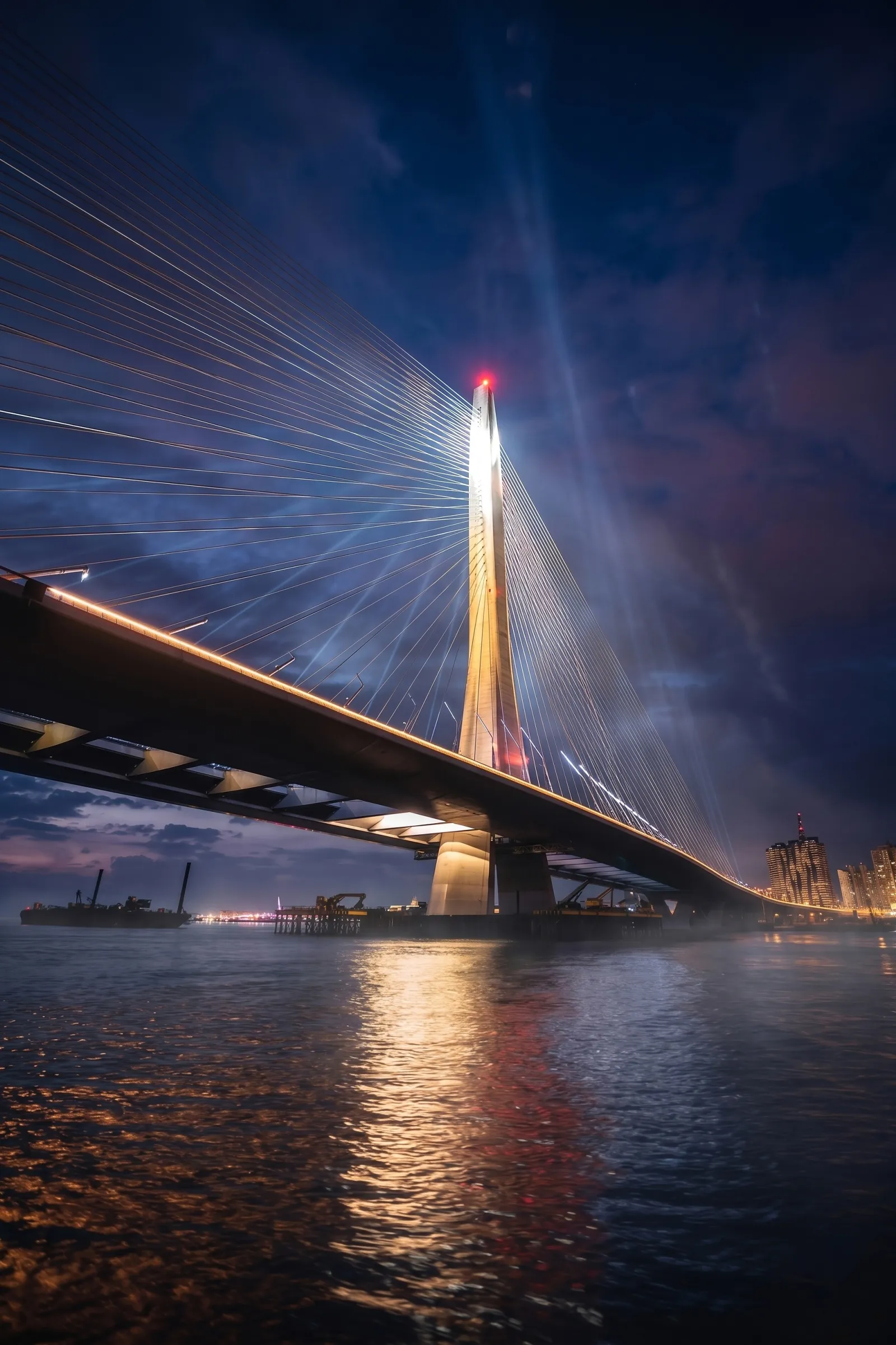
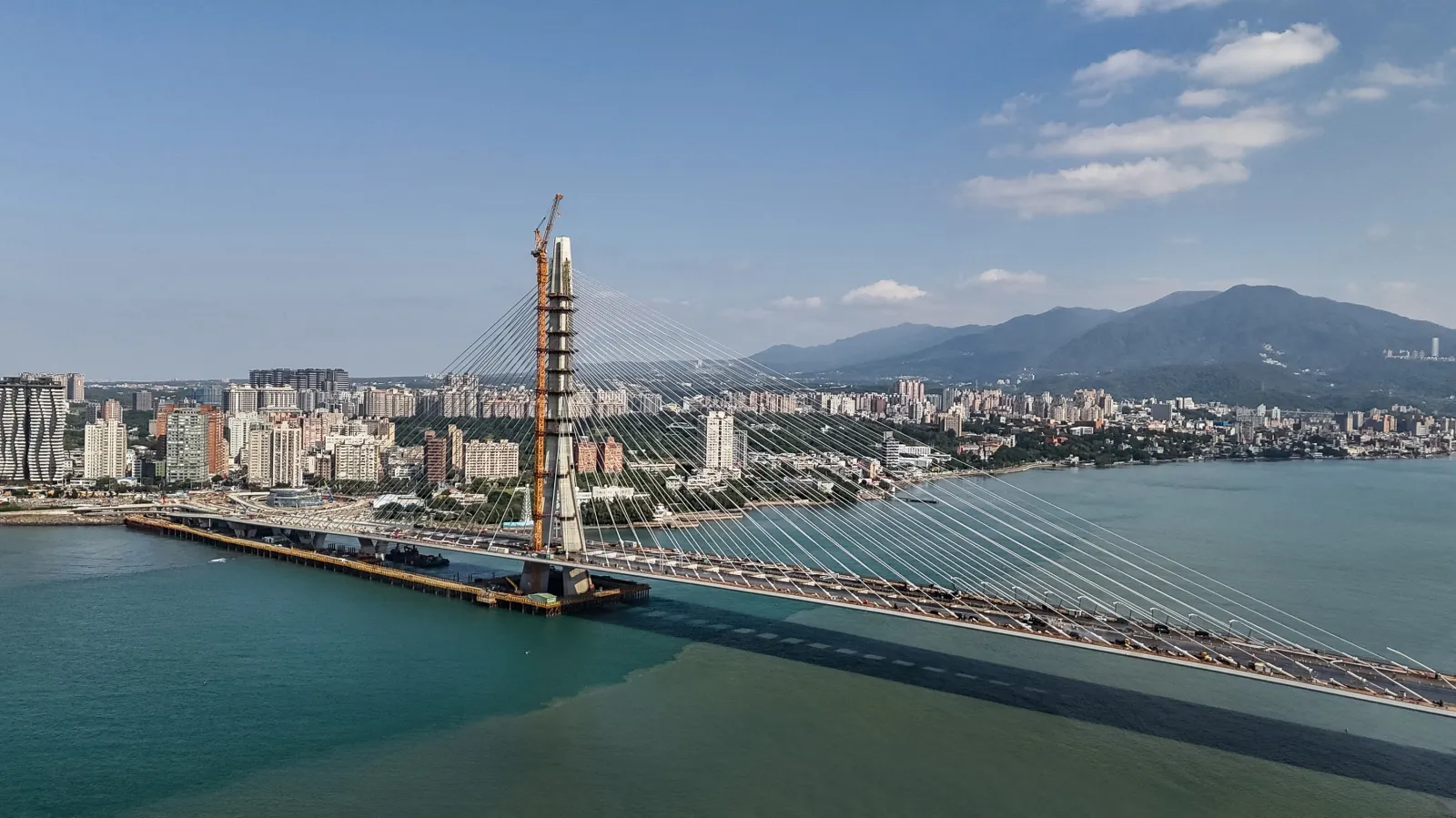
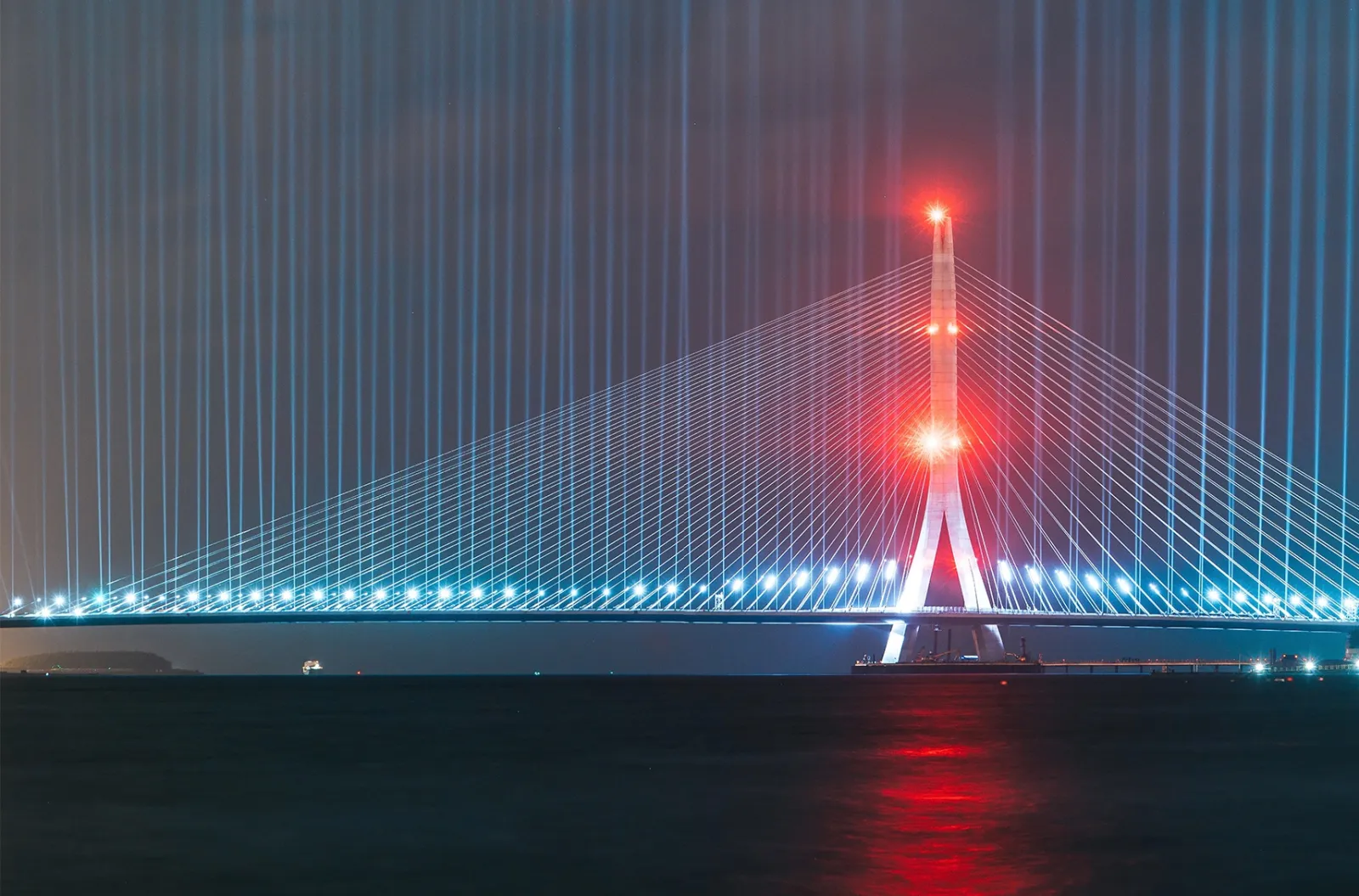
Taiwan has officially opened the world's longest asymmetric, single-mast bridge—the Danjiang Bridge, a landmark infrastructure project spanning the mouth of the Tamsui River in Taipei, the Taiwanese capital.
Stretching around 3,018 feet (920 meters), the bridge—described as "the world’s longest single-tower, asymmetric cable-stayed bridge"—is longer than the height of Dubai’s Burj Khalifa, the current world’s tallest building, which rises to about 2,717 feet.
The bridge designed by ZHA, the architectural firm founded by the late architect Zaha Hadid, sits at the estuary of the Tamsui River, a popular destination where residents gather to watch sunset over the water. That setting played a central role in shaping the design.
ZHA said the bridge’s sculptural 200‑meter mast (around 656 feet) was engineered to optimize structural performance “without impairing views of the setting sun,” with the structure made as slender as possible while still supporting its 450‑meter (around 1,476 feet) main span in extreme weather and seismic conditions.
Charles Walker, director at ZHA and the lead architect on the project, told Newsweek that protecting the natural view was a key design principle.
“The sunset view down the Tamsui River is protected, and we didn’t want to frame or enclose the sunset,” Walker explained, noting that this consideration—along with the asymmetric geography of the riverbed and surrounding landscape—led to the decision to use a single tower.
He added that the asymmetric design was not only an aesthetic choice but also a practical one, responding to the site’s uneven terrain and the low mountains on the Bali side of the river.
The opening of the Danjiang Bridge comes amid a broader shift toward sustainability in recent infrastructure projects.
In Finland, the Kruunuvuorensilta bridge in Helsinki—the world’s longest bridge dedicated to trams, pedestrians and cyclists, which opened in April—was designed explicitly to reduce reliance on private cars and promote low‑emission mobility, forming part of a wider push for greener urban transport.
Elsewhere in Europe, new cycle and pedestrian bridges, such as the “Blue Carpet” cycle bridge in the Netherlands, have incorporated sustainably sourced materials, including FSC‑certified timber, while encouraging walking and cycling as alternatives to car travel.
Similarly, projects like Norway’s Paradis Bridge demonstrate how advanced composite materials can reduce maintenance needs and extend a bridge’s lifespan, lowering its long‑term environmental footprint.
'The Design Follows the Integrity of Its Structure'
Walker told Newsweek that the cable‑stayed, single‑mast structure was also the most efficient and economical solution for a span of this size.
“We zeroed‑in on a cable stay arrangement with a single tower to minimize visual and environmental impact, in addition to optimal cost‑effectiveness,” he said.
Once that structural approach was determined, the focus turned to refining the form. Walker said the architect’s role was “shaping the elements to produce the most elegant proportions when seen in silhouette against the sky.”
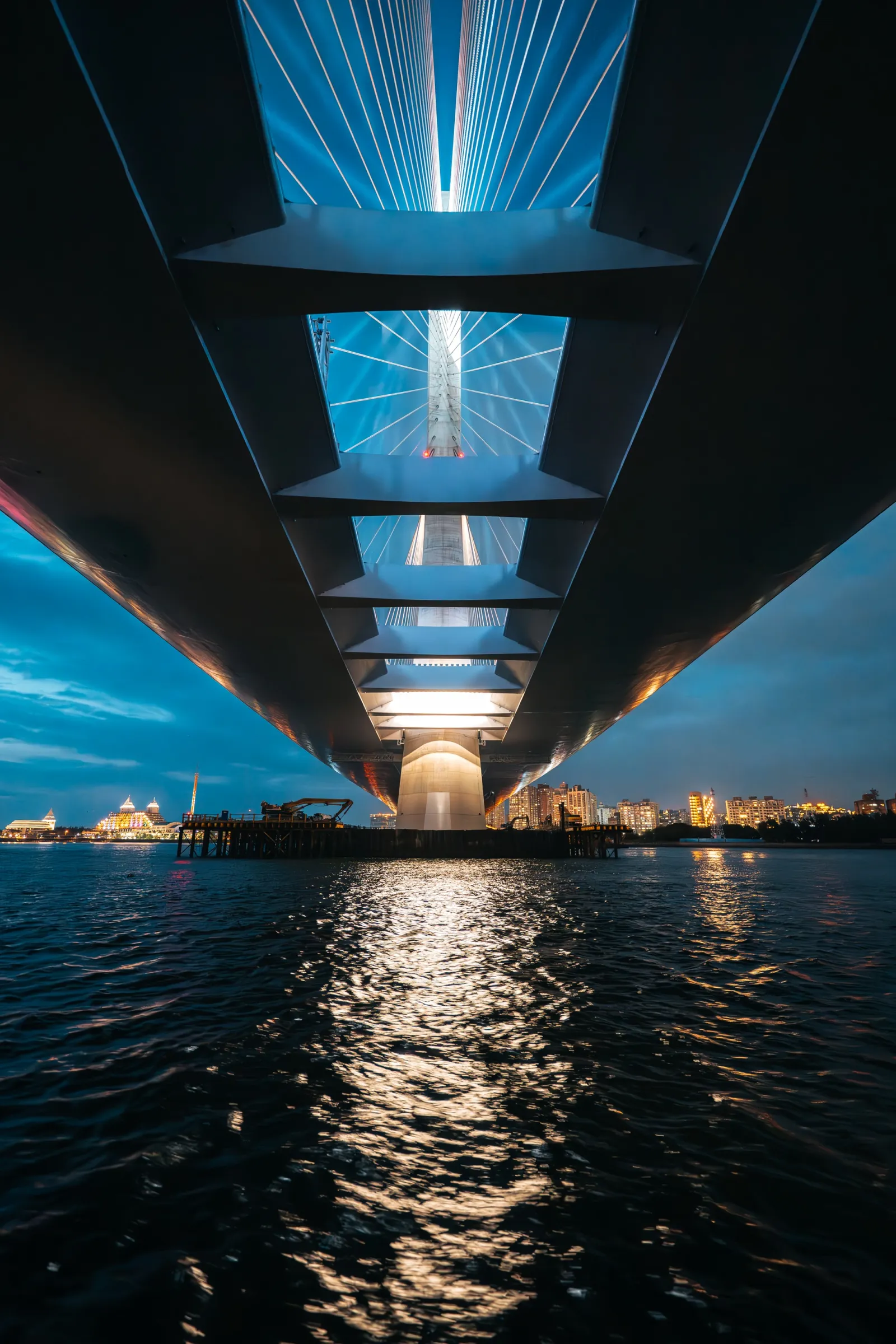
The bridge’s defining mast was split at its base—a decision welcomed by engineers for its structural benefits and incorporated seamlessly into the design. Walker explained that the project aimed to ensure “the design follows the integrity of its structure,” creating a form that appears balanced and harmonious from every vantage point.
Minimizing Environmental Impact
Beyond visual considerations, reducing environmental disruption was another central priority.
Walker said that limiting the number of piers in the water was essential to protecting the riverbed. A long‑span, single‑tower design allowed engineers to minimize construction impact on the estuary, which is home to an important natural ecosystem.
ZHA also emphasized that detailed 3D modelling and mapping were used to determine the placement of the mast and deck height, ensuring safe navigation for vessels while maintaining unobstructed views along the river.
The firm added that the single‑mast configuration reduces the structure’s footprint in the river, aligning with environmental programmes aimed at preserving the estuary’s ecology.
Connecting Taipei’s Transport Network
While its sculptural design has captured global attention, the bridge is also a major piece of transport infrastructure.
The Danjiang Bridge forms part of a broader effort to upgrade northern Taiwan’s transport network. It links Highway 2 on the eastern side of the river with key routes on the western side, including Highway 15, the West Coast Expressway and the Bali‑Xindian Expressway.
According to ZHA, the crossing will ease congestion on existing local roads and reduce traffic pressure on the nearby Guandu Bridge, located around 5 kilometres upstream.
The improved connectivity is expected to streamline travel between Tamsui District, central Taipei, New Taipei City and key transit hubs such as Taoyuan International Airport and the Port of Taipei.
Built for the Future
The bridge has also been designed with future mobility in mind.
ZHA said the structure includes dedicated pedestrian and cycle lanes and has been engineered to accommodate a future extension of the Danhai Light Rail system across the river—positioning it as a multi‑modal transport corridor rather than just a road crossing.
Walker said that this approach reflects a broader philosophy behind the project: infrastructure should not only serve practical needs but also enhance its surroundings.
“We believe that a properly designed bridge can enhance the landscape rather than detract,” he said, describing that goal as “our primary focus.”
Do you have an architecture or design-related story to share? Let us know via s.kim@newsweek.com, and your story could be featured by Newsweek.