 3 hours ago
11
3 hours ago
11
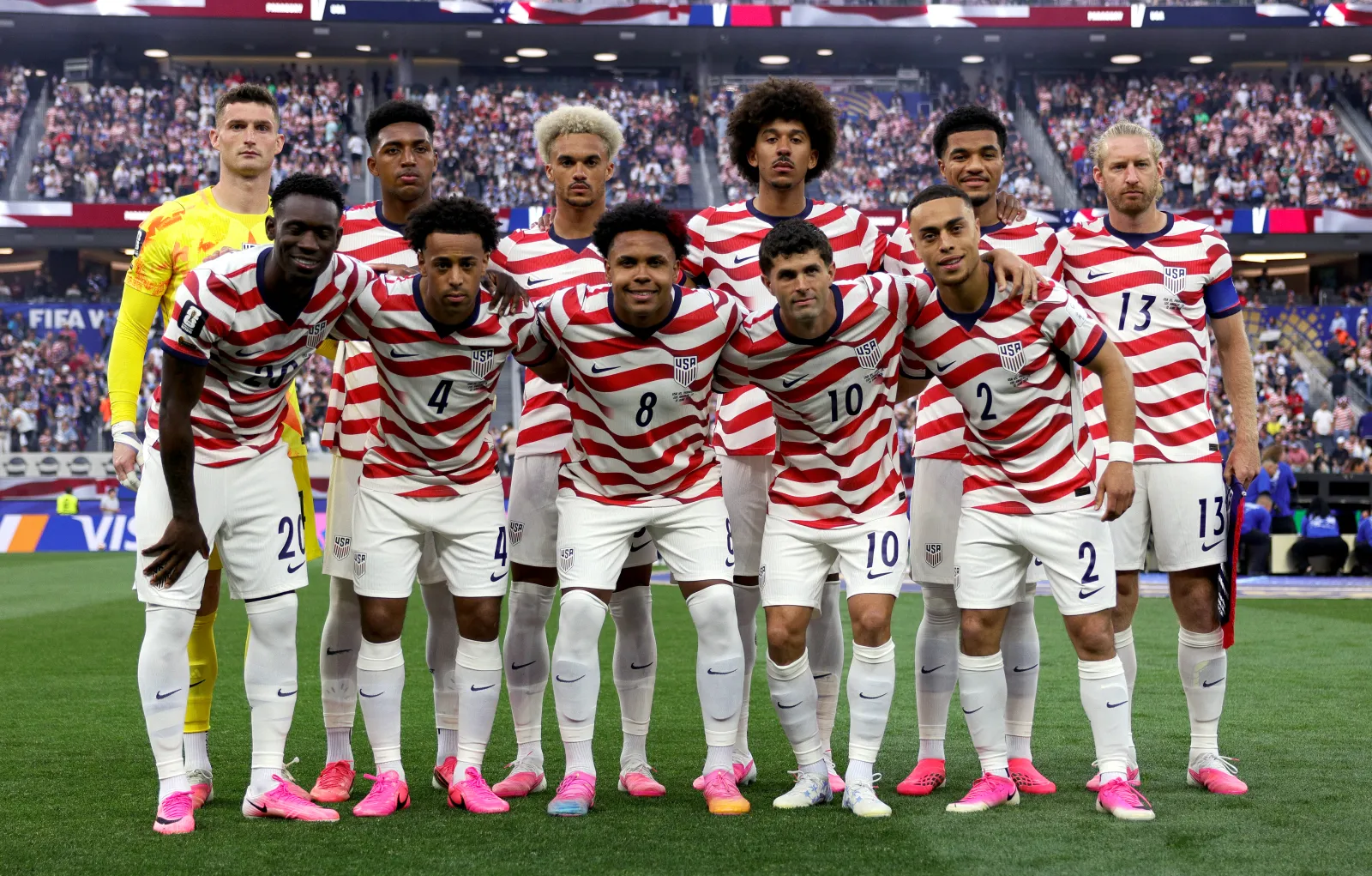
Six players on the U.S. men's national soccer team at the 2026 World Cup were born outside the country. More than half the 26 men on the roster hold dual citizenship. And the striker who scored twice in the Americans' opening 4-1 victory over Paraguay is eligible to play only because of a legal provision the Trump administration has sought to eliminate.
The team's immigrant and diasporic makeup is drawing attention as the tournament plays out on American soil, against the backdrop of an aggressive immigration enforcement posture that has already sidelined a World Cup referee and forced one national team to base its operations in Mexico.
How Birthright Citizenship Put a Striker on the USMNT
Folarin Balogun's birth in the United States was not planned.
His mother, Florence, a Nigerian citizen living in London, was seven months pregnant when she attempted to fly home from New York in summer 2001. Airline attendants denied her boarding due to the advanced state of her pregnancy and the absence of required medical clearances. She was forced to remain, and Folarin was born in Brooklyn on July 3.
That made him an American under the 14th Amendment's birthright citizenship clause.
President Donald Trump signed an executive order on January 20, 2025, seeking to deny automatic citizenship to children born in the United States if neither parent is a citizen or permanent resident. Federal courts have blocked the order from taking effect. The Supreme Court heard oral arguments in April and is expected to issue a ruling by the end of June or early July.
The decision will come while the tournament is still underway. Under the policy Trump has sought, Balogun would not have been eligible to represent the United States.
"I visualized my debut in the World Cup scoring, but the reality did surpass that," Balogun said after Friday's match. "A very dreamy night."
Born in the USA: The USMNT Players With Immigrant Roots
Balogun is not the only player on the roster whose American identity runs through immigrant roots.
Tim Weah was also born in Brooklyn, the son of George Weah, the only African soccer player to win the Ballon d'Or, who later served as the 25th president of Liberia. His mother Clar is Jamaican American. Weah was eligible to represent four countries—the United States, Liberia, France and Jamaica—before committing to the Americans.
Haji Wright was born in Los Angeles to a father from Ghana and mother from Liberia. He plays his club soccer in England, for Coventry City.
Ricardo Pepi was born in El Paso, Texas, to Mexican parents and grew up in nearby San Elizario. He is one of two Mexican American dual-national players on the squad. Cristian Roldan, born in Artesia, California, is the other.
Christian Pulisic, born in Hershey, Pennsylvania, has Croatian heritage through his grandfather, Mate Pulisic, who immigrated to the United States from the island of Olib as part of a wave of Yugoslav emigrants in the mid-20th century. That heritage gave Pulisic a Croatian passport, which allowed him to move to Borussia Dortmund at age 16 without a work permit.
Weston McKennie, born at Fort Lewis, Washington, to an African American Air Force family, grew up in Germany after his father, a retired U.S. Air Force staff sergeant, was stationed near Ramstein Air Base. He learned soccer there and signed his first professional contract in Germany.
Which USMNT Players Were Born Outside the United States
Sergiño Dest was born in Almere, Netherlands, to a Surinamese American father and Dutch mother, and holds dual U.S. and Dutch citizenship. His father was born in Suriname, immigrated to the United States, and later became an American citizen, dedicating approximately 25 years to military service.
Antonee Robinson was born in Milton Keynes, England. His father Marlon was born in England but later moved to White Plains, New York, attended Duke University and was naturalized as a U.S. citizen.
Malik Tillman was born in Nuremberg, near the U.S. Army base at Ansbach, to a German mother and American father who served in the military.
Gio Reyna was born in Sunderland, England, where his father Claudio, a former USMNT captain, played for Sunderland AFC. Sebastian Berhalter was born in London while his father Gregg Berhalter played professionally in England.
Alejandro Zendejas was born in Ciudad Juárez, Mexico, and moved with his family to El Paso, Texas, at roughly 6 months old. His parents are originally from Toluca, in the State of Mexico.
"I grew up doing both things at the same time," Zendejas said. "I'm just grateful to have both citizenship."
How Immigration Is Reshaping World Cup Rosters in 2026
The United States is not an outlier. Nearly a quarter of the 1,248 players at this year's World Cup are representing a country other than the one where they were born. At the 2006 tournament, that figure was less than 9 percent.
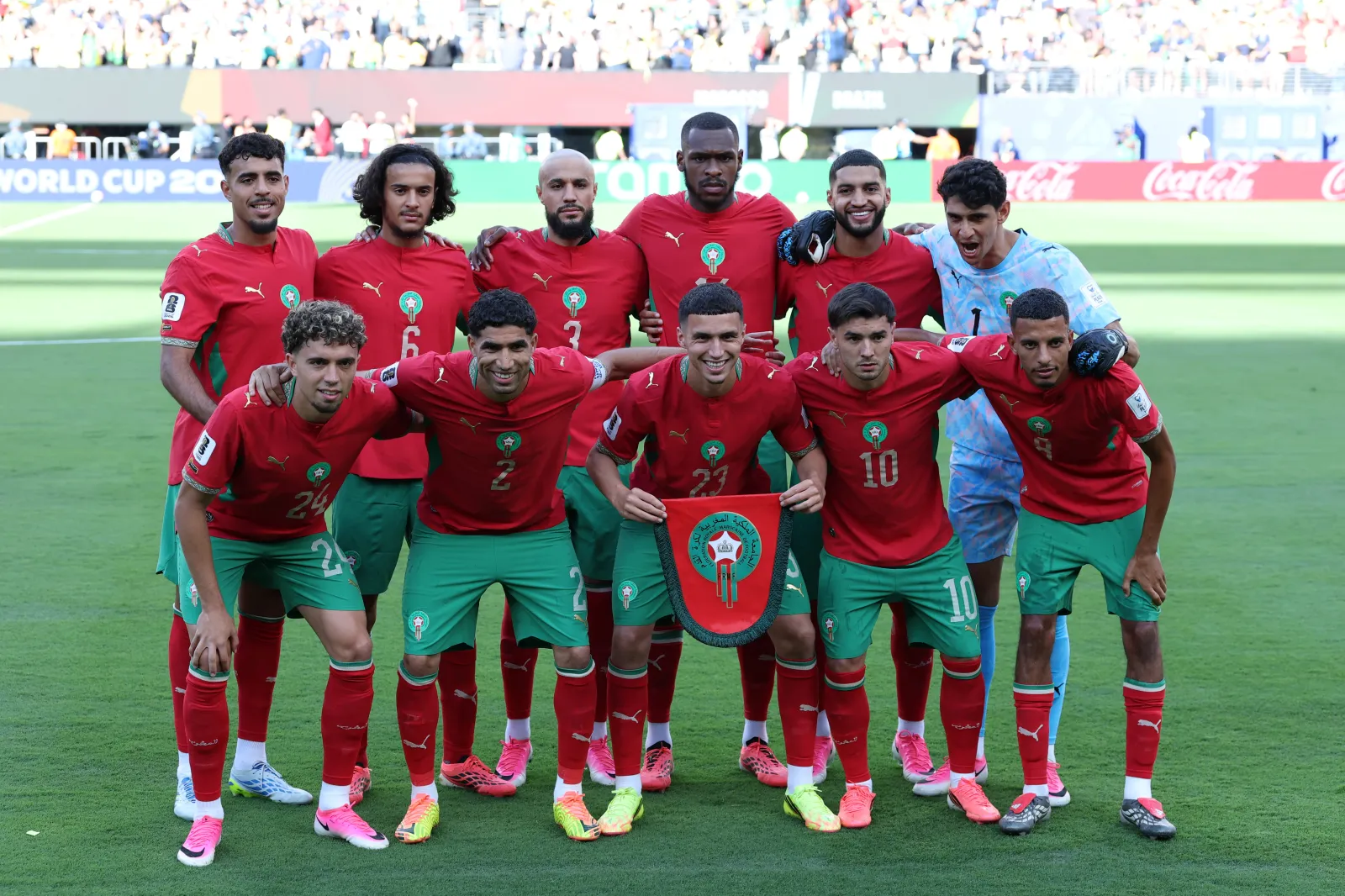
Morocco has 19 foreign-born players on its 26-man squad, 12 of whom grew up in France or Spain. Tunisia, Curazao, Algeria, Bosnia and Herzegovina, Congo and Qatar all have more than half their squads made up of players born elsewhere.
Bosnia and Herzegovina draws 16 players from its European diaspora, born in countries including Germany, Croatia, Sweden and the United States—direct consequence of the mass displacement of the Bosnian war in the 1990s.
FIFA has also made it easier for players to switch national allegiance. A 2021 rule change allows a player to change affiliation provided they have made no more than three appearances for their first country and none at a major tournament final. At this World Cup, Congo defender Aaron Wan-Bissaka switched from England, and Australia midfielder Cristian Volpato moved from Italy.
Somali Referee, Iraqi Players: How US Immigration Policy Hit the Tournament
The Trump administration's immigration stance has already reached the field of play.
Omar Abdulkadir Artan, who was set to become the first Somali referee to officiate at the World Cup, was denied entry by U.S. Customs and Border Protection (CBP) despite having been vetted by the Department of State and issued a valid visa. The agency cited "vetting concerns" without elaborating. Somalia is on the administration's travel ban list.
Aymen Hussein, Iraq's star player, and the Iraq team photographer were detained and questioned by CBP for seven hours at Chicago O'Hare International Airport. The photographer was denied entry.
Iran's national team has remained based in Mexico due to visa issues, traveling to United States venues only to play its matches before returning south of the border.
Andrew Giuliani, executive director of the White House Task Force for the World Cup and son of Rudy Giuliani, said the denial of Artan's entry was "for very good reasons," but did not elaborate.