 19 hours ago
28
19 hours ago
28
This is an edition of The Atlantic Daily, a newsletter that guides you through the biggest stories of the day, helps you discover new ideas, and recommends the best in culture. Sign up for it here.
America’s national debt hit $40 trillion last week. That number certainly feels like something worth panicking over—the mind balks at all the zeros. But although the debt has been in the trillions for decades, not everyone has considered it a problem.
One camp of economists has been warning about the perils of high debt for years: Budget hawks predicted that if the country kept spending and didn’t raise taxes enough to keep pace, the resulting fiscal crisis could be devastating. But others—the doves—have brushed it off. Their perspective was that as long as the U.S. GDP was growing faster than the interest rate it was paying on its debt, the Treasury would be able to keep rolling over its bonds without too much of a problem. For much of the 2010s, this was essentially the status quo, and debt panic was muted.
We’re nowhere near a complete failure of the Treasury market, and yet, over the past couple of years, some economists who were once more dovish have switched teams. Martha Gimbel, the executive director of the Budget Lab at Yale and the author of a recent Atlantic story on this issue, told me that part of the reason these economists are pivoting is that they’re starting to realize that interest rates are “probably going to be elevated for quite some time.” The average interest rate on U.S. debt—that second variable the doves look at—has been relatively high for several years now, and it’s only growing. It was hovering around 1.5 percent in 2021, and it’s now roughly 3.4 percent. The yield on the 30-year Treasury bond has more than doubled since 2021. “I was not a deficit hawk, and that reflected the dynamics” of the 2010s, when rates were lower, Gimbel told me. Now, she said, “the environment has changed.”
Why are rates rising? The Fed’s reaction to inflation is one reason. It may also have something to do with the extreme investments being made in AI, and these companies’ demand for credit. And it’s likely connected to the deficit panic—concern about the expansion of the national debt and the government’s ability to sustain it. Investors are starting to think of long-term Treasurys as riskier than they once did, and they’re demanding more money in exchange for taking on America’s debt. At the same time, the federal government has shown no real appetite to pull its two main levers for reducing the debt: cutting spending and raising taxes.
Jared Bernstein, the former head of Joe Biden’s Council of Economic Advisers, wrote in The Atlantic a few months ago that he’d “flipped from dove to hawk”—and told me this week that it was partly the government’s complacency on this issue that spurred this change. “Neither side seems particularly motivated to do much of anything about this,” he said. Rather than attending to the debt problem, politicians of both parties have instituted major tax cuts and increased spending over the past 25 years. The U.S. had its credit downgraded by a major ratings agency last spring, in part because of rising debt. The One Big Beautiful Bill Act will add an estimated $4.7 trillion to the deficit through 2035, and Donald Trump’s efforts to decrease immigration will add another half a trillion to that number over the same period, per the Congressional Budget Office.
Despite some recent attempts at short-term stabilization, his administration hasn’t done much to assure the country’s creditors that everything’s fine; they now appear to be seeking greater yields as a result. When longer-term bond yields rise, as they have been, everyday forms of borrowing such as mortgage rates and student loans tend to become more expensive as well. That’s why yields are ultimately “a kitchen-table issue in the same way that inflation is,” Ernie Tedeschi, a former chief economist for the White House’s Council of Economic Advisers, told me.
Last week, in an apparent attempt to depress yields, the Treasury Department announced that it would be more than doubling the size of its longer-term-bond buybacks. It worked briefly—yields fell—but about 24 hours later, they climbed higher than where they were before. In a scathing (and AI-written) Wall Street Journal op-ed this week, the investor and longtime deficit hawk Stanley Druckenmiller, Treasury Secretary Scott Bessent’s former mentor, stressed that the increased buybacks were a distraction from the real problem: the government’s spending.
This political inertia likely stems from the fact that the two most important levers for reducing the debt—raising taxes and cutting spending—remain unpopular among lawmakers and voters alike. Bessent suggested last week that he’s interested in a third option: stimulating the economy enough that it once again outpaces interest rates. But without a concrete plan in place, this sounds like wishful thinking, especially when the more obvious solutions to fix the deficit remain untapped. “This is the era of ‘No tax on blank’ in our politics right now,” Tedeschi said. On the campaign trail, Trump promised to remove taxes on tips, overtime pay, and Social Security payments; he accomplished the first and second, and took steps toward the third. That’s “exactly the opposite mentality we need to have if we want to stabilize our debt going forward,” Tedeschi said.
Likelier than a true collapse of the Treasury market, he told me, is that both the debt and interest rates keep rising over time, and that “the days of the 2 or low 3 percent mortgage of a few years ago are just gone.” With affordability concerns playing a major role in the midterms, politicians aren’t exactly clamoring to raise taxes on their constituents. But affordability is exactly what’s at stake if Washington doesn’t at least attempt to chip away at the debt problem.
Related:
Here are four new stories from The Atlantic:
Today’s News
- Flash floods swept through parts of Nepal and Tibet, killing more than 150 people in Nepal; hundreds remain missing across the region. Nepal and China have declared emergencies and launched rescue efforts.
- Meta agreed to pay about $18 billion to settle lawsuits from states claiming that its platforms harmed young users. The company did not admit wrongdoing but has agreed to changes, including daily time limits for teen users.
- A coalition of Democratic-led states sued the Trump administration over new Postal Service rules affecting voting by mail. The lawsuit follows Monday’s Supreme Court ruling allowing the administration to move forward with its plans to restrict voting by mail while legal challenges continue.
Evening Read
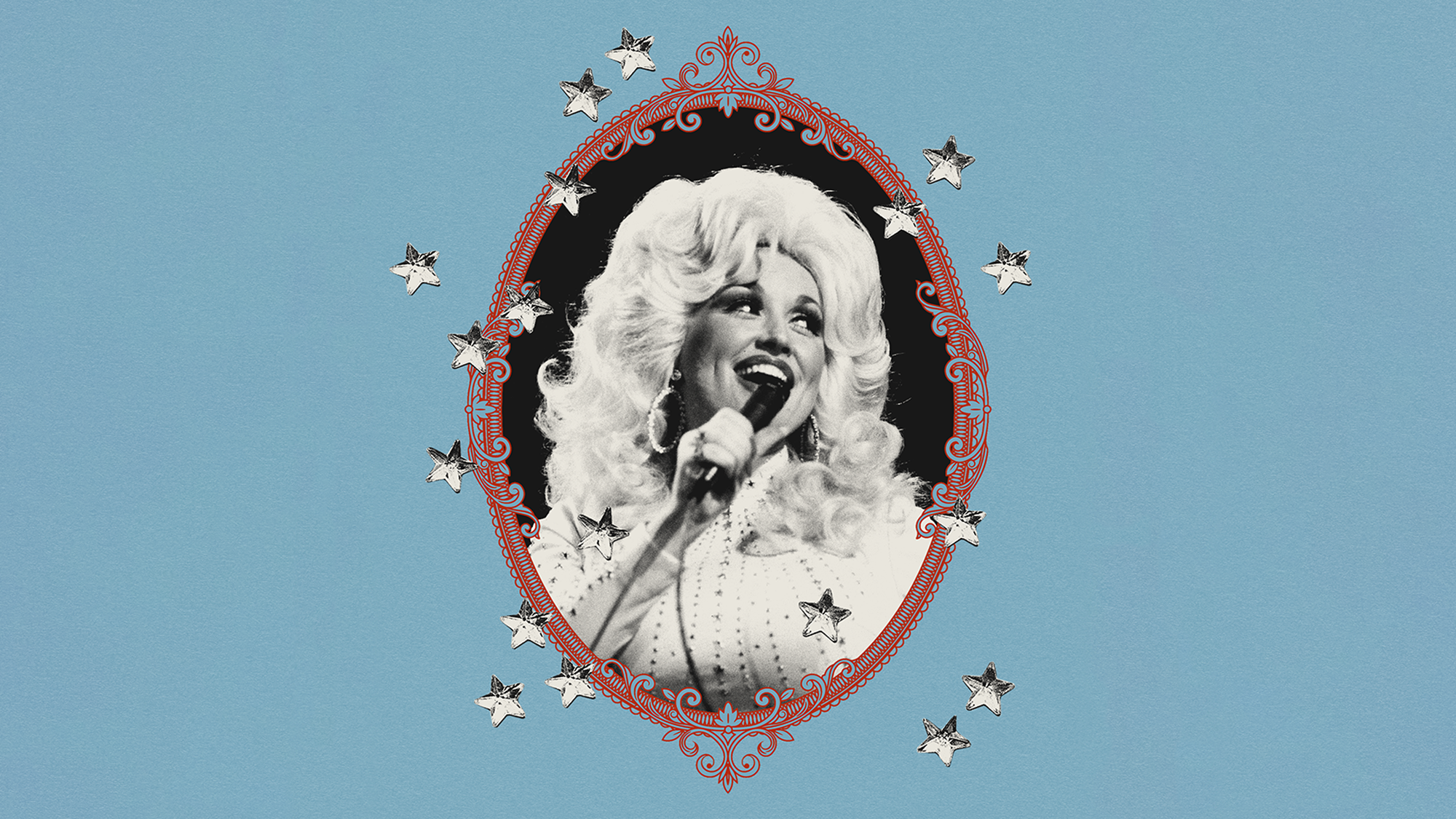 Illustration by Akshita Chandra / The Atlantic*
The Most Beautiful Woman
By Annie Joy Williams
Growing up in Tennessee, I could hardly walk into a grocery store without hearing “Jolene” playing on the radio. My mom sang fragments of “9 to 5” as she cooked Hamburger Helper on school nights, after clocking out of work. At my babysitter’s house in the summer, where Country Music Television was our ambient noise, she’d shout, “Good golly, Miss Dolly!” every time a Dolly song came on (which was at least every 30 minutes). Dolly Parton was more of an institution than a star to Tennesseans. Her image was plastered on T-shirts and hung on walls, like Mother Mary would be in a Catholic home. We vacationed at her amusement park, Dollywood, every school break. No one ever used her last name—she was simply Dolly to us all, and she was living proof that tough odds were no match for a cup of ambition.
When Dolly’s death was announced yesterday afternoon, my phone lit up with texts from hometown friends. “It feels like a member of our family died in Tennessee today,” one friend said. My socialist sister said Tennessee’s poet laureate had left us. My Donald Trump–voting father cried. In Tennessee, whether you fly a MAGA flag or a Pride flag, one thing is for sure: You’re listening to Dolly.
More From The Atlantic
Culture Break
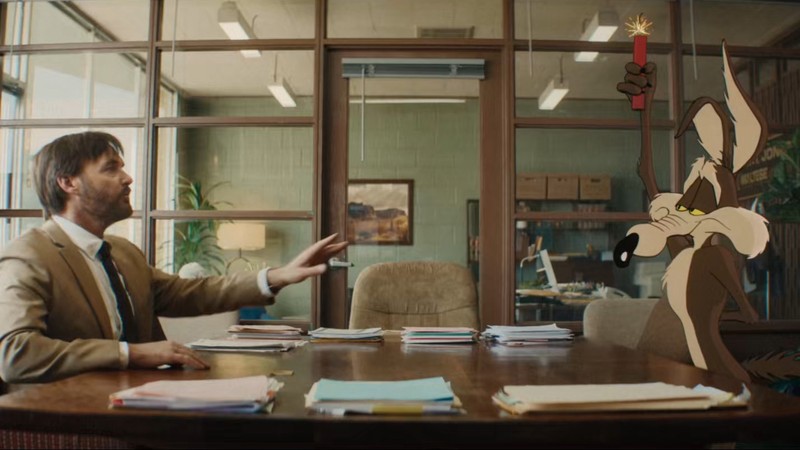 Ketchup Entertainment
Watch. Why was this Looney Tunes movie almost shelved for good? David Sims spoke with the director of Coyote vs. Acme (out now in theaters) about the winding path that almost kept the movie from audiences forever.
Reminisce. Sally Jenkins explores the truth about Dolly Parton’s style.
Rafaela Jinich contributed to this newsletter.
When you buy a book using a link in this newsletter, we receive a commission. Thank you for supporting The Atlantic.