 2 hours ago
8
2 hours ago
8
For the first time in decades, U.S. policy toward Syria offers something rare: a genuine win—for American interests, for regional stability and for a people who have survived one of the worst atrocities of the modern era. As Washington recalibrates its posture in the Middle East and seeks new frameworks for engagement with Arab partners, Syria deserves recognition as a model for what principled, interest-driven diplomacy can achieve.
The fall of Bashar al-Assad's regime in December 2024 created a window the United States moved quickly to open. The Trump administration's swift sanctions relief—including the revocation of comprehensive Syria sanctions in June 2025 and the delisting of Hayat Tahrir al-Sham (HTS) as a Foreign Terrorist Organization—signaled that Washington was prepared to engage a post-Assad Syria on its merits, not its past. That pragmatism is already paying dividends.
Syria's new leadership, under President Ahmed al-Sharaa, has moved to build institutions and restore order in ways that align directly with U.S. counterterrorism objectives, regional stability goals and work toward the protection of vulnerable communities. The new government has taken measurable steps against remnants of the Assad regime. In April 2026, Syrian authorities arrested Amjad Youssef—the so-called "Butcher of Tadamon"—a former military intelligence officer responsible for the 2013 massacre of over 40 civilians in Damascus. U.S. Special Envoy Tom Barrack called it a "powerful step away from impunity toward accountability." It is also a sign that the new Syria is willing to pursue justice even where it is difficult. The National Commission for Transitional Justice, established in May 2025, represents the institutional scaffolding for a credible accountability process—one the United States should actively support.
This moment also reflects the value of a broader regional coalition. Gulf partners, particularly Saudi Arabia and Qatar, have been instrumental in Syria's reintegration into international financial systems, with both pledging support for a resumption of World Bank operations after a 14-year suspension. Turkey, Jordan and Iraq remain critical to border management and refugee stabilization. A U.S. Syria policy that works through and alongside these partners—rather than in spite of them—is not a concession; it is a multiplier. Syria is an illustration of what American leadership looks like when it builds coalitions rather than operating in isolation.
On minority communities, progress is genuine but incomplete—and that distinction matters. Al-Sharaa met with leaders from across Syria's Christian denominations as early as December 2024, and that engagement has continued throughout the transition. His March 2025 cabinet included representatives from diverse backgrounds, and authorities moved to integrate Suwayda's Druze community into state institutions rather than marginalize them. The contrast with the Assad era is meaningful. Religious leaders have welcomed these early steps, even as they have called on the government to match words with sustained, enforceable protection.
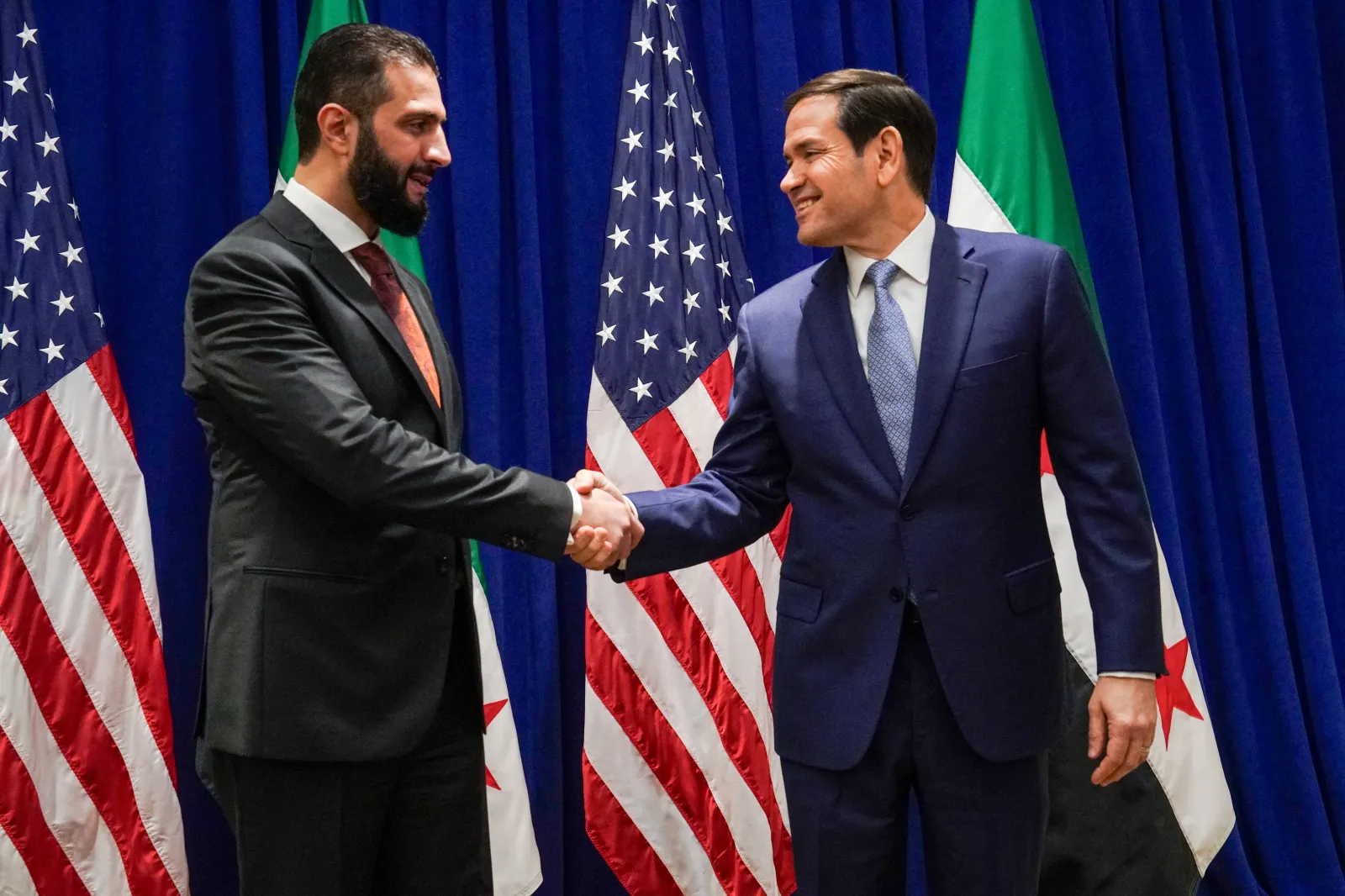
The last remaining structural barrier to Syria's full international reintegration is its 1979 designation as a state sponsor of terrorism (SST). That designation was earned by a regime that no longer exists. The legal standard for removal is clear: a fundamental change in government and policy, and a credible break with the behaviors that warranted the listing. Syria under al-Sharaa has severed ties with Hezbollah, expelled Iranian influence from its territory and actively partnered with the U.S. on counterterrorism. Secretary of State Marco Rubio was directed last year to review the designation. That review should conclude. Lifting the SST label would unlock foreign aid flows, normalize financial transactions and allow Syria's reconstruction to begin in earnest—outcomes that serve American interests alongside Syrian ones.
The U.S. does not often get to point to a Middle East policy that is working. In Syria, it can. The task now is not to declare victory but to consolidate it—through continued support for accountability, consistent pressure on inclusive and transparent economic policies and the removal of legal remnants of a regime Washington helped outlast. Syria's transition is fragile, but it is real. American policy should meet that reality with the seriousness it deserves.
Abdulrahim Ismail is president of Citizens for a Secure and Safe America (C4SSA), a Syrian-American advocacy organization. Bakr Ghbeis is a former president and current board member of C4SSA.