 1 week ago
25
1 week ago
25
This is a preview of the June 4 edition of Access Health—Tap here to get this newsletter delivered straight to your inbox on Thursday mornings.
Good morning. The American Society of Clinical Oncology (ASCO) hosted its Annual Meeting in Chicago this week. In my conversations with cancer care leaders and researchers, I heard excitement about new answers: breakthrough treatments and discoveries that could enable patients to live longer after diagnoses that would’ve once been terminal.
These new answers pose a new question, one that’s a welcome challenge for the oncology community: How must cancer care change as patients live longer with and beyond cancer?
When I caught up with Dr. Boris Pasche, president and CEO of the Karmanos Cancer Institute, he pointed to one “stunning” study above all others. A new targeted therapy from Revolution Medicines doubled survival in patients with metastatic pancreatic cancer who had already exhausted first-line treatment options. Patients receiving standard chemotherapy lived about six months on average. Patients receiving the KRAS-targeting drug lived 13.2 months.
"It was really double the survival you would expect with chemotherapy as a second line," Pasche told me.
It’s monumental news, given that pancreatic cancer remains one of oncology's most stubborn challenges. It is expected to become the second-leading cause of cancer death in the United States by 2030, and meaningful breakthroughs have been rare. Pasche called this new therapy a "game changer" that could eventually reshape treatment across the entire spectrum of pancreatic cancer care. While FDA approval is still pending, an expanded access program is already underway.
This year's conference also featured a growing body of evidence suggesting that patients taking GLP-1 agonists may face a lower risk of developing obesity-related cancers, and be less likely to experience cancer recurrence after treatment.
The findings are still preliminary, and it’s not entirely clear whether the benefit comes primarily from weight loss or some other biological mechanism. But as the body of research grows, Pasche predicts that this could change oncologists’ prescribing patterns. If an individual fulfills the criteria for GLP-1 therapy, “that would be an impetus for colleagues to consider referring this patient or prescribing [the medication] themselves,” he said.
Taken together, these developments point toward a brighter outlook for patients with several common cancer diagnoses.
That's why another announcement this week caught my attention. City of Hope CEO Robert Stone unveiled a new survivorship framework aimed at helping cancer centers support patients long after active treatment ends.
The renewed focus on success stories could benefit providers too, Stone told me. Survivorship creates space to celebrate wins for clinicians who often encounter loss. It shifts the conversation from simply extending life to helping people live well after cancer, and encourages health systems to hold patients’ hands as they confront the long-term physical, emotional and financial consequences of a diagnosis.
You can read all this week’s oncology announcements on ASCO’s news site. And to those returning home from the conference, I wish you safe travels (and a much-needed footrest after traversing McCormick Place!)
In Other News
Major health care headlines from the week
- Newsweek and Statista released two hospital rankings this week—just in time for a mid-year status check.
- America’s Best Hospitals for Specialized Care identifies 1,375 leading hospitals across seven critical specialties: cancer, cardiac, endocrine, gastrointestinal, neurological, orthopedic and pulmonary care.
- And America’s Best Children’s Hospitals recognizes the top 50 pediatric hospitals in eight fields.
- You can find your hospital’s standing and read up on the methodology at the links above.
- CMS outlined a framework to implement Medicaid work requirements, which could cause an estimated 5 million people to lose health coverage by 2034.
- Under the new rules, certain Medicaid applicants and beneficiaries must complete at least 80 hours per month of qualifying activities to qualify for coverage.
- Exemptions apply to those who are pregnant, postpartum, disabled, American Indian, Alaska Native, parents or caregivers of young children and people with disabilities and/or are already complying with work requirements for the SNAP and TANF programs. CMS also specified that “medically frail” individuals would not have to comply, but it’s not exactly clear who falls into that category or where regulators will draw the line.
- Forty-three states and the District of Columbia are now obligated to verify compliance when residents apply for or renew Medicaid coverage. States must provide a 30-day period for beneficiaries to prove that they meet the work requirements or qualify for an exemption before terminating or denying coverage.
- My Newsweek colleagues have the scoop.
- Federal prosecutors have charged two NIH researchers with conspiring to smuggle monkeypox into the U.S. and giving false statements to law enforcement.
- Allegedly, the two defendants brought more than 100 vials of virus samples into the country after traveling to the Republic of Congo. Both men are foreign nationals and were studying infectious disease spread at the NIH’s high-containment Rocky Mountain Laboratories in Montana.
- The investigation is ongoing, with both defendants facing a maximum sentence of five years in prison. Read the full story at Newsweek.
- AI is reshaping the exam room, a new Wolters Kluwer survey suggests. Nearly 60 percent of patients said their clinicians openly engage with AI-generated information during appointments, while 56 percent of clinicians said they review AI-generated information brought in by patients.
- As Dr. Peter Bonis, chief medical officer at Wolters Kluwer Health, put it when we spoke about the survey: "AI is not just something that health care organizations are implementing within the walls of the health system. It’s something that’s shaping the patient journey well before they enter the doctor’s office. That influences the dynamics of clinical decision-making in important ways."
- That shift is creating new opportunities—but also introducing new friction. Bonis warned that clinicians may be entering "a state of epistemic fluidity," where patients armed with consumer AI tools arrive at appointments with their own answers, sources and assumptions.
- "The exam room has the potential to transform into this battleground of what's right, what's true," he said.
- However, both patients and clinicians share deep concerns about trust when introducing AI into their interactions. Nearly three-quarters of clinicians cited hallucinations as a major concern, while 75 percent of patients said they worry about accountability if AI contributes to harm during care.
- Yet adoption continues to accelerate. Bonis called this disconnect "this gap between reality and expectations for the validity of information and governance," noting that patients expect AI outputs to be verified even as many clinicians lack visibility into the safeguards governing these tools.
- Governance, in particular, appears to be lagging behind adoption. Just 27 percent of clinicians said they are aware of formal AI governance policies within their organizations, up only slightly from 21 percent a year ago.
- Bonis told me that the finding points to a communications challenge for health systems.
- "The concern here is that these systems are currently still faulty,” he said, “and without the proper governance in place, without the transparency, there's a mismatch between the expectations of patients and what is actually being performed at that enterprise level."
Pulse Check
Executive perspectives on key industry issues
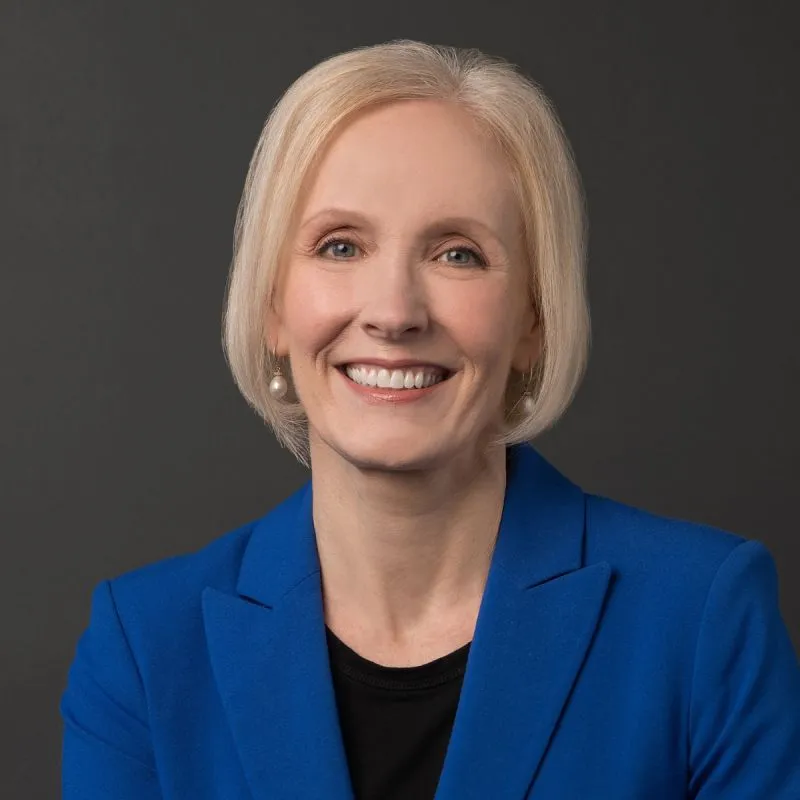
This morning, WellSpan Health announced a seven-year partnership with Philips that positions the Pennsylvania-based system as a co-developer of future health care technology.
The agreement includes a systemwide imaging modernization effort, a joint research agenda focused on AI and operational efficiency and a plan to co-create new products alongside Philips' R&D teams. WellSpan says the collaboration will help advance its goal of reclaiming more than 500,000 hours of workforce time annually.
It's not the type of announcement you see every day from a community health system, so I called Roxanna Gapstur, WellSpan's president and CEO, to learn more about the strategy behind the deal, what it means for WellSpan's AI ambitions and why she believes community health systems should play a larger role in health care innovation.
Find a portion of our interview below.
Editor’s Note: Responses have been lightly edited for length and clarity.
What was WellSpan’s relationship with Philips prior to this partnership?
We had a traditional vendor relationship five years ago, and then in the last five years, WellSpan has really stepped out around culture and competence to accelerate innovation for our strategic plan, WellSpan 2030. Part of that plan calls for personalization, simplification and transformation of the health care system, and with that, we began to evolve our relationship with several companies. You may have seen some of our strategic partnerships with others like AiDoc, Hippocratic AI and General Catalyst, so this has been a natural evolution for us to really deepen partnerships in service of accelerating our strategy.
I think Philips also recognized our growing competence around the ability to not just pilot innovation, but scale innovation across our organization and completely change how we provide care.
We're really excited about this new seven-year strategic alliance with them, because we'll not only be bringing new, advanced imaging and digital technology to our teams and patients, but we'll be doing the research and co-development alongside Philips to make sure those solutions are exactly what we need for health care going forward.
Why is that co-development piece so important to WellSpan? Where specifically do you see the most benefit from being able to collaborate on new technologies?
We've shied away from choosing 50 different point solutions, and instead looked at the large, integrated platforms that we know are going to be a key part of care delivery over the next five to 10 years, and [considered] how we can co-develop and shape those platforms to really bring the most value to our patients and organization.
That's what I think is different: Philips isn't just a point solution, an ultrasound or an MRI. There's an entire platform with artificial intelligence and diagnostics that go along with that. How those might be used not only in imaging or clinical equipment, but really across workflows, is something that Philips is also very interested in understanding. This co-development piece really leverages the strengths of both partners.
We see a lot of these sorts of partnerships coming out of academic medical centers. What does it signal for the industry as community health systems like WellSpan start to get involved in the development process?
The majority of people in the United States receive care through a community health system. There's a very small percentage of people who actually need and are able to go to academic health systems—most people across the U.S. don't live right next to one—so we think it's really important that the place where most people receive their care has the opportunity to shape and be part of research and development.
One of the partnership’s goals is to reclaim more than 500,000 hours of workforce time annually. Where are those hours being lost today, and what sorts of solutions will you prioritize to maximize time savings?
There is a significant administrative burden to health care across teams. I think a lot of times, our clinical teams get the limelight on documentation and things that take them away from the patient, but there is as much administrative waste in imaging, in billing, in claims, in finance as there is at the bedside.
Making sure that we can reclaim hours across our teams—both clinical and non-clinical—is really important. We're just taking a look at our results from this past year, and we exceeded our 500,000 hours this past year, so it just shows that there is a significant amount of redesign that the system needs to undergo in order to be more effective for our teams and our patients.
As you free up those hours, what will clinicians do with the extra time?
At times, we might not understand that there's actually 12 or 14 hours of work to do in an eight-hour shift, so we're asking people to do a terrific amount of documentation and other work while they're also providing patient care. Hopefully we will create more manageable roles for our teams and our patients that have eight hours of work in an eight hour shift.
Right now, we're not seeing people sitting around going, "Oh gosh, I have nothing else to do this shift.” Instead, I hope that there will be extra face time with patients, but I also hope that people will have a workflow and a sustainable job role that doesn't require them to be dashing from one thing to the next, and that they're able to provide a real quality service.
You mentioned earlier that WellSpan has had success not only piloting AI initiatives, but scaling them across the organization. That's where many health systems seem to get stuck. What has enabled WellSpan to move from experimentation to enterprise-wide deployment more effectively than others?
I talked earlier about culture and competence, and we did not have this culture or this competence six or seven years ago. We really worked hard to develop it. Part of it is having deep R&D at the beginning of a project and truly understanding the project, the workflows, the teams. And then that partnership between our innovation leaders, our human-centered design teams and our operational teams has been really key for us. You cannot scale if you haven't tested things in a real-world environment and ironed out the bugs.
We have an “innovation sprint” process, where we go through a four- to six-week deep dive at the beginning of the project, and we scale from there. The deep dive includes the pilot, so at the end of the six weeks, we're saying, “Is this a go or no go? Is this going to work or not?”
If it's going to work—if it's a good project and we see good metrics and outcomes—then we're scaling. We're not waiting, we're not saying, "Oh, well, let's try five more pilots to see if this was really true.” And that has worked well for us.
I will just emphasize again, this partnership between operations and the innovations team has to be there, and there has to be people from the actual care team or the operations team as part of the project, as part of the deep dive. We can't bring them in to their own workflows later and say, "Hey, we redesigned this for you.” That isn't going to be the most effective way to implement something.
Have you found that staff are open to participating in that development process, given all of the other requirements of their roles?
I think all of us recognize that there are opportunities to make health care better, and one of our values at WellSpan is, “Find a better way.” It is absolutely core to who we are as an organization, so we have not had difficulty engaging teams in making health care better. In fact, I think they want to do that, and they certainly want the best care for their patients. It's been a real passion and purpose for our teams to find a better way.
Research is a big component of the Philips partnership. What does success look like on that front: peer-reviewed studies, commercialized products, specific clinical outcomes?
Yeah, I think it could be all of the above. We have a research department at WellSpan, we have some academic programs and we have grants, so we're familiar with the process. I think engaging with Philips around their research infrastructure and trying to understand what might be the best way to go forward where we don't have solutions today, co-developing and then researching those solutions is definitely part of the plan.
Is there a specific problem that you believe this partnership with Philips can help solve?
There are several—it's a target-rich environment, as you can imagine. But let's just talk a little bit about efficiency, workflows and productivity with our teams.
We've seen Philips do some terrific work over the last few years on making imaging more efficient, patients spending less time in scanners and all of that—but what we're really excited about is the potential of digital twins, avatars and AI assistants that could be incorporated into imaging to both help the patient and the team make it through that whole process much, much more efficiently (and probably with better emotional intelligence around assisting patients, because it can be intimidating to go through a scan).
Do you envision this partnership creating products that could be used outside of WellSpan? Are you viewing this as a revenue-generating opportunity?
I don't think that's out of the question. We haven't gotten together yet for our initial [planning session to set] stakes in the sand and determine what work streams we would like to put into place for the first 12 months, but I think that's definitely going to be on the list of things that we discuss together.
C-Suite Shuffles
Where health care leaders are coming and going
- Ardent Health named Dave Caspers president and CEO.
- Caspers joined Brentwood, Tennessee-based Ardent Health in March 2025 and previously served as its chief operating officer.
- He succeeds Marty Bonick, who stepped down to “pursue other opportunities,” according to the company.
- Min Lee will become the new president of UNC Hospitals, headquartered in Chapel Hill, North Carolina, on July 20.
- She comes to UNC Health from UVA Medical Center in Charlottesville, Virginia, where she has been chief operating officer since 2022.
- Previously, Lee held hospital leadership roles at Emory Healthcare and Tower Health.
- The health care navigation and accessibility platform Transcarent selected Anjali Jameson as chief product officer.
- Jameson’s résumé includes product leadership roles at Amazon One Medical, UnitedHealth Group and Apple.
This is a preview of the June 4 edition of Access Health—Tap here to get this newsletter delivered straight to your inbox on Thursday mornings.