
 1 week ago
21
1 week ago
21
The Trump administration has issued a warning about a fast-moving outbreak of New World screwworm (NWS), a parasitic fly whose flesh-eating larvae are being detected increasingly close to the U.S. border, raising concerns about potential impacts on agriculture and wildlife.
The United States eradicated the screwworm in the 1960s. The outbreak reemerged in Panama and Costa Rica in 2023 and has since spread through all countries in Central America and into Mexico, where thousands of animal cases have been reported. Federal officials say confirmed detections have steadily moved closer to the U.S. border in recent months, including cases documented within a few hundred miles of Texas. According to federal data, the screwworm is not currently present in the United States, and there are no confirmed domestic infestations. However, the proximity of recent cases has elevated concern among agriculture officials and policymakers.
U.S. Agriculture Secretary Brooke Rollins said in a social media post that officials are tracking the threat closely as it advances through Mexico.
"Just held a virtual NWS briefing call with over 700 attendees from media to stakeholders to elected officials, to deliver a full update on the flesh-eating New World Screwworm pest as it nears our southern border — a threat that could potentially devastate American agriculture, livestock, and wildlife," Rollins posted on X on Tuesday afternoon. "In the Trump Administration, transparency is non-negotiable. We’re keeping the public updated in real time, shutting down rumors, and laying down the facts on exactly what we and our state partners are doing to protect American agriculture, livestock, and wildlife."
Newsweek reached out to the United States Department of Agriculture (USDA) by email for comment.
New World Screwworm Outbreak: What We Know
The New World screwworm is a parasitic fly whose larvae hatch in open wounds and feed on living tissue, causing severe injury and sometimes death if untreated. Unlike many other maggots that feed on dead tissue, screwworm larvae consume healthy flesh, making the pest particularly destructive.
The screwworm's eradication from the U.S. is estimated to save the U.S. livestock industry $900 million per year, the USDA said.
On June 1, Texas State Representative Don McLaughlin issued an urgent call to action, claiming that the destructive pest has been identified within one mile of the Texas border.
The USDA and the Centers for Disease Control and Prevention (CDC) have emphasized that the pest’s northward movement is being closely tracked through surveillance programs. These include regular updates on detections within several hundred miles of the U.S. and coordination with Mexican authorities to contain the spread.
To prevent entry into the U.S., federal and state agencies are deploying a series of containment measures, most notably the release of sterile male flies. This long-standing technique works by disrupting the screwworm’s reproduction cycle, as females that mate with sterile males produce no viable offspring, gradually collapsing the population.
Officials have restricted livestock imports from affected regions and are working with partners to monitor outbreaks and prevent the parasite’s spread. The risk stems largely from the movement of animals. Infected livestock, wildlife or even pets can carry larvae into new areas, allowing the parasite to spread geographically.
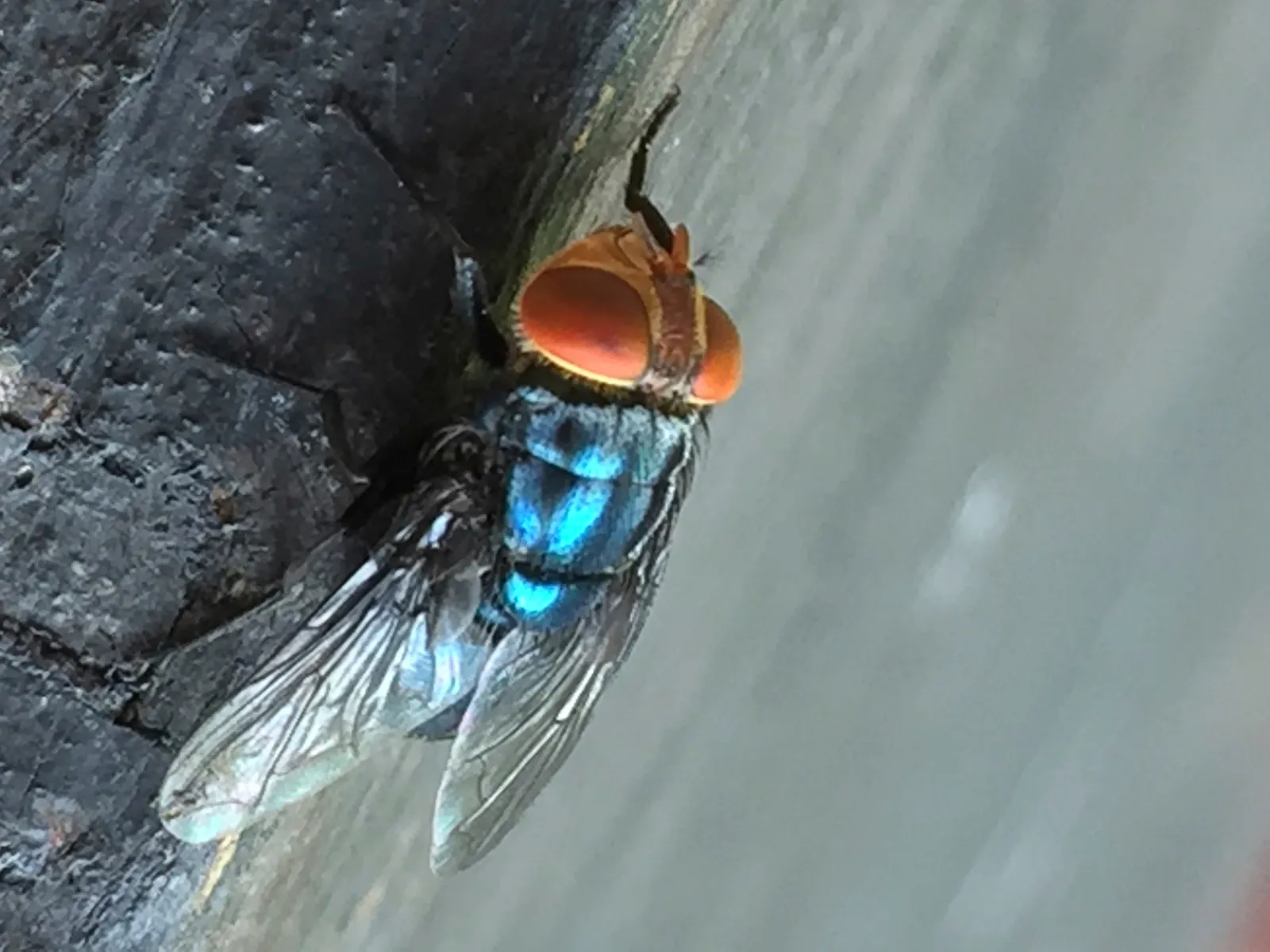
Can Flesh-Eating New World Screwworm Maggots Infect People?
Although the screwworm primarily affects livestock and wildlife, humans can become infected in rare cases. The infestation—known as myiasis—occurs when flies lay eggs in an open wound or body opening. When the eggs hatch, the larvae burrow into the tissue and begin feeding on living flesh, causing painful, progressively worsening wounds. In severe instances, untreated infestations can lead to extensive tissue damage and secondary infections.
Symptoms can include:
- Unexplained, painful wounds or sores that do not heal.
- A foul-smelling odor or bleeding from the site of the infestation.
- Seeing maggots or feeling movement in open wounds or sores or in the areas of the body such as the nose, mouth, eyes, ears, or genitals.
There has been at least one travel-associated case in the United States, which occurred in August 2025 after the patient returned to the U.S. after traveling to El Salvador. Officials advise people traveling to impacted areas to keep wounds clean and covered and seek medical care if signs of infestation occur.
Agricultural Impacts of New World Screwworm
The primary concern over the screwworm’s spread is its potential to devastate the livestock industry. The parasite targets warm-blooded animals, including cattle, sheep, horses and deer, with larvae feeding aggressively on living tissue and enlarging wounds.
Infestations can weaken or kill animals if not treated quickly, leading to economic losses for farmers and ranchers. The pest was historically one of the most damaging parasites in U.S. agriculture before eradication efforts succeeded decades ago.
What Happens Next
A renewed outbreak could disrupt livestock production, trigger trade restrictions and require costly eradication campaigns. Federal officials have warned that protecting the agricultural sector is a top priority, as even a limited outbreak could have significant economic and supply-chain impacts.
The Trump administration’s latest update underscores both the progress and fragility of decades-long eradication efforts. While the screwworm remains outside U.S. borders for now, the steady march of cases northward has placed authorities on high alert—prompting an aggressive, coordinated response to keep the flesh-eating parasite from reestablishing itself on American soil.