 2 hours ago
7
2 hours ago
7
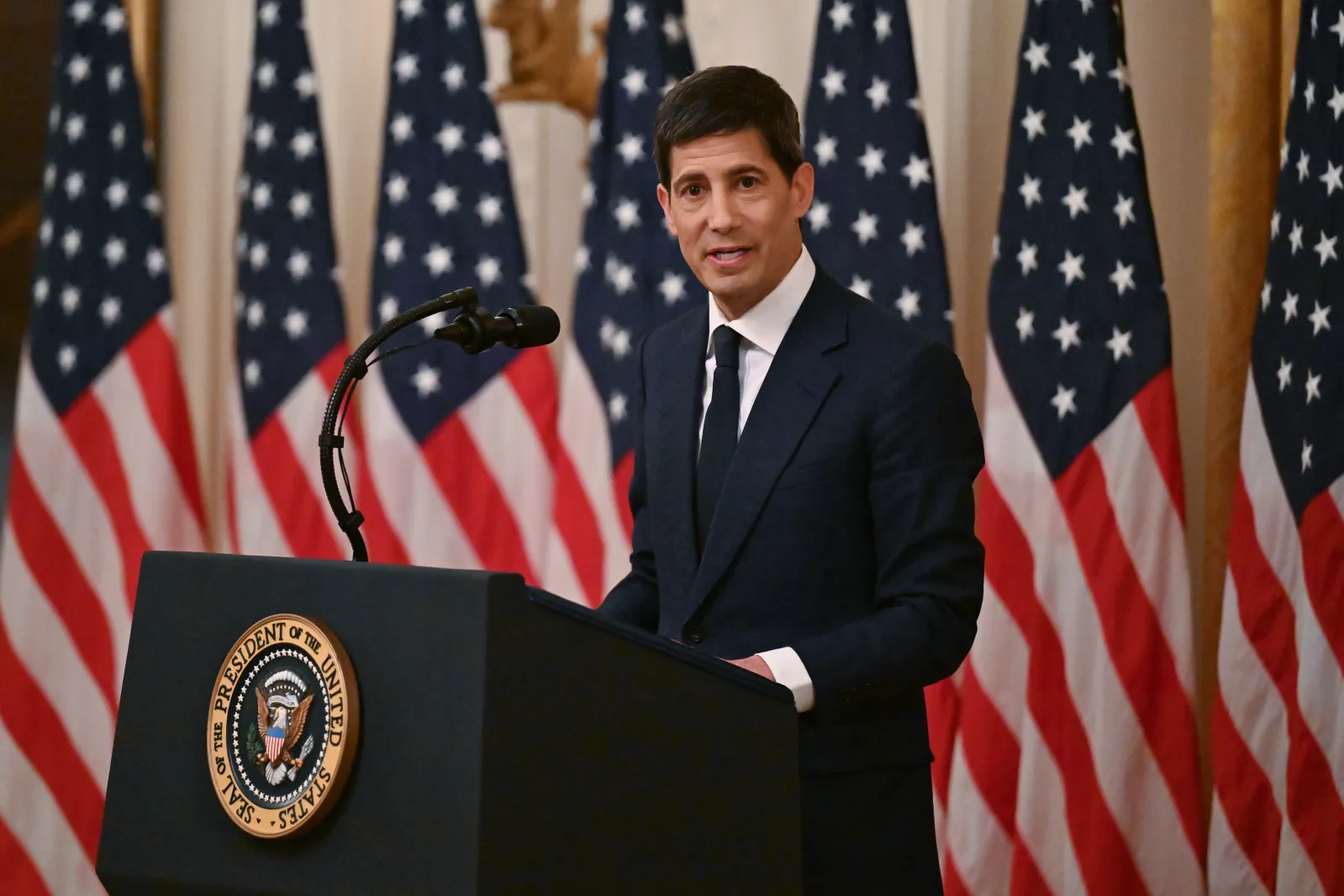
The Federal Reserve on Wednesday held interest rates, marking the first major policy decision under new chair Kevin Warsh and setting the tone for the U.S. economy in the months ahead.
The move comes at a pivotal moment for policymakers, who are balancing persistent inflation pressures and growing uncertainty about today’s economy.
Warsh’s decision is likely to be scrutinized as Americans are increasingly concerned about the cost of living and the direction of the economy.
Why It Matters
The Fed’s benchmark interest rate influences borrowing costs across the economy, from mortgages and credit cards to savings accounts and auto loans.
- Higher rates tend to cool inflation but raise borrowing costs.
- Lower rates can boost spending and growth but risk pushing prices higher.
Wednesday’s decision is especially significant because it is Warsh’s first rate call as Fed chair, and markets are looking for clues about how he intends to steer monetary policy going forward.
What To Know
The Fed has largely kept rates steady in 2026 after cutting them in late 2025. However, inflation recently climbed to around 4.2 percent, the highest in more than three years, complicating any push to lower borrowing costs.
At the same time, experts say the U.S. economy has shown resilience, with strong job growth and consumer spending, even amid the war with Iran.
“We have recently seen the Fed rate come down while mortgage rates ticked up. It is also a supply and demand issue,” Drew Powers, the founder of Illinois-based Powers Financial Group, told Newsweek.
“One thing we should keep in mind is that zero percent interest rates are not the sign of a healthy economy. It should cost something to borrow money.”
What Was the Federal Reserve’s Interest Rate Decision?
The Federal Open Market Committee (FOMC) voted to maintain its benchmark federal funds rate, which currently sits in a target range of around 3.50 percent to 3.75 percent.
"Economic activity is expanding at a solid pace despite elevated uncertainty that owes, in part, to the conflict in the Middle East. Productivity growth and capital investment are strong. Job gains have kept pace with the workforce, and the unemployment rate has changed little," the Fed said in a statement Wednesday afternoon.
"Inflation remains elevated relative to the Committee's 2 percent goal, in part reflecting supply shocks that have driven price increases in certain sectors, including energy. The Committee will deliver price stability."
The vote was 12-0.
What Does This Mean for Americans’ Wallets?
The Fed’s decision could ripple quickly through household finances.
With rates now unchanged, Americans can expect the following:
- Borrowing costs likely stay elevated
- Relief for consumers may be delayed
“On paper nothing changes,” Michael Ryan, a finance expert and the founder of MichaelRyanMoney.com, told Newsweek. “In real life it signals the Fed is still watching inflation. It doesn't give relief to borrowers and it doesn't reward savers. It's a continuation of pressure on everyone carrying floating-rate debt.”
Because rates have remained relatively high this year, many Americans are already facing elevated borrowing costs, even without new increases.
“Even though Warsh is more dovish, he’s one of 12 voting members of the Fed’s Board of Governors, and he’s going to have a hard time getting a majority of them to agree to cut rates in this current inflationary environment,” Melissa Cohn, the regional vice president of William Raveis Mortgage, said ahead of the Fed rate decision Wednesday.
“There’s really no way they can lower rates,” Cohn said. “We just need to wait and see what Warsh’s sentiment will be.”
What Are Federal Reserve Chair Kevin Warsh’s Views on Inflation?
Warsh has taken a complex stance on inflation and interest rates over time.
He gained a reputation as an inflation hawk concerned about rising prices during the Great Financial Crisis. But Warsh has also criticized the Fed for being too slow to cut rates and shown sympathy for lowering borrowing costs in some cases.
“Economic growth in the U.S. is poised to boom, but it’s being held down by bad economic policies coming from the central bank,” Warsh told Fox Business last year. “Bad supervision policies. Bad monetary policies, and a very confusing set of standards as we’ve gone from last year to this year. Interest rates should be lower.”
More recently, Warsh emphasized that the Fed must prioritize price stability while supporting growth.
“Our mandate at the Fed is to promote price stability and maximum employment,” Warsh said after taking his oath of office.
“When we pursue those aims with wisdom and clarity, independence and resolve, inflation can be lower, growth stronger, real take home pay higher, and America can be more prosperous, and no less important, America’s place in the world more secure.”
That mix of views means markets are closely watching whether he leans toward tightening policy to fight inflation or easing to support economic growth.
Poll: How Do Consumers Feel About the U.S. Economy?
Despite signs of economic strength, public sentiment is weak.
- Roughly 44 percent of Americans say they are financially worse off than a year ago, according to Federal Reserve Bank of New York data
- The share describing their situation as “much worse” rose to 13.3 percent, the highest since 2022
- Inflation is still a top concern, with many voters ranking it among their most pressing issues
This disconnect between economic data and consumer sentiment has become a key challenge, experts say.
“The Fed rate isn't one number that helps or hurts you uniformly,” Ryan said. “It hits your credit card, your mortgage, your car loan, and your savings account on completely different timelines and in completely different ways.”
When Is The Next Time the Federal Reserve Will Have Another Interest Rate Decision?
The Fed meets eight times per year to set interest rates. The latest meeting took place from June 16 to 17, 2026, and the next scheduled meeting is from July 28 to 29.
Each decision is announced at approximately 2 p.m. ET on the final day, followed by a press conference from the Fed chair.
What Happens Next
Looking ahead to future Fed rate decisions, inflation and economic growth data will play a key role.
Eyes will also be on whether the Fed, now led by Warsh, continues to signal a policy of holding steady or switches course to implement rate cuts or hikes.
“If interest rates do increase, many Americans will feel that uptick first in more expensive interest rates for credit cards, mortgages, auto loans, and other borrowing,” Alex Beene, a financial literacy instructor for the University of Tennessee at Martin, told Newsweek.
“The increase would only intensify affordability concerns, as more consumers are leaning on debt to fill the financial gaps of their monthly budgets as prices jump.”