 1 week ago
32
1 week ago
32
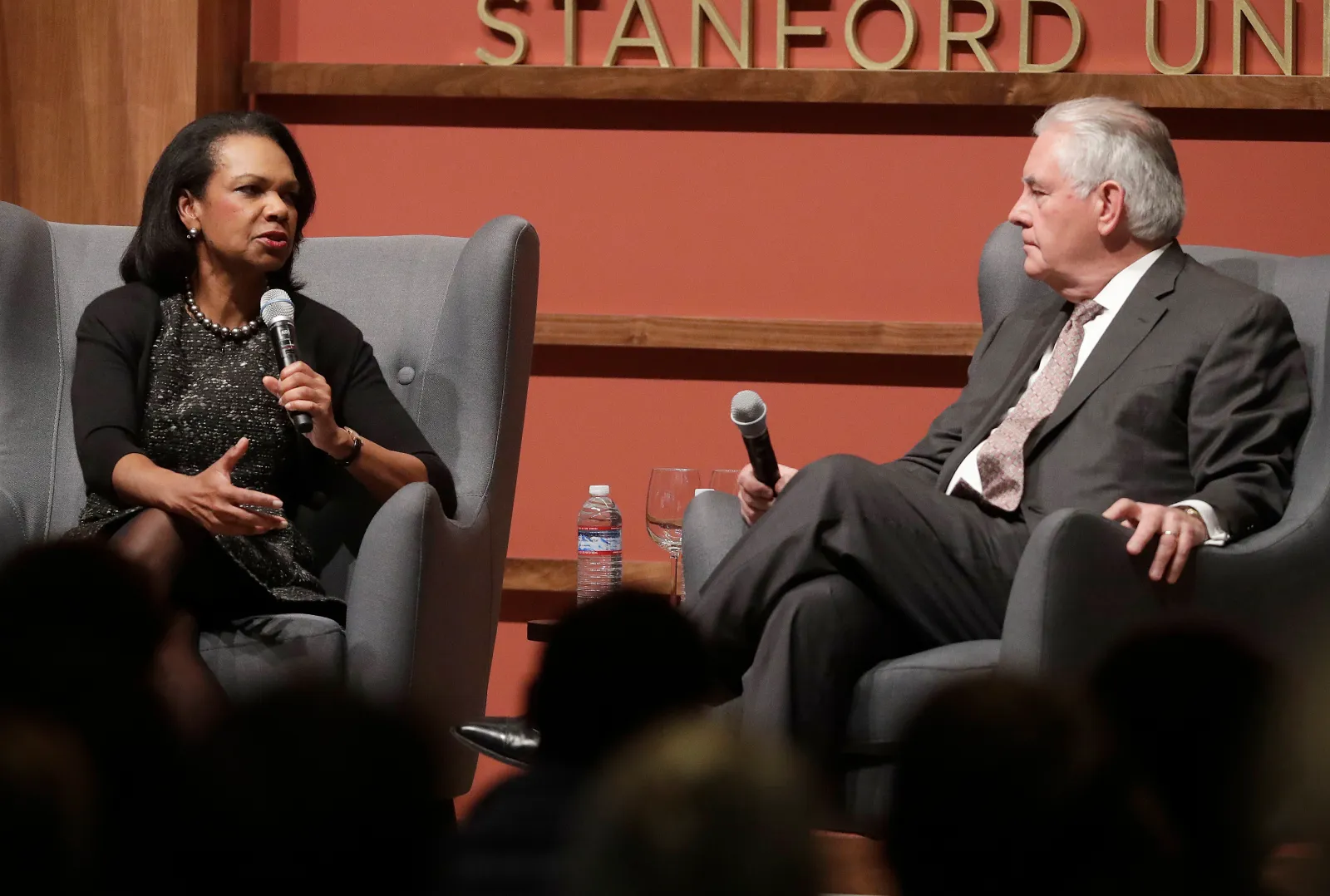
Condoleezza Rice, the director of Stanford University's Hoover Institution, has requested that a student newspaper withdraw a report alleging that the institution had received at least $3 million from a member of one of China's top political families who leads an influence and intelligence agency affiliated with the Chinese People's Liberation Army (PLA)
The explosive allegation was based on information from a whistleblower, according to the report in the Stanford Review that published on Monday, titled "Investigation: Stanford Receives Chinese State-linked Donations."
The report detailed a total of about $60 million in Chinese donations going back about a decade, saying that it aimed to create transparency around the university's Chinese donor entities and persons. The issue of foreign donations to American universities—which are extensive and often not publicly disclosed—has come under increasing scrutiny in media, by colleges and in the government in recent years amid concerns that they could influence research and decisions, and lead to vital technology loss.
The report said that a $3 million donation made in 2025 came from a person called Chen Yuan: "[T]he name, nationality, and the financial capacity implied by the gift most closely match Chen Yuan, the chairman of the China Association for International Friendly Contact (CAIFC), who has extensive documented ties to Stanford spanning two generations of his family."
However, it caveated: "The disclosure does not identify which 'Chen Yuan' made the gift."
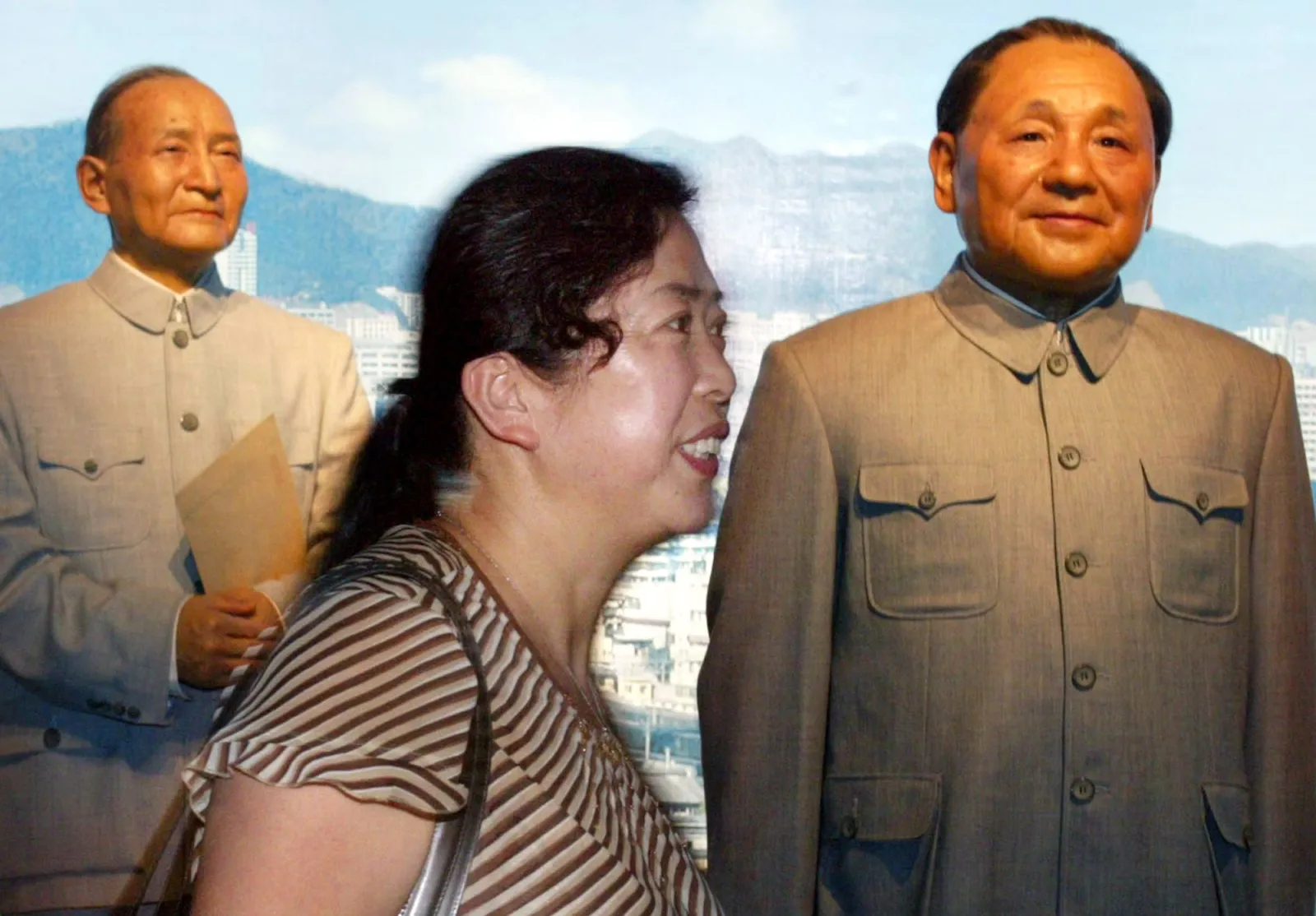
Chen Yuan is the son of one of China's founding Communist Party leaders, Chen Yun. The U.S. government says CAIFC is subordinate to the Liaison Bureau of the Political Work Department of the Central Military Commission, China's top military body. The Political Work Department is a Chinese Communist Party (CCP) organ responsible for political warfare and influence operations.
Chen Yuan and the Beijing-based CAIFC could not be reached for comment.
Follow the Money
The money arrived at the university via a circuitous route—a San Francisco law firm that specializes in nonprofit organizations, according to the Review, noting that it was the only donation it found that was channeled to the university this way.
It may have been an effort to hide the source, according to the investigation: "Routing a foreign gift through a legal intermediary can make it difficult to verify the donor's true identity, as it obscures the funds' true source."
In a statement issued on Tuesday, Rice, who served as U.S. secretary of state under former President George W. Bush, pushed back strongly against the allegations.
"The Stanford Review article of June 1, using innuendo and speculation, incorrectly identifies a donor to Hoover as the chairman of the China Association for International Friendly Contact (CAIFC)," Rice said.
"The article admits that it does not actually know the identity of the named person," she said.
The paper was told that they were wrong by a Hoover scholar who asked them not to publish what was a case of "mistaken identity," Rice said, referring to the historian Glenn Tiffert, a China specialist at the institution. "This is irresponsible and unconscionable," Rice said.
"As such, the Office of the General Counsel of Stanford, as well as appropriate federal and local authorities including the Department of Education, and the Chairman and Ranking Member of the House Select Committee on China have been notified of this misuse of leaked confidential reporting information," Rice said.
"We respectfully ask that the Review withdraw their story immediately," she said.
Rice suggested that Hoover, which has a reputation for being critical of China and of communist systems overall, was an unlikely candidate for a nefarious political donation from the CCP.
"The Hoover Institution has supported the efforts of dissidents and freedom fighters against authoritarian regimes, including China, for more than a century. That is why our archives hold so many treasured papers and testimonies of these brave people—given to us to protect their stories and preserve them for the historical record. Any support that the Institution receives is consistent with its mission and these values," she said.
Unclear Source
One of the authors of the report, Elsa Johnson, a student of East Asian studies at Stanford who previously worked as a research assistant at Hoover, told Newsweek that she was determined to "get to the bottom" of the money flow from China.
"We don’t know for certain whether it is that Chen Yuan or not, but our ultimate goal is to get to the bottom of this donation," Johnson said.
"We emailed people at Stanford and met with some of them. We felt that their cryptic responses were not a flat-out denial and went ahead with the piece. I’m not surprised by the pushback and was expecting this," Johnson said.
"We felt that the donation being made through the San Francisco law firm was strange and given Chen Yuan’s ties for Stanford it’s not unreasonable to believe the Chen Yuan of CAIFC is the donor," she said.
"I hope that the Chen Yuan mentioned in the article is not in fact the donor. I have tremendous respect for the Hoover Institution and it would be a shame if they really accepted such a donation," Johnson said.
The U.S. government has increasingly sought to scrunitise research security and academic integrity, as well as unwanted knowledge outflow and technology transfer to China, after decades of open collaboration, as the U.S. and China compete for science and technological dominance.
Seeking Science, and Influence
In total, the investigation by the Review said there had been about $60 million in donations to the university from Chinese individuals and entities over the last decade, with about $34 million coming from three persons who had positions in organisations that are part of the Communist Party's United Front political influence and interference system.
Other donations came from Chinese state-linked entities, including a PLA subcontractor, and the state physics research institute of the Chinese Academy of Science—for a superconducter detector array telescope that was subsequently sent to Tibet. Prominent technology businesses and leaders also donated.
Some donations were tied to specific research projects but others were for unspecified purposes, including one for $3.9 million from e-commerce platform JD.com, the investigation said. Still another was for work on "the diffusion of information."
The China National Petroleum Corporation (CNPC) provided $380,000 in contracts from 2023 to 2026 for an unnamed Stanford investigator to study cement integrity for long-term hydrogen storage, the report said.
"Huawei Technologies provided $250,000 in contracts and gifts from 2019 to 2020, after the U.S. Bureau of Industry and Security placed it on the Entity List. The purpose was not specified," it said.
Stanford spokesperson Angie Davis told Newsweek that many of the contracts and grants listed in the article occurred several years ago and were no longer active. "For example, Stanford has maintained a moratorium on Huawei funding since 2018."
Davis, who is assistant vice president for strategic communications and media relations, did not answer emailed questions about specifics, principally the identities of donors.
"Stanford's mission of research and education benefits from the financial support of individuals and organizations across the United States and some from abroad, including alumni, parents, and friends with longstanding relationships with the university," Davis said.
"It is Stanford's practice not to disclose donor names or gift information without explicit authorization from the donor. In this case, we are not able to share additional information about individual gifts," she said.
"Stanford conducts rigorous due diligence for all philanthropic gifts and sponsored research, with enhanced scrutiny applied to international sources, particularly those from countries of concern. This includes restricted party screening, assessment of ties to foreign governments, and evaluation of research security implications," Davis said.
'Unknown, Untracked' Money
Stanford was just one of many U.S. academic institutions that had accepted large amounts of problematical funding from China, said Jeffrey Stoff, the founder of the Center for Research Security and Integrity in Washington, D.C.
"This particular story provides a tiny window into unknown, untracked, undisclosed transfers of money, and with that the influence that our main adversary is bringing into our academic research ecosystem," Stoff told Newsweek.
"They're not donating it for research on cultural anthropology, or for understanding each other's societies and history. Critical STEM, that's what most of the money is going to," Stoff said.
Donations were often "disguised, contracted research for Chinese institutions" and were occurring in areas "where we are in direct competition with China" including its military, Stoff said.