 1 hour ago
17
1 hour ago
17
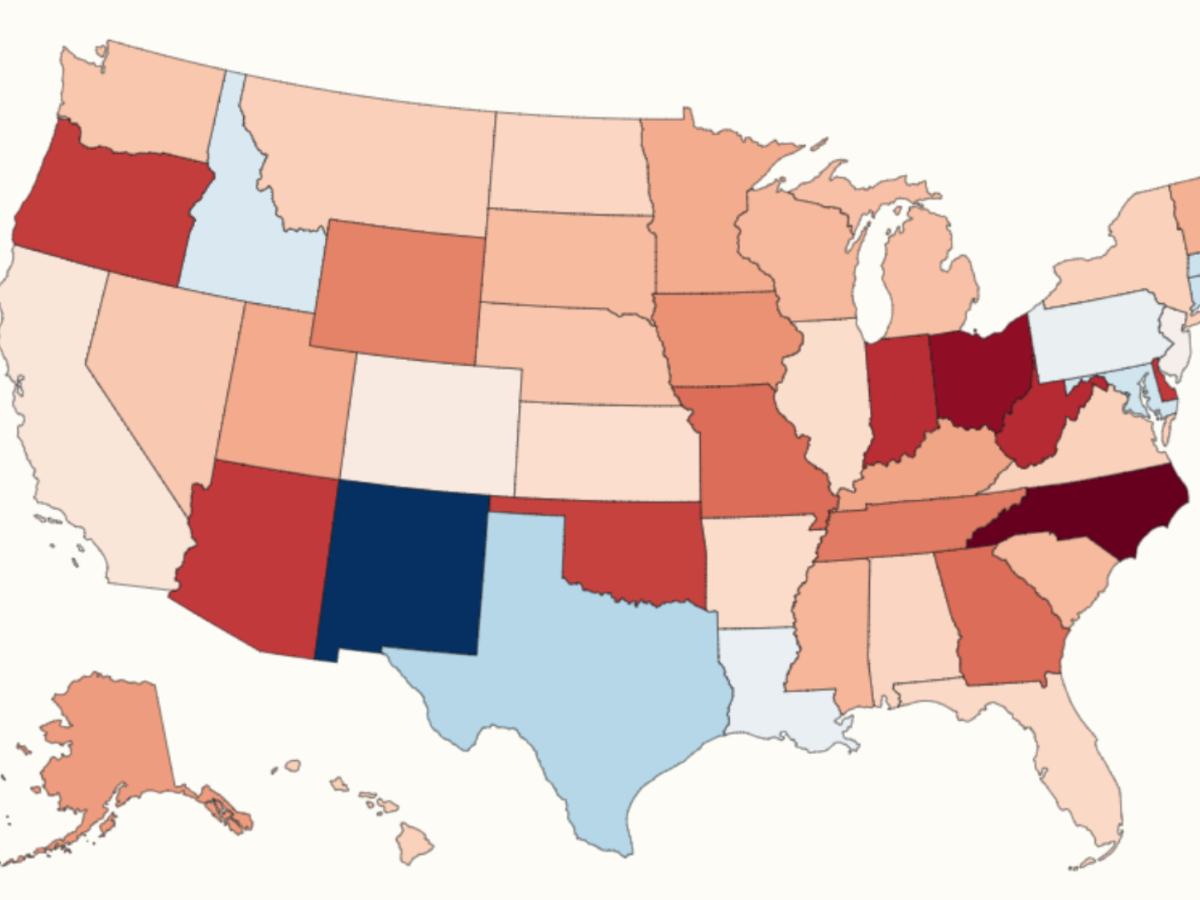
America’s data centers consumed 183 terawatt-hours (TWh) of electricity last year, more than Ohio uses in 12 months. The International Energy Agency reports that demand continues to grow at 15 to 20 percent annually as AI output increases, and the national grid is now under significant strain.
The North American Electric Reliability Corporation (NERC) warns that much of North America is at risk of supply shortages. In particular, the PJM grid, which covers 13 states and Washington, D.C., is the most exposed. Forecasted data center expansions have pushed its capacity bill to $16 billion.
To meet demand, America’s tech giants are turning to nuclear power, striking deals for steady, carbon-free electricity in what experts are calling a “nuclear renaissance.”
John Moura, director of reliability assessments and performance analysis at the North American Electric Reliability Corporation told Newsweek, “Existing nuclear plant life extensions and select plant restarts can provide meaningful reliability benefits because the infrastructure largely already exists.”
Microsoft and OpenAI have agreements to open power centers in Ohio. The software giant also has a footprint in Illinois while OpenAI is additionally building in Ohio in partnership with Oracle, Blackstone, and Related Digital.
The Redmond, Washington-based Microsoft has also inked a deal with Constellation Energy, the nation's largest nuclear power provider, committing more than $1.5 billion to restart Pennsylvania's Three Mile Island nuclear plant, supported by a $1 billion federal loan from the U.S. Department of Energy.
Separately, Meta signed a 20-year power purchase agreement with Constellation Energy.
The U.S. government is also backing nuclear energy development across small modular reactors (SMRs), which offer compact, factory-built reactors that are faster and cheaper to deploy than traditional plants. The U.S. Department of Energy selected the Tennessee Valley Authority and Holtec as the first recipients of $400 million each in funding to advance small modular reactor deployments.
Partnership tie-ups are a big part of the data center power equation. Google signed a corporate agreement with Kairos Power to purchase energy from a fleet of advanced SMRs, adding up to add up to 500 megawatts of clean power to the grid. Amazon expanded its partnership agreement with Talen through 2042, part of its larger $500 million push into nuclear technologies, partnering with Dominion Energy and Energy Northwest to build SMRs near its data center hubs in Virginia and Washington.
However, not every project is moving smoothly. Wonder Valley, an off-grid 7.5-gigawatt, 58-building data center campus in northwestern Alberta, is facing multiple challenges, including no finalized land purchase and no new provincial permits. Its sister site, Wonder Valley Utah, is also receiving community pushback.
The projects are by O’Leary Ventures, a company headed by celebrity investor and “Shark Tank” star Kevin O’Leary. He blames Chinese government interference and foreign-funded propaganda for the backlash against his mega-data center developments.
In a recent appearance on Fox News, O’Leary said, “"Who would want us to stop building our electrical grid? Who would want to stop us from having the compute capacity to develop AI? Which adversary would want that? There's only one, it's China."
New nuclear plants must secure licensing and permits, scale supply chains, and prove reliable operations before they will be a viable solution. These requirements are unlikely to be met in the short-term.
It took Georgia Power 15 years to open an expansion of its Plant Votgle nuclear facility. The price tag on the two-unit expansion was $36.8 billion (more than double the original $14 billion estimate) by its 2024 ribbon cutting.
Jay Dietrich, research director of sustainability and energy at Uptime Institute told Newsweek, “Meeting the AI infrastructure power demand will require data center operators to shift development approaches, co-developing their projects with the new on-grid wind, solar, and natural gas generation and battery storage required to power the facility.”
Dietrich cited natural gas generation as a short-term option that is widely deployable and available now. For geothermal energy and SMRs, it will be at least another decade before they are ready to support data center energy consumption.
Prominent Silicon Valley- based venture capital firms including DCVC (Data Collective), Founders Fund and Andreessen Horowitz (a16z) have invested millions into nuclear fission and fusion startups. DCVC is heavily invested in Oklo, a startup with OpenAI's CEO Sam Altman as chairman. That company is developing fast neutron reactors fueled by HALEU (high-assay, low-enriched uranium), which can pull power from recycled nuclear waste.
The DOE estimates that the U.S. has accumulated over 90,000 metric tons of spent nuclear fuel from commercial nuclear power plants as of early 2026.