 1 day ago
16
1 day ago
16
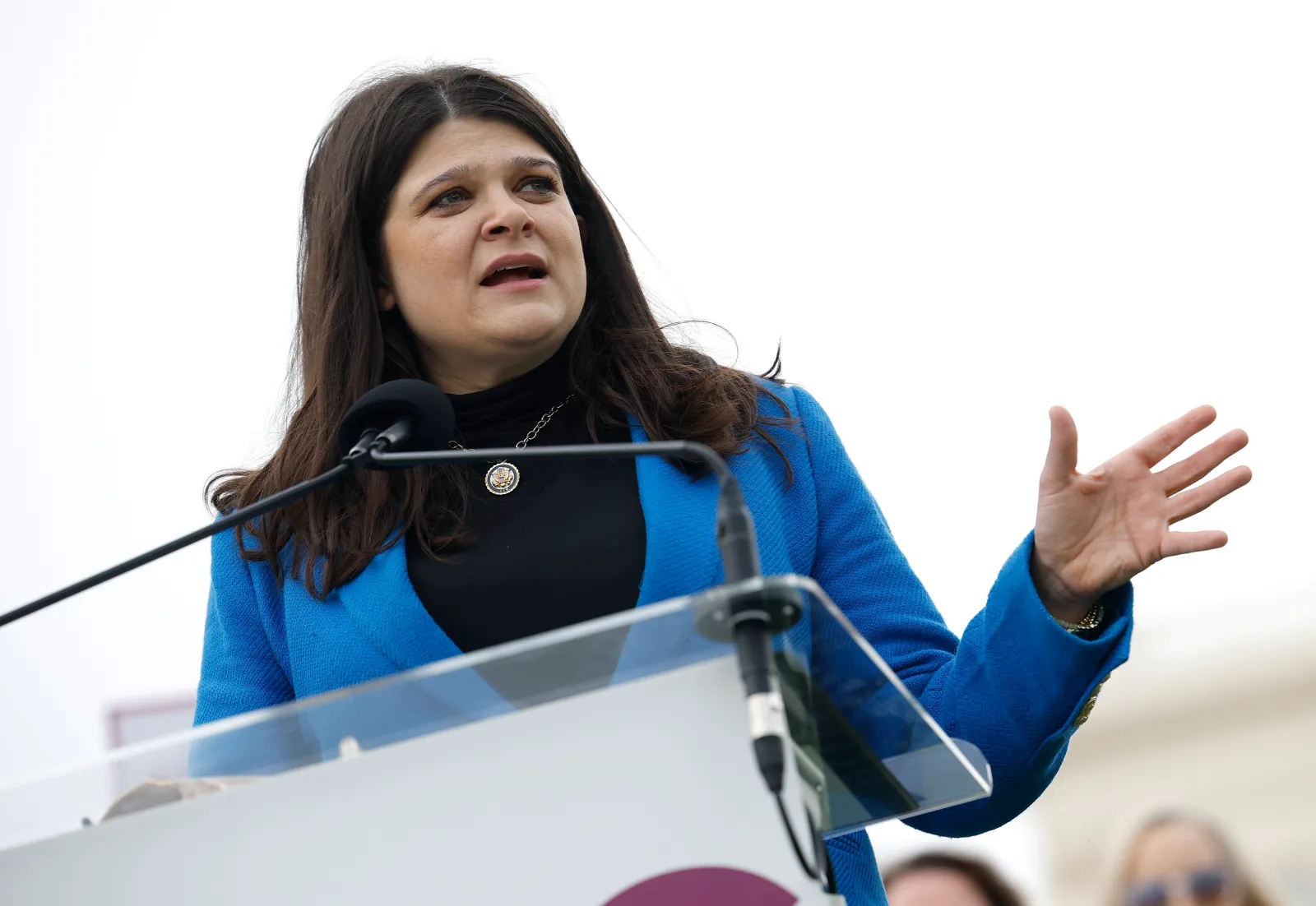
Senate Democratic Leader Chuck Schumer said Representative Haley Stevens has the “best chance” of winning Michigan’s Senate race in the 2026 midterm elections, a must-win for the party if they hope to flip control of the chamber.
What To Know
- Democratic Senator Gary Peters is retiring at the end of his term.
- That leaves open a seat in a key battleground state that President Donald Trump won by fewer than 2 points in the 2024 presidential race.
- Michigan’s Senate race is viewed as among the most competitive ahead of November.
- Democratic candidates include Stevens, state Senator Mallory McMorrow and former Wayne County health official Abdul El-Sayed.
Republicans hope a splintered Democratic field could produce a weaker nominee, bolstering Republican Mike Rogers’ campaign. Democrats, however, believe that Trump’s declining national approval rating will leave their eventual nominee in a stronger position.
Still, the question of electability hangs over Michigan Democrats ahead of the primary later this year.
What Did Schumer Say About Stevens?
Schumer told Punchbowl News he believes Stevens, a centrist who represents a suburban district near Detroit, would be the best option in the race.
“I think she has the best chance to win,” he told the publication.
Newsweek reached out to the El-Sayed, McMorrow and Stevens campaigns for comment via email.
Which Democratic Candidate Polls Best Against Rogers?
Latest polls of the race do show Stevens in a better position than El-Sayed or McMorrow against Rogers.
A TIPP Insights poll, which surveyed 1,154 likely voters from May 20-23, showed:
- Stevens up 7 points with 48 percent to Rogers’ 41 percent.
- McMorrow up 4 points with 45 percent to Rogers’ 42 percent
- El-Sayed led by only a single point with 43 percent compared to Rogers’ 42 percent.
An earlier poll from Mitchell Research & Communications, a well-known Michigan pollster, gave Rogers a lead over each of the Democratic candidates. It showed:
- Rogers leading Stevens by 3 points, with 42 percent to her 39 percent.
- McMorrow also trailed with 40 percent to Rogers’ 43 percent.
- Rogers had 42 percent against El-Sayed, who received 41 percent support in that poll.
It surveyed 606 likely voters from May 1-7 and had a margin of error of ±6 percentage points.
An earlier Glengariff Group poll, sponsored by the Detroit Regional Chamber, showed Rogers leading Stevens by 2 points (44 percent to 42 percent), McMorrow by 2 points (43 percent to 41 percent), and El-Sayed by 5 points (45 percent to 40 percent). It surveyed 600 likely voters from April 28 to May 1 with a margin of error of plus or minus 4 percentage points.
Can Haley Stevens Win the Primary?
Stevens, despite polling best against Rogers, has struggled to carve out a clear lead in Michigan's Democratic primary. El-Sayed, a favorite among progressives, has led recent polling.
A recent Lake Research Poll, an El-Sayed internal, showed him up with 34 percent of Democratic primary voters compared to Stevens’ 31 percent. McMorrow trailed with 19 percent support. An additional 15 percent were still undecided. It surveyed 600 likely voters from May 26-28 and had a margin of error of ±4 percentage points.
The TIPP Insights poll found Stevens up with 36 percent, compared to El-Sayed’s 31 percent and McMorrow’s 13 percent. The Mitchell Research & Communications Survey gave El-Sayed an advantage with 28 percent compared to 18 percent for Stevens and 17 percent for McMorrow.
Meanwhile, the Glengariff Group poll gave Stevens 25 percent, El-Sayed 23 percent and McMorrow 16 percent.
Those polls all showed a large number of undecided voters—36 percent in the Glengariff Group survey, 38 percent in the Mitchell poll and 19 percent in the TIPP Insights poll. Those undecided voters will be critical to the eventual outcome of the race.
How Michigan Emerged as a Swing State
Michigan emerged as an electoral battleground over the past decade. While former President Barack Obama carried the state easily in both of his runs—by more than 16 points in 2008 and by just under 10 points in 2012—Trump flipped it in 2016, carrying it by less than half a percentage point.
Trump made gains across the state due to his strong showing among white voters in rural areas who had backed Obama twice. He lost ground in the suburbs around Detroit and Grand Rapids, but those rural gains made up for it. Democrats have struggled to win back those voters in significant numbers in the past decade, but have continued to make gains in the suburbs.
The state flipped back to Democrats in 2020, when former President Joe Biden carried it by just under 2 points. But Trump won it again in 2024 by about 1.4 points—the strongest showing for a Republican presidential candidate since 1988.
At the same time, Democratic Senator Elissa Slotkin managed to win an open seat by less than half a percentage point in 2024.
Former Vice President Kamala Harris lost significant ground among Michigan’s large Arab American community, many of whom declined to support her due to the Biden administration’s strong support for Israel amid its conflict with Hamas and the humanitarian crisis in Gaza. Whoever wins the Senate nomination will be tasked with winning back those voters in November and will have to walk a careful line to hold support from both the Arab and Muslim voters as well as the state’s Jewish community.
El-Sayed is the favorite to win the nomination on prediction markets, holding a 72 percent chance of winning on Kalshi and a 69 percent chance on Polymarket as of Thursday.
Prediction markets allow traders to buy and sell contracts tied to political outcomes and current events, aggregating real‑money wagers into probability estimates. Prices fluctuate as traders react to polling, fundraising, candidate developments and broader political trends. They measure trader sentiment at a given moment but do not always accurately predict the future.
The 2026 Senate Map
Midterm elections are generally viewed as a referendum on the sitting president, and the president's party historically loses seats in the midterms. President Trump’s declining national approval rating, which has fallen amid concerns over inflation and the cost of living, has fueled Democrats’ optimism that 2026 could be a “blue wave” year.
But Democrats may struggle to flip the Senate even in a strong year.
Republicans hold a 53-47 majority, so Democrats must flip four seats to win control. The vice president serves as the tiebreaking vote. In addition to Michigan, Democrats are defending a seat in another Trump-won state. Senator John Ossoff is running for reelection in Georgia, a race deemed Lean Democrat by the Cook Political Report.
Maine and North Carolina are viewed as Democrats’ best pickup opportunities. Harris won Maine by about 7 points in 2024, but GOP Senator Susan Collins is viewed as a strong opponent who has won tough races in the past. Democrats have nominated progressive Graham Platner to challenge her in November.
Meanwhile, GOP Senator Thom Tillis is retiring in North Carolina, leaving the race between Democratic former Governor Roy Cooper and Republican Michael Whatley in a state that backed Trump by about 3 points.
But there are no other Senate races in Harris-won or single-digit Trump states, meaning Democrats have to expand the Senate battleground and compete in more conservative areas if they want to win a majority. They are targeting GOP-held seats in Alaska, Iowa, Ohio and Texas as potential states to flip.
Prediction markets favor Republicans to win the Senate. The GOP had a 56 percent chance on both Kalshi and Polymarket of holding onto their majority as of Thursday.
What Happens Next?
Michigan’s primary is set for August 4, 2026, so candidates still have several months to make their cases to voters ahead of the election. The race is considered a toss-up by forecasters such as the Cook Political Report and Sabato’s Crystal Ball.
On Thursday, Kyle Kondik and J. Miles Coleman of Sabato’s Crystal Ball wrote in an update that there are “questions about the quality of the eventual Democratic nominee in the open seat in Michigan, to the point where a race that probably could or should already be in the Democratic column does not yet seem to be.”