
 1 week ago
23
1 week ago
23
Most smartwatches are very good at one thing: collecting data you'll never fully understand. Step counts, heart rate variability, blood oxygen readings - it all ends up buried in a dashboard that rewards the obsessive and confuses everyone else. Samsung wants to change that entirely with the next Galaxy Watch, and it's using a major Samsung Health app update to lay the groundwork.
Samsung announced today that a significant overhaul of the Samsung Health app is on the way, with the rollout beginning June 8. The update acts as a preview of what the next-generation Galaxy Watch will fully deliver, but the direction of travel is clear: AI takes raw biometric data and converts it into concrete recommendations: when to rest, when to push harder, when to pay closer attention to what your body is telling you.
What the New Features Actually Do
The centerpiece is Vitals.
Each morning, it cross-references five overnight bio-signals - heart rate, heart rate variability, respiratory rate, skin temperature, and blood oxygen - against your personal resting baseline, and only flags something when it detects a meaningful deviation. The idea is to help you recognize whether you need more recovery time or might be coming down with something, without the constant low-grade noise of unnecessary alerts.
Cardiovascular tracking gets a similar upgrade. Samsung is retiring its existing Vascular Load feature in favor of a new Heart Health Score, which pulls together sleep, stress, activity, and body composition data into a single daily metric.
For workout planning, Daily Cardio Load measures accumulated cardiovascular strain from aerobic exercise and uses it to recommend both training intensity and recovery windows - with the explicit goal of balancing effort against the risk of burnout.
Rounding out the new additions, Fitness Index looks at heart rate, daily steps, and VO2 max, then benchmarks results against similar users and generates personalized goals based on individual strengths and weaknesses.
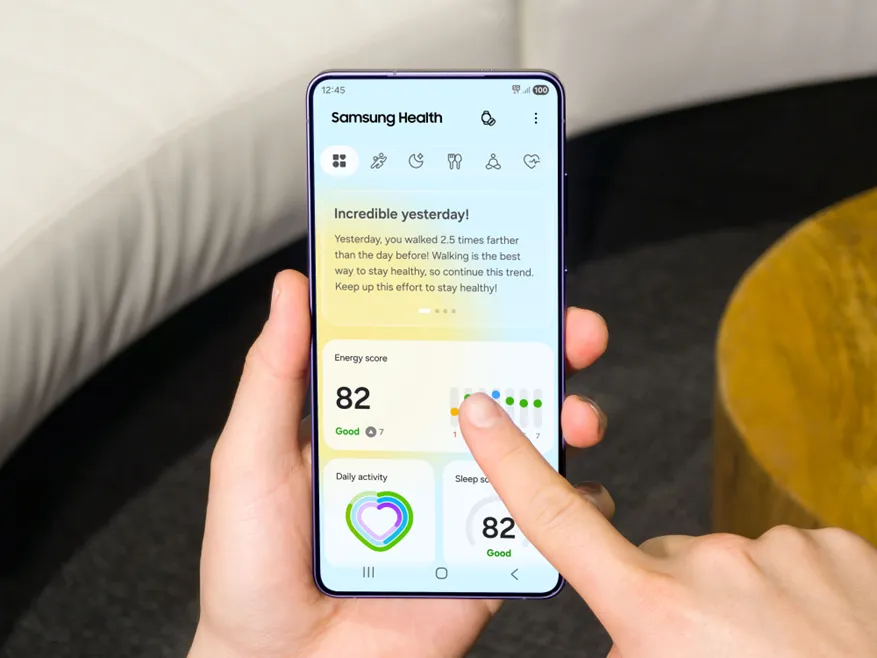
The app itself has been reworked to match this new philosophy. Samsung Health now organizes everything around five core pillars - Sleep, Activity, Nutrition, Mindfulness, and Vitals - with an AI-powered Energy Score and daily wellness tips front and center on the home screen, giving users a single view of how their habits connect.
There's also a new Hearing Health feature: Galaxy Watch sensors monitor ambient noise levels throughout the day and deliver personalized insights to help protect hearing, whether that's a noisy commute or a high-volume workout.
Samsung's Play Against Apple
This push puts Samsung in direct competition with Apple, which has spent years establishing Apple Watch as the serious health wearable. Irregular rhythm notifications, crash detection, its own Vitals feature in watchOS 11. Samsung has had competitive hardware for some time but has consistently trailed on the software intelligence side.
This update looks like the most deliberate attempt yet to close that gap. There's also a strategic dimension to the timing. Samsung planned the June 8 rollout as a showcase for the upcoming Galaxy Watch, and per Android Authority, codenames consistent with a Galaxy Watch 9 family surfaced recently, with an Unpacked event reportedly expected in London on July 22.
An AI-powered fitness assistant that can answer health questions and track goals within the app has already appeared in app code but was absent from today's announcement, which suggests Samsung is saving it as a hardware launch headline.
Hon Pak, Samsung's SVP and Head of Digital Health, discussed the company's intention:
"Samsung Health is evolving to connect health data measured by Galaxy Watch with AI-based insights, enabling users to understand their physical and mental condition more easily and intuitively."
The feature set is genuinely compelling. Whether Samsung can execute it smoothly enough that ordinary users actually trust the guidance and change their behavior because of it is the harder problem. That's true of every AI health pitch right now. The difference here is that Samsung has the scale, the ecosystem, and the hardware runway to actually pull it off.