
 3 days ago
25
3 days ago
25
NASA on Tuesday announced the four astronauts who will take part in its Artemis III mission, a key step in the agency’s long-term plan to send humans to the moon for the first time in more than a half-century.
The crew—drawn from NASA and the European Space Agency (ESA)—will not land on the moon under the current plan but will carry out complex tests designed to ensure a future lunar landing mission can proceed safely.
Artemis III is part of NASA’s Artemis program, which began with an uncrewed test flight in 2022 and continued with Artemis II, a crewed mission around the moon in April. The Artemis III mission is currently targeted for launch no earlier than 2027 and is intended to test systems and operations—including coordination with commercial partners—needed for future lunar landing missions.
"Artemis III will demonstrate the power of American innovation and international partnership as we test complex rendezvous and docking operations and advance the technologies that will one day carry us deeper into the solar system," NASA Administrator Jared Isaacman said. "This mission will require the most awe-inspiring coordination of heavy-lift rocket launches in history, drawing on the talent and capability of teams across government and the spaceflight community."
Who Are the Artemis III Astronauts?
The four astronauts named to the Artemis III mission are:
- NASA astronaut Randy Bresnik, commander
- ESA astronaut Luca Parmitano, pilot
- NASA astronaut Andre Douglas, mission specialist
- NASA astronaut Frank Rubio, mission specialist
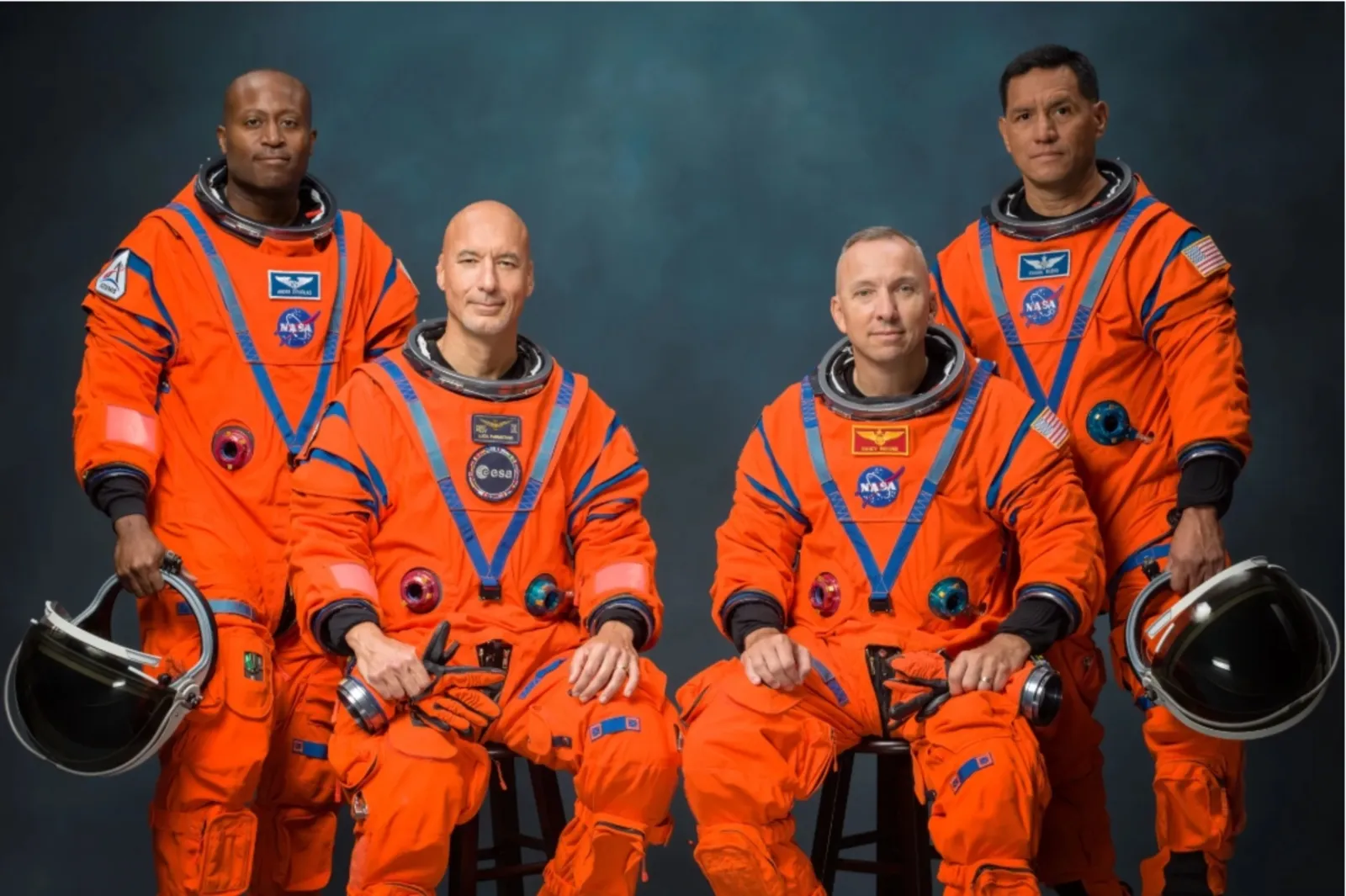
Bresnik has flown to space twice, including a 2009 space shuttle mission to the International Space Station (ISS) and a later trip to the ISS. He has served as a flight engineer and commander. A U.S. Marine colonel and test pilot, he was selected as a NASA astronaut in 2004 and has logged more than 7,000 flight hours. Since 2018, he has held a leadership role in the Astronaut Office, helping oversee development and testing for Artemis mission systems.
Parmitano is a two-time spaceflight veteran and was selected as an ESA astronaut in 2009. He has served as a flight engineer and later commanded Expedition 61 on the ISS, becoming the first Italian to lead the station. A trained test pilot and Italian Air Force colonel, he has logged more than 2,000 flight hours and holds degrees in political science and experimental flight test engineering.
Douglas will make his first spaceflight on Artemis III after being selected as part of NASA’s 2021 astronaut class and previously supporting Artemis II as a backup crew member. A Virginia native, he has a background in mechanical engineering from the U.S. Coast Guard Academy and holds multiple advanced degrees, including a doctorate in systems engineering. Before joining NASA, he served in the Coast Guard on missions such as search and rescue and drug interdiction, and later worked at Johns Hopkins Applied Physics Laboratory on projects involving autonomous systems, space exploration technologies, and undersea platforms.
Rubio will be making his second spaceflight after a record-setting mission aboard the ISS, where he spent 371 days in orbit—the longest single-duration flight by a U.S. astronaut. Selected by NASA in 2017, he is a U.S. Army officer with more than 28 years of service and has a background as an aviator and physician, holding a medical degree from the Uniformed Services University of the Health Sciences.
Bob Hines will serve as a backup crew member, training alongside the primary Artemis III astronauts and stepping in if needed. He previously piloted NASA’s SpaceX Crew‑4 mission and was selected as an astronaut in 2017 after working as a research pilot at Johnson Space Center. A U.S. Air Force colonel, he has more than 27 years of experience as an instructor, fighter and test pilot.
“These four brave individuals represent the next step in advancing humanity into deep space," Casey Dreier, chief of space policy at The Planetary Society, told Newsweek. "Artemis stands as a testament to the achievements possible when America works closely with its allies in pursuit of a great challenge.
"Yet the agency faces some of its largest budget cuts in history, which undermine the very alliances, partnerships and science needed to ensure our long-term success at the moon. We hope that this moment reminds our political leadership that space exploration and inspiration doesn't just happen, it takes dedicated individuals like the Artemis III crew and thousands of engineers, scientists and technicians around the country and the world to make it all work."
How Much Will Artemis III Astronauts Be Paid?
NASA astronauts are paid under the U.S. federal government’s General Schedule (GS) pay scale, typically ranging from GS‑12 to GS‑14, depending on experience. Salaries vary based on grade, step and location but generally fall between about $90,000 and $150,000 per year. Astronauts do not receive mission-specific bonuses or hazard pay.
That means the Artemis III crew members will likely receive standard federal salaries for astronauts—even as they prepare for a mission NASA has described as one of the most complex it has undertaken.
Historically, astronauts have not received additional compensation specifically tied to the risks of spaceflight, as they are paid under standard federal or military pay systems. Instead, their compensation includes benefits such as government health coverage and retirement contributions, with training built into their roles. During the Apollo era, astronauts were similarly paid through government scales rather than receiving mission-specific pay, a system that continues into the Artemis program.
In terms of personal financial standing, precise net worth figures for individual astronauts are not publicly detailed in NASA’s release. However, many senior astronauts—particularly those with long careers in aerospace, military aviation or previous space missions—have decades of experience that contribute to their overall earning potential outside NASA, including speaking engagements, consulting or later career opportunities.
What Is Goal of Artemis III?
The primary goal of Artemis III is to test the systems needed to land astronauts on the Moon in a future mission. Instead of attempting a lunar landing, the crew will remain in low Earth orbit and carry out a series of demonstrations, including docking with one or more commercial lunar landers.
NASA described the mission as "challenging" in its press release announcing the astronauts.
The tests are designed to verify how NASA’s Orion spacecraft, the Space Launch System (SLS) rocket and landers developed by companies like SpaceX and Blue Origin can operate together. Engineers will evaluate integrated systems, including propulsion, communications, software and rendezvous and docking capabilities needed for future missions.
When Will Artemis III Launch?
NASA is currently targeting a launch no earlier than 2027 for Artemis III, though an exact date has not been finalized.
The mission is expected to last about two weeks and will launch from Kennedy Space Center in Florida using the SLS rocket and Orion spacecraft.
However, the timeline remains dependent on several factors, including the readiness of commercial lunar landers being developed by SpaceX and Blue Origin, as well as the completion of integrated system testing. Any delays in the components could push the launch date further into the future.
How Is Artemis II Connected to Artemis III?
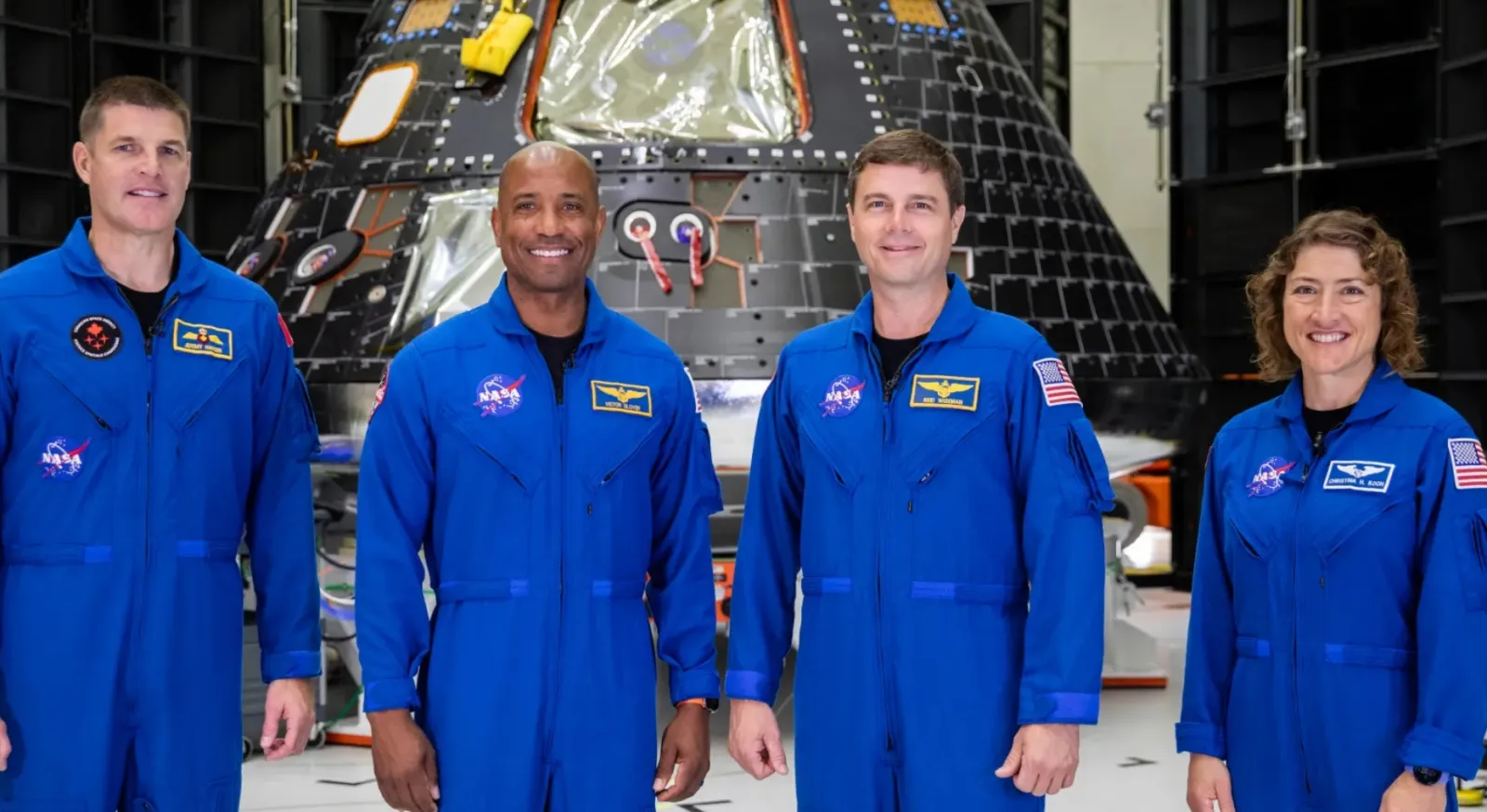
Artemis III builds on Artemis II, which sent four astronauts on a crewed flyby around the moon in April. That mission tested Orion’s life-support, navigation and other critical spacecraft systems with humans aboard in deep space.
Data gathered from Artemis II is being analyzed to inform future missions and validate the spacecraft’s ability to support longer-duration flights. Artemis III will build on those lessons by introducing more complex operations, including docking with separate spacecraft and coordinating multiple mission elements.
In that sense, Artemis II served as a critical test of human spaceflight beyond low Earth orbit, while Artemis III expands those efforts by testing more complex operations such as docking and coordination between multiple spacecraft. Together, the missions are designed to prepare NASA and its partners for future crewed lunar missions.