1 hour ago
23
The Milwaukee Brewers are 2026 World Series champions, bringing home the organization's first ever title. For the franchise and their fans, it was the culmination of years of quality scouting, drafting, international signings, player development, and remarkably successful trades.
It was also a near-perfect example of what it takes to win a championship in baseball.
This page may contain affiliate links to legal sports betting partners. If you sign up or place a wager, FOX News may be compensated. This content was created by a team that works independently from the FOX newsroom.
While William Contreras won World Series MVP, voters had plenty of options to choose from on the Milwaukee roster. Jackson Chourio became the first player since Babe Ruth, yes, literally Babe Ruth, to have 10 hits in the first four games of a World Series. Cooper Pratt, a light-hitting, defense-first shortstop, set a rookie record with hits in six straight at bats from game four to game five.
BREWERS RIDE RIDICULOUS, RECORD-SETTING EIGHT-RUN INNING TO DOMINANT 3-0 WORLD SERIES LEAD OVER RAYS
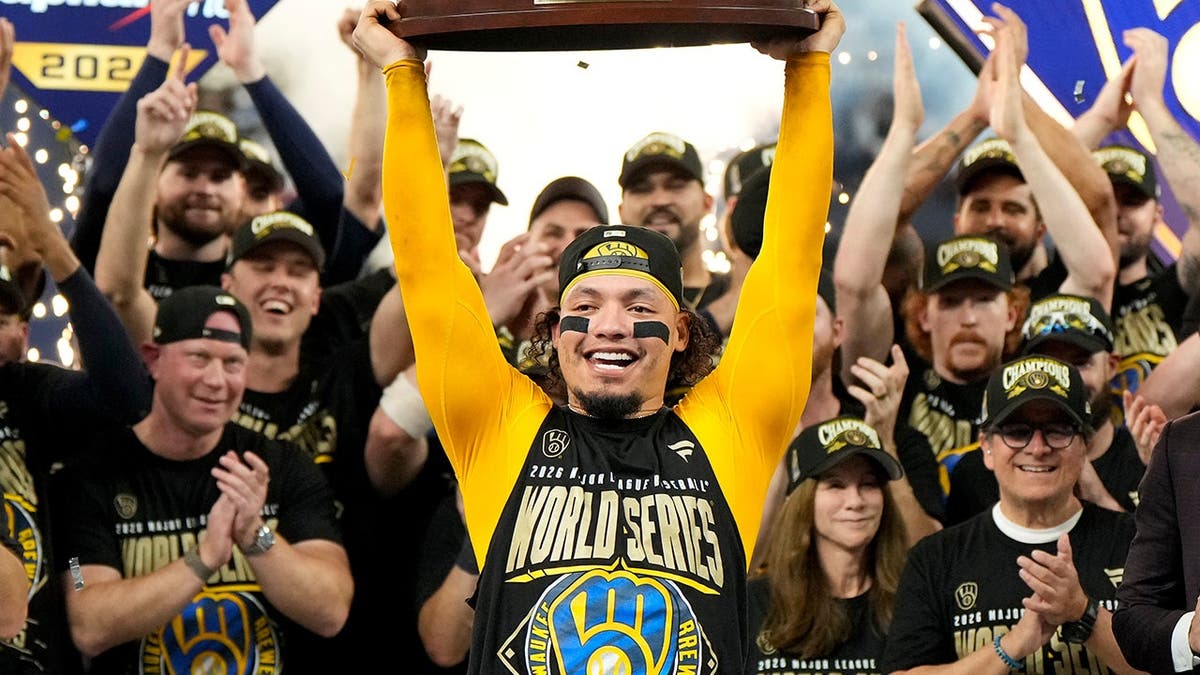
Milwaukee Brewers catcher William Contreras holds the MVP trophy after the Brewers won baseball's World Series against the Tampa Bay Rays on Wednesday, Oct. 28, 2026, in St. Petersburg, Fla. (AP Photo/Ashley Landis)
Brice Turang hit .316, below average hitter David Hamilton crushed what looked like a huge home run in game four. Aaron Ashby went 5.2 innings with no runs, just one hit allowed and nine strikeouts. Abner Uribe allowed just two hits in 5 innings. Jacob Misiorowski allowed only one run in 10.2 innings, winning game one and the clinching game five. Robert Gasser was equally unhittable, with just one run allowed in his game three start. A start so incredible that it was the first of its type by a left-handed pitcher since legendary Hall of Famer Sandy Koufax.
The whole team was World Series MVP. The whole team was NLCS MVP, and NLDS MVP too. Milwaukee went 11-2 in the postseason against the San Diego Padres, the hottest team in baseball in the second half, the star-studded 100-win Los Angeles Dodgers, and the 98-win Tampa Bay Rays, who tore through the American League. They won eight straight games in the playoffs. Their two losses came by a combined two runs, and their one World Series loss was on a walk-off in the 12th inning after they blew a 3-2 lead.
It's not a stretch to say it's one of the most dominant stretches of playoff baseball in the history of the sport. And it's why we can make the argument that the Milwaukee Brewers broke Major League Baseball. It's not supposed to be this easy, and it rarely is, even for some of the most expensive, talented rosters we've ever seen.
The 2024 Dodgers, with Shohei Ohtani coming off the first 50-50 season in history and a long list of other stars, were down 2-1 in the NLDS to the Padres before coming back to win. It took them six games to beat the Mets in the NLCS. They very nearly lost the clinching game five of the World Series, falling behind 5-0 to the Yankees before the New York defense went on a comical run of errors and mental mistakes. In 2025, they were down to their final two outs in game seven of the series against Toronto, until Miguel Rojas hit a miraculous game-tying homer.
Milwaukee? They never trailed in a series, or even came close. In fact, it was the exact opposite. They had a 2-0 lead in the NLDS, a 4-0 lead in the NLCS, and a 3-0 lead in the NLCS. It's remarkable.
Which raises the question, how did they do it? What was their philosophy and approach in October? The real answer, boring as it might be, they didn't do anything. Baseball happened.
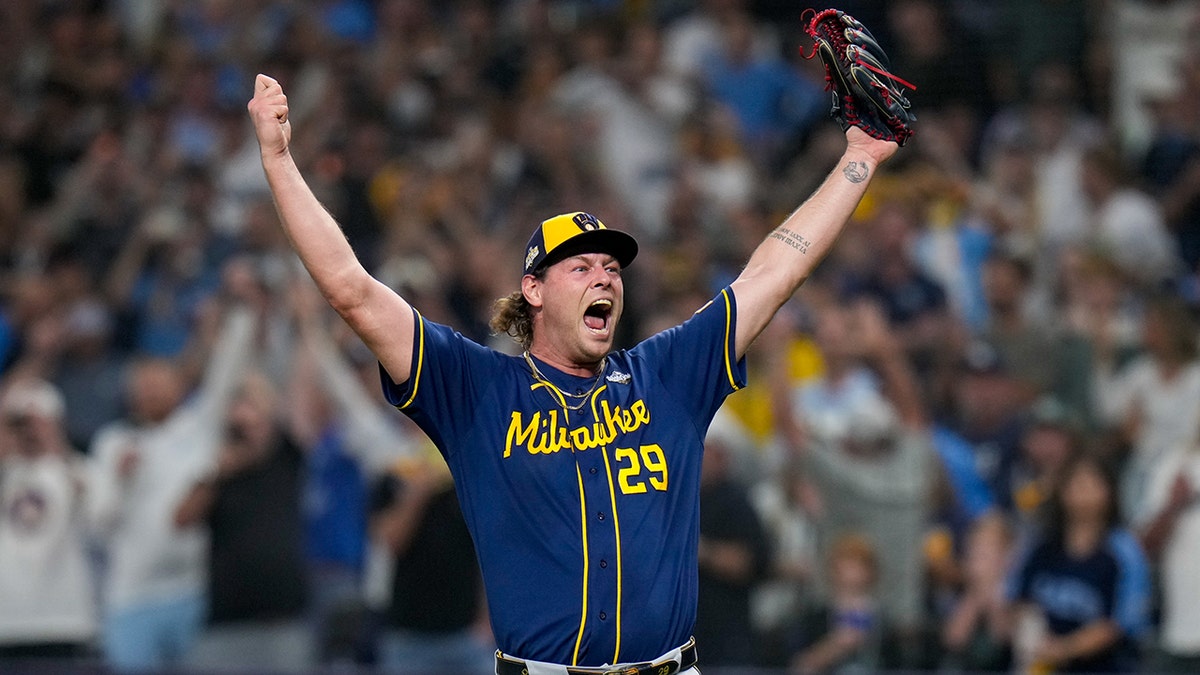
Milwaukee Brewers pitcher Trevor Megill celebrates after winning baseball's World Series, against the Tampa Bay Rays, Wednesday, Oct. 28, 2026, in St. Petersburg, Fla (AP Photo/Chris O'Meara)
That's not to say that the Brewers don't have good players or didn't have good results. Misiorowski is going to win the Cy Young Award at 24-years-old, and looks set to dominate the league for years to come. Christian Yelich is a former MVP, multiple-time Silver Slugger Award winner and borderline candidate for the Hall of Fame. William Contreras has been a top-three catcher in baseball for several years. Garrett Mitchell is a former first round pick and top prospect, as is Brice Turang. Jackson Chourio is already a star at 22.
The big secret the Brewers discovered? Have your players get hot at the right time, have a few bounces go your way, rely on some of your less talented players to hit perfectly timed home runs, and sit back and watch as your bullpen goes from very good to almost literally untouchable.
Every year, the greater baseball world looks to find some sort of meaning or blueprint from the team that wins the World Series. In 2024 and 2025, the Dodgers "proved" that you can just guarantee a title by spending money, even though the Mets and Yankees haven't won in decades. In 2023, the Rangers showed you need a veteran manager like Bruce Bochy, and that home runs, Texas hit eight in five games, are how you win in October. Very smart analysts have pointed to quality bullpens, big midseason trades, drafting and development, free agency, dominant starting rotations, home runs, or making contact and putting the ball in play. The reality? You need all of those, and you can't predict which ones you'll actually get when it matters.
CLICK HERE FOR MORE OUTKICK SPORTS COVERAGE
Not once in these discussions does anyone acknowledge that the different paths taken by different teams demonstrate that there is no one way to win a championship. And that the disparate approaches to roster construction show that what actually matters is a combination of timing, randomness, luck, and talent. Because there has to be meaning and lessons and broad conclusions to draw from every outcome, the baseball world picks a reason and explanation, then quietly discards it when next year's team does the opposite.
Here are a few examples of why looking for meaning in playoff baseball is pointless. "Clutch" hitting is frequently praised as meaningful and predictive. Some players just have the "clutch" gene, the received baseball wisdom goes. So let's look at superstar shorstop Corey Seager as an example. Seager had an astonishing run in the 2020 playoffs, hitting. 328 with eight home runs and 20 runs batted in, winning NLCS and World Series MVP. One of the best postseasons ever. Clutch hitter, right?
In 2016 and 2017, he went a combined 18 for 82. Then in the 2019 postseason went 3-20 with two singles and no homers. In 2021, Seager was 9-48, a .188 batting average. In 2023, he was once again a force of nature for Texas, hitting .318 with six homers. So is Seager the clutch playoff force from 2020 and 2023, or the hopeless, unclutch, "moment is too big" failure from 2016, 2017, 2019, and 2021?
THE CRAIG CARTON SHOW–UNFILTERED, UNAPOLOGETIC AND UNMISSABLE. DOWNLOAD HIS DAILY PODCAST NOW!
Therein lies the problem. Corey Seager is an elite hitter, but even the best hitters go through hot and cold streaks. Pitchers go through hot and cold streaks. They can't pick and choose when those streaks happen, because if they could, they'd all pick to be hot in October. Derek Jeter hit .235 in the 1998 playoffs, .226 in the 2001 playoffs, .245 in 2004, .176 in 2007, and .250 in 2010 and 2011. He also had plenty of very good results in other years. That's baseball.
Aaron Ashby quite literally had the greatest October by a relief pitcher in baseball history. Next year, he could be the worst pitcher on the team in the NLDS. That's baseball. Robert Gasser could be horrible next season after his dominance in this year's playoffs. That's baseball. Look at last year's Toronto Blue Jays.
Ernie Clement, literally Ernie Clement, set the record for most hits in a single postseason with an incredible 30 in 73 at bats. In 2026, he was 20% worse than league average offensively, cost his team 14 runs compared to an average hitter, and had a .285 on base percentage. In the 2025 playoffs, Vladimir Guerrero Jr. had a .356 batting average on balls in play. Addison Barger was .422, Ernie Clement was .420, and George Springer .319. Predictably, the Blue Jays scored a lot of runs in October.
SIGN UP FOR THE DAILY OUTKICK NEWSLETTER
In 2026, Guerrero had a .288 BABIP, Springer was .282, Clement .272, and Barger was .063 in his few games before he got hurt. Toronto finished in last place and missed the playoffs. That is also baseball. There's no predictive value from the tournament, because players do not magically become different in October. There's just a typical distribution of outcomes, particularly among good teams, that sometimes goes your way and sometimes doesn't.
OUTKICK IS NOW AVAILABLE ON THE FOX NEWS APP: CLICK HERE TO DOWNLOAD
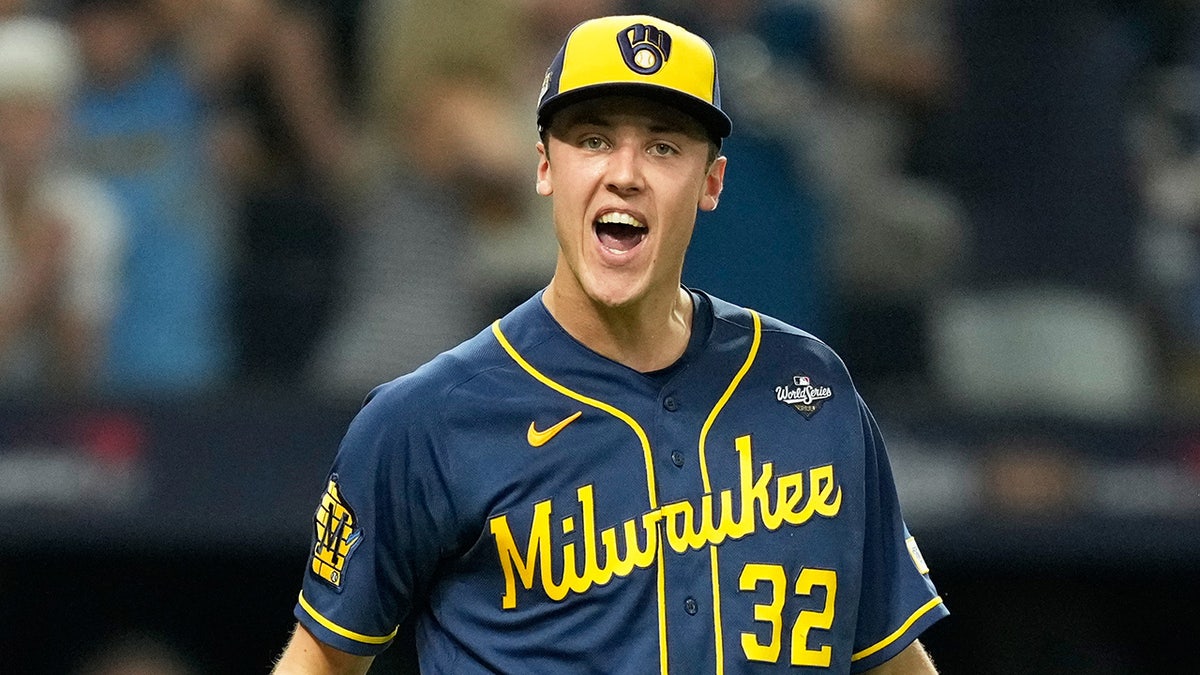
Milwaukee Brewers pitcher Jacob Misiorowski celebrates the end of the fourth inning of Game 5 of baseball's World Series, Wednesday, Oct. 28, 2026, in St. Petersburg, Fla., between the Milwaukee Brewers and the Tampa Bay Rays. (AP Photo/Ashley Landis)
None of this means the Brewers didn't deserve to win, or weren't a good team. They absolutely did, and they absolutely are. They deserve an immense amount of credit for identifying players in the draft or international markets, as well as in trades and free agency, that they thought they could improve or would fit specific needs. But looking for some sort of explanation or path for your favorite team to follow is insane. Because while you need good players to win, you can't predict how they'll perform over a few weeks of small sample sizes. It's just...baseball. Enjoy it when your team wins, celebrate it, and understand that the inherent variability of it ensures it can't ever be broken.
Ian Miller is a writer at OutKick.