
 3 days ago
15
3 days ago
15
The sudden closure of Arizona's San Carlos Lake after a mass fish die-off has raised alarm among scientists, environmental experts and water managers, who warn that similar events could unfold elsewhere as drought, warming temperatures and water management pressures intensify.
The San Carlos incident was triggered by a combination of prolonged drought followed by rapid water releases, according to the San Carlos Recreation and Wildlife Department. "Recent drought conditions, combined with water releases from the dam, have resulted in a major fish kill affecting approximately 100 percent of the fish population within the lake," the department wrote on Facebook. Still, experts warn that the underlying conditions—low water levels, warming temperatures and oxygen depletion—are increasingly common across major U.S. water systems.
Why It Matters
Without intervention, more lakes may be at risk of reaching similar tipping points, with consequences including ecological damage and disruptions in water supply for millions.
In that sense, what happened in Arizona may be less an anomaly and more a preview of what lies ahead.
Colorado River System Faces Intensifying Pressure
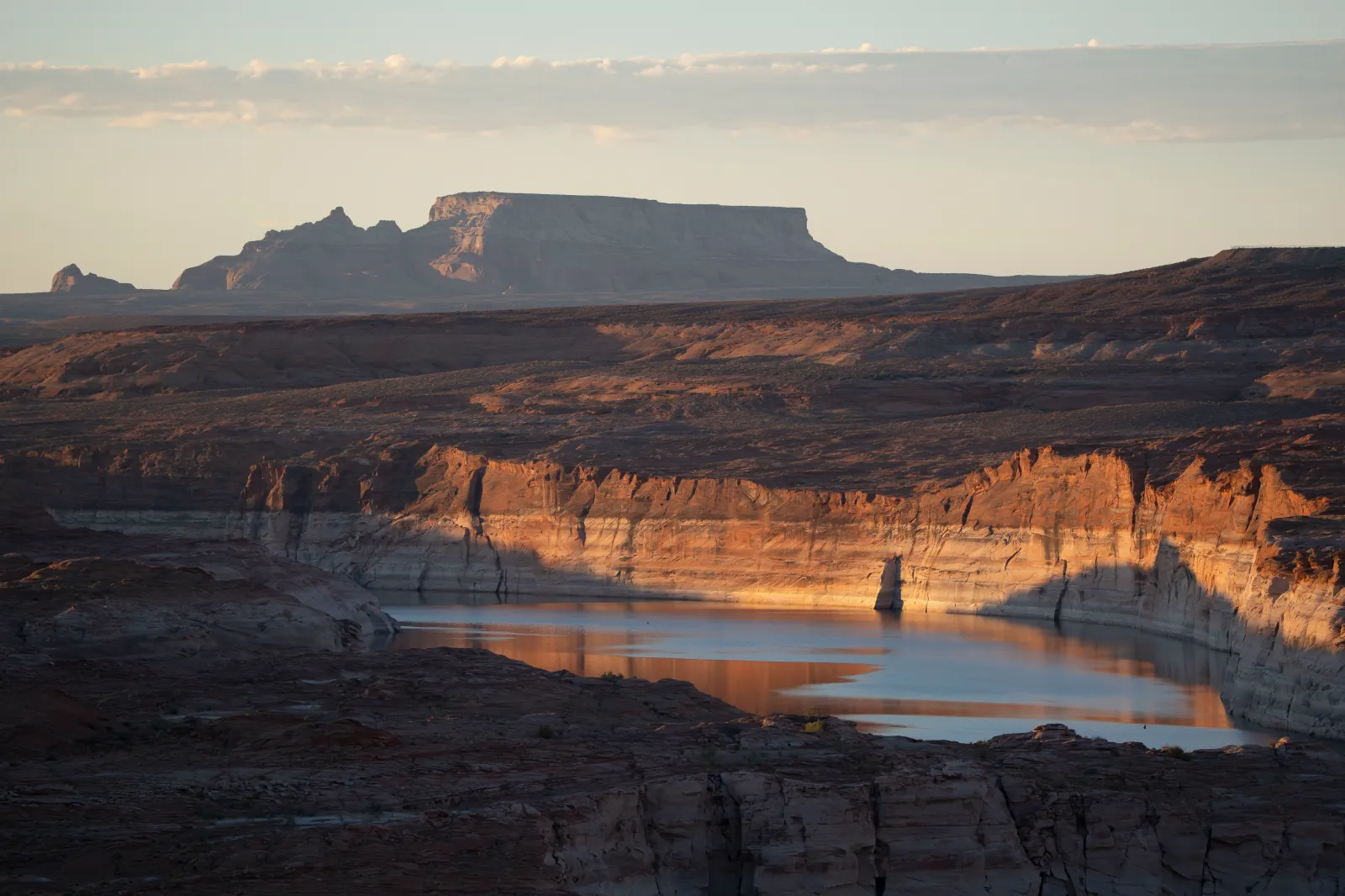
Nowhere is the risk more acute than along the Colorado River, where two of the nation's most critical reservoirs—Lake Mead and Lake Powell—are already under historic strain.
Lake Mead, the largest reservoir in the United States, supplies water to about 40 million people. It's currently operating under official shortage conditions, with inflows sharply reduced by prolonged drought. Forecasts from the U.S. Bureau of Reclamation say that water levels could fall to record lows by 2027.
As levels drop, the lake becomes warmer and more stagnant—conditions that can fuel harmful algal blooms and reduce dissolved oxygen. This mirrors the environmental stress that contributed to the fish deaths at San Carlos, raising concerns about ecological impacts in addition to water supply pressures.
Lake Powell faces similarly dire conditions. The reservoir is about 25 percent full, leaving little buffer if dry conditions persist. Scientists have warned that continued declines could trigger a broader "system crash" within the Colorado River basin by 2028.
The implications extend far beyond local ecosystems.
If Mead and Powell were to fail, experts say the result would not be isolated fish die-offs. It would cause large-scale disruption to water delivery systems across the Western United States.
Great Salt Lake Nears Ecological Collapse
In Utah, the Great Salt Lake is experiencing a different but equally alarming trajectory.
The lake has lost more than 70 percent of its water over time and continues to shrink, driven by drought and upstream water diversions.
Unlike freshwater systems such as San Carlos, the primary threat here is rising salinity—the amount of salt there is in the water, according to Utah State University.
As water levels fall, salt concentrations increase, threatening brine shrimp and other organisms that underpin the lake's food web.
At the same time, the exposed lakebed is creating toxic dust risks for nearby communities, according to the U.S. Geological Survey.
Although the outcome differs—gradual ecosystem collapse rather than a sudden die-off—the drivers are similar: heat, reduced inflow and human water use.
Algal Bloom Threatens the Great Lakes
Further east, Lake Erie highlights how similar problems can emerge even where water levels remain relatively stable.
The Environmental Protection Agency (EPA) says the lake has been plagued by recurring toxic algal blooms, fueled by nutrient pollution and warming water temperatures. These blooms can create "dead zones," where oxygen levels drop so low that fish and other aquatic life struggle to survive.
This mechanism closely mirrors the process seen in fish-kill events: Algae consume oxygen as they decompose, leaving the water starved of the conditions needed to sustain life.
Lake Tahoe's Slower Decline
Other lakes, such as Lake Tahoe, represent a slower-moving version of the same crisis.
While not experiencing a dramatic collapse, Tahoe has been identified as shrinking faster than expected because of climate pressure and recurring drought.
Falling water levels combined with rising temperatures are gradually reshaping the lake's ecosystem, reinforcing concerns that even seemingly stable lakes are not immune.
Widespread Problems Affect Nation's Lakes
Data from the EPA shows the scale of the issue. Roughly half of U.S. lakes are showing signs of nutrient pollution and degraded conditions.
Experts say this combination—pollution, heat and reduced water levels—creates ideal conditions for algal blooms and oxygen crashes, dramatically increasing the risk of fish kills and broader ecological damage.
In that context, the San Carlos die-off is not an isolated incident; it's a more visible example of a widespread, slow-building problem.