 1 day ago
17
1 day ago
17
Americans’ confidence in the economy has fallen to the lowest level in seven months as gas prices remain above $4 per gallon nationwide, forcing them to make financial sacrifices and change their driving habits, according to recent polls.
The Conference Board said on Tuesday that its Consumer Confidence Index decreased to 89.4 in August, down from 90.2 in July, with its Chief Economist Dana M. Peterson saying consumers "were more pessimistic about business conditions and the labor market over the next six months."
Soaring gas prices in the weeks and months following the start of the war in Iran in late February are one of the reasons Americans’ outlook has soured, as has their opinion of President Donald Trump and his administration.
Just before the U.S. and Israel launched joint strikes on Iran on February 28, the national average gas prices had finally dipped below $3 per gallon, at $2.98, in line with Trump’s campaign promise to lower the cost of living for everyday Americans. A month later, it had already reached $4 per gallon, driven up by disruptions in the global oil supply and the effective chokehold on the key Strait of Hormuz.
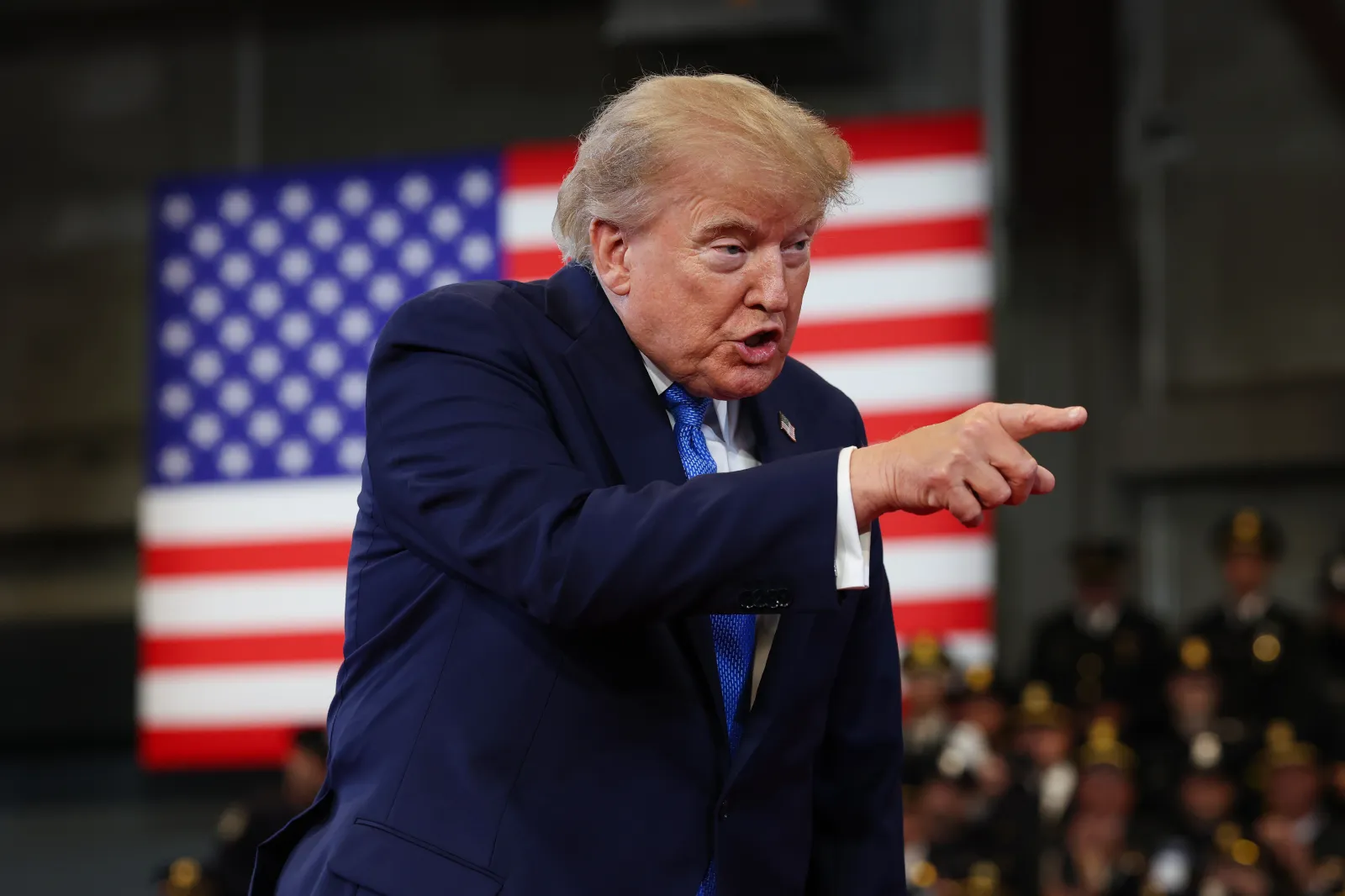
With only a few months to go before the crucial November midterms, a new poll from YouGov and The Economist found that 36 percent of Americans approve of Trump while 57 percent disapprove. The poll was conducted among 1,536 U.S. adults between August 21 and 24 and had a margin of error of plus or minus 3.5 percentage points.
A Reuters/Ipsos poll released on Monday found 65 percent of respondents disapproving of the president’s job performance, while only 33 percent approved. It surveyed 1,215 adults nationwide between August 21 and 24 and had a margin of error of plus or minus 3 percentage points.
Ranked: the Top 5 States for Highest Gas Prices
As of Wednesday, August 26, the national average gas price was $4.097 per gallon, according to the latest data by the American Automobile Association (AAA). Across the U.S., statewide averages ranged from a peak of $5.623 to a low of $3.491, with only eight states still having average prices of below $4 per gallon.
As always, drivers in California paid the highest price in the nation, at $5.623 per gallon of regular gas. These are the five states where drivers paid the most to fill the tank, in a list topped by the Golden State:
- California: $5.623/gal;
- Hawaii: $5.412/gal;
- Washington: $5.268/gal;
- Alaska: $4.832/gal;
- Nevada: $4.819/gal.
These states are normally among the most expensive in the country. In California, a combination of high state taxes, strict environmental regulation, the isolation of the state’s fuel market and the specific type of blend used have long contributed to making gas more expensive than anywhere else in the nation.
But as gas prices have increased all across the country, with no state spared since the start of the conflict in the Middle East, gas prices in California have reached levels unseen since the fall of 2023. The all-time California record remains $6.44 per gallon, set on June 14, 2022, when prices spiked due to the impact of the pandemic supply disruptions and the Russian invasion of Ukraine.
On the other hand, these are the five states with the lowest statewide average gas prices:
- Indiana: $3.491/gal;
- Texas: $3.620/gal;
- South Carolina: $3.640/gal;
- Mississippi: $3.655/gal;
- Tennessee: $3.659/gal.
Why Have Gas Prices Risen?
The main reason why oil and gas prices spiked all over the world in the weeks and months following the start of the war in Iran is the effective closure of the Strait of Hormuz, a narrow waterway where one-fifth of the world’s oil normally used to transit.
With only a few ships making it through the strait since late February, the global supply of oil has been squeezed, putting upward pressure on oil prices and, in turn, gas prices. That has happened even in a country that is oil-rich as the U.S. is, showing the importance of the global market on the national economy.
Negotiations between the U.S. and Iran over reopening the strait and a now-defunct ceasefire allowed for prices to come down slightly in recent months, but they have stubbornly stayed above $4 per gallon.
As the war in Iran drags on with no clear end in sight, oil and gas experts have warned that only the reopening of the Strait of Hormuz will ensure gas prices return to the levels they were at before the start of the conflict. And even then, they say, the process would be very slow and might take years.
"Normal flows of oil through the Strait of Hormuz would likely be step one. But even if the strait reopens it will take some time to normalize," Denton Cinquegrana, chief oil analyst at Oil Price Information Service (OPIS), a Dow Jones company, previously told Newsweek.
How Is This Affecting Americans?
By mid-August, GasBuddy’s head of petroleum analysis Patrick De Haan wrote that Americans were spending $338 million more on gasoline than they did a year earlier, "or $2.35 billion more every week."
While Trump has asked Americans to "pay a tiny little bit more" for their gas so that "a very evil country," Iran, cannot have a nuclear weapon, consumers have clearly been feeling the pain of higher prices at the pump.
A new survey by insurance-comparison marketplace Insurify found that 35 percent of U.S. drivers have taken on debt to deal with higher gas prices, 29 percent have missed or delayed a bill payment, 24 percent have reduced their auto insurance coverage because of high gas prices, and 46 percent have delayed car maintenance or repairs.
The vast majority (76 percent) have cut back on spending to handle higher gas prices, while 69 percent said they have driven less.
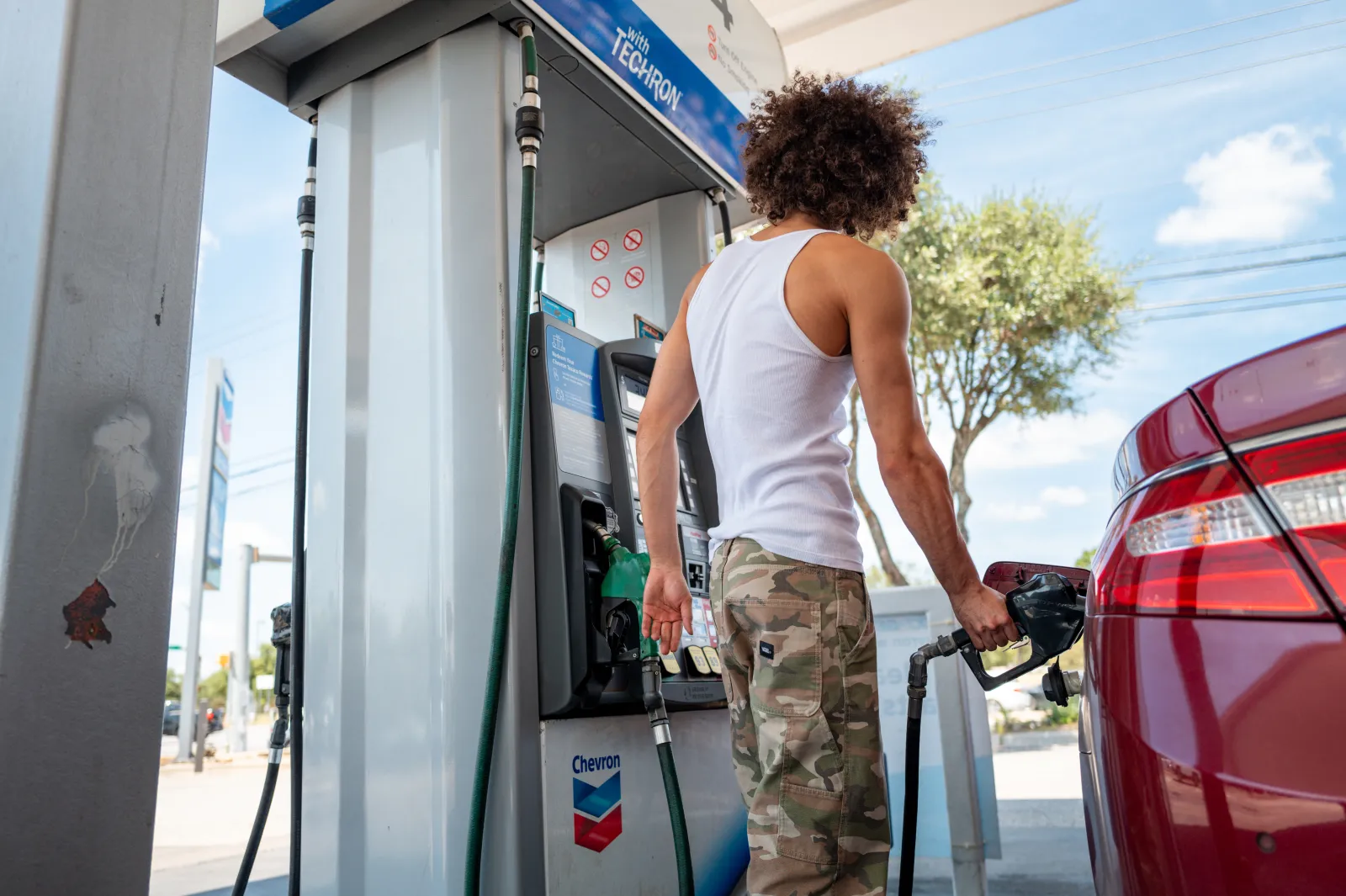
Another recent survey by LendingTree found that 81 percent of Americans have changed their driving or transportation habits due to the higher costs, with 38 percent saying they are combining errands into fewer trips, driving less overall (31 percent) and searching for cheaper gas before filling up (28 percent).
Americans are also experimenting with driving habits that are more common in Europe than in the U.S.: nearly 3 in 10 have carpooled about once a week or more over the past year, according to the survey. Even so, not everyone is willing to give up driving alone: 39 percent of Americans say they have never carpooled.
Most significantly for the political future of the country, rising gas prices—and the higher cost of living—are weighing heavily on voters’ minds. Not only has Trump’s approval rating been plummeting since the start of the war in Iran, but Americans’ unhappiness with higher gas prices could backfire against Republicans at the ballot.
Insurify’s survey found that 65 percent of U.S. adults say they will consider the cost of gas when deciding how to vote in the 2026 midterms, including 77 percent of Democrats and 57 percent of Republicans.
Contact Newsweek editors on this story: John Fitzpatrick and James Debens