 1 week ago
27
1 week ago
27
Where you live in America may matter more than ever for LGBTQ+ residents. New research suggests the gap between the country's most and least LGBTQ+-friendly states is continuing to widen, creating sharply different experiences depending on geography.
The findings come from the 2026 State LGBTQ+ Business Climate Index, which measures states on legal protections, workplace inclusion, healthcare access and broader social conditions.
Together with Gallup’s latest "Values and Beliefs" survey showing support for some LGBTQ+ issues has eased from recent highs, the two reports suggest the U.S. is becoming increasingly divided on LGBTQ+ issues.
While some states continue expanding protections and maintaining broad support, others are moving in the opposite direction, creating sharply different legal, economic and social environments depending on where people live.
The States Showing Strongest LGBTQ+ Support
The index shows that the Northeast continues to dominate the rankings, with Massachusetts, New York, Connecticut and New Jersey occupying the highest tier.
Researchers cite a combination of legal protections, healthcare access and workplace inclusion as key reasons these states continue to perform strongly.
The index evaluates factors that collectively measure how hospitable a state is for LGBTQ+ residents and businesses, including:
- Nondiscrimination protections
- Access to healthcare
- Workplace inclusion
The Index also finds that this upper tier has remained relatively stable in recent years, even as the national landscape has become more polarized.
The concentration of top-ranked states in the Northeast reinforces a growing regional divide in LGBTQ+ policy environments.
Researchers behind the Index note that, while "the top ten states have held steady or improved," national averages have declined, increasing the distance between the country's most and least inclusive regions.
Where LGBTQ+ Residents Face the Greatest Challenges
At the bottom of the rankings sits Arkansas, joined by several Southern states including South Carolina, Tennessee, Louisiana, Mississippi, Alabama and Oklahoma.
These states have consistently ranked among the lowest performers since 2019, and the report shows that the gap between them and the higher-ranking states has widened by 11 points.
Researchers say conditions in many of these states have deteriorated relative to the country's leaders, further widening the gap.
These states tend to score poorly across the same five categories used to rank more inclusive regions:
- Legal protections
- Youth and family support
- Political climate
- Healthcare access
- Workplace inclusion
This indicates a broad lack of institutional support rather than just a single policy gap.
The Index highlights how this divergence is accelerating: The gap between the most and least inclusive states is now at its widest level on record.
This reflects a shrinking middle where fewer states occupy moderate positions and instead align more clearly at either end of the spectrum.
Public Opinion: A Subtle but Significant Shift
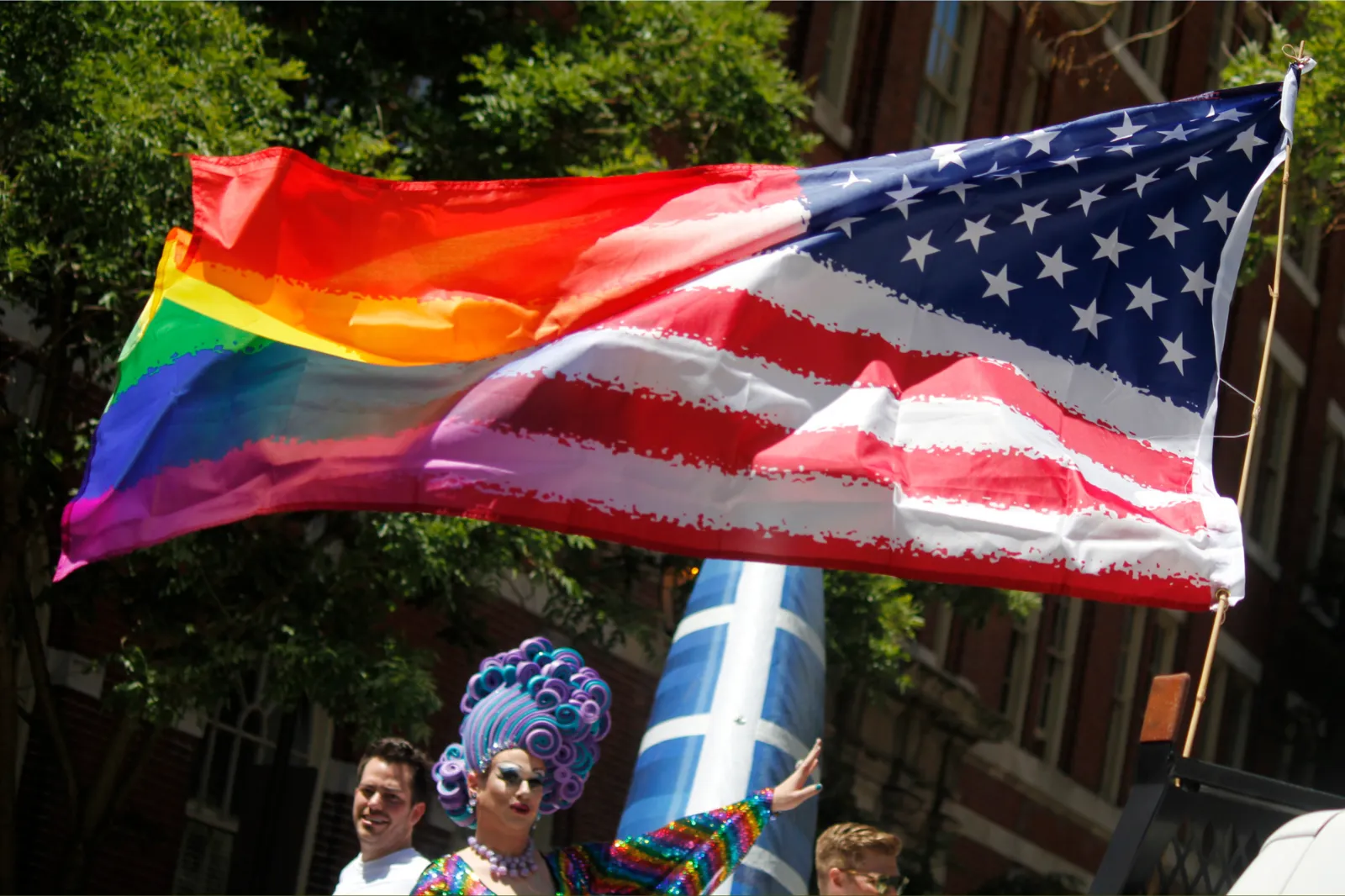
Alongside these policy differences, national attitudes toward LGBTQ+ issues appear to have shifted slightly in recent years.
Gallup’s June 2026 survey found support for same-sex marriage at 65 percent, down from 71 percent in 2022 and 2023.
The survey also reports that 62 percent of Americans now view same-sex relationships as morally acceptable, the lowest level recorded since 2016, while 38 percent say changing one’s gender is morally acceptable, reflecting a decline over the past several years.
Gallup attributes much of this shift to changes among Republican respondents, reporting that GOP support has fallen significantly.
For example, support for same-sex marriage dropped from 55 percent in 2021 and 2022 to 37 percent in 2026.
By contrast, Democratic support for same-sex marriage has remained stable at 87 percent since 2022.
Why the Widening Gap Across the US Matters
Taken together, the reports paint a picture of a country moving in different directions depending on region.
The State Climate Index finds that the top-performing and lowest-performing states are becoming more distinct, with fewer states occupying a middle ground.
This divergence has implications beyond social policy.
The index states that differences in legal and political environments can affect economic outcomes, including where businesses locate and how easily they can attract and retain talent.
At the same time, Gallup’s findings suggest that public opinion, while still broadly supportive in many cases, is no longer trending upward and may be stabilizing or declining modestly.
What Does the Future Look Like?
Neither report points toward a rapid narrowing of the divide.
Gallup’s long-term data indicates that while support rose steadily for two decades, attitudes may now be entering a period of plateau or modest decline.
At the same time, the state index shows policy environments becoming more entrenched, with leading states maintaining strong protections and those lagging behind showing little movement upward.
For LGBTQ+ residents, workers and businesses, location may increasingly determine everything from legal protections to workplace opportunities and healthcare access.
With younger generations placing a high value on inclusion, some analysts believe economic and workforce pressures could eventually encourage greater convergence.
For now, however, the evidence points toward a country becoming more geographically divided on LGBTQ+ issues.