
 1 hour ago
10
1 hour ago
10
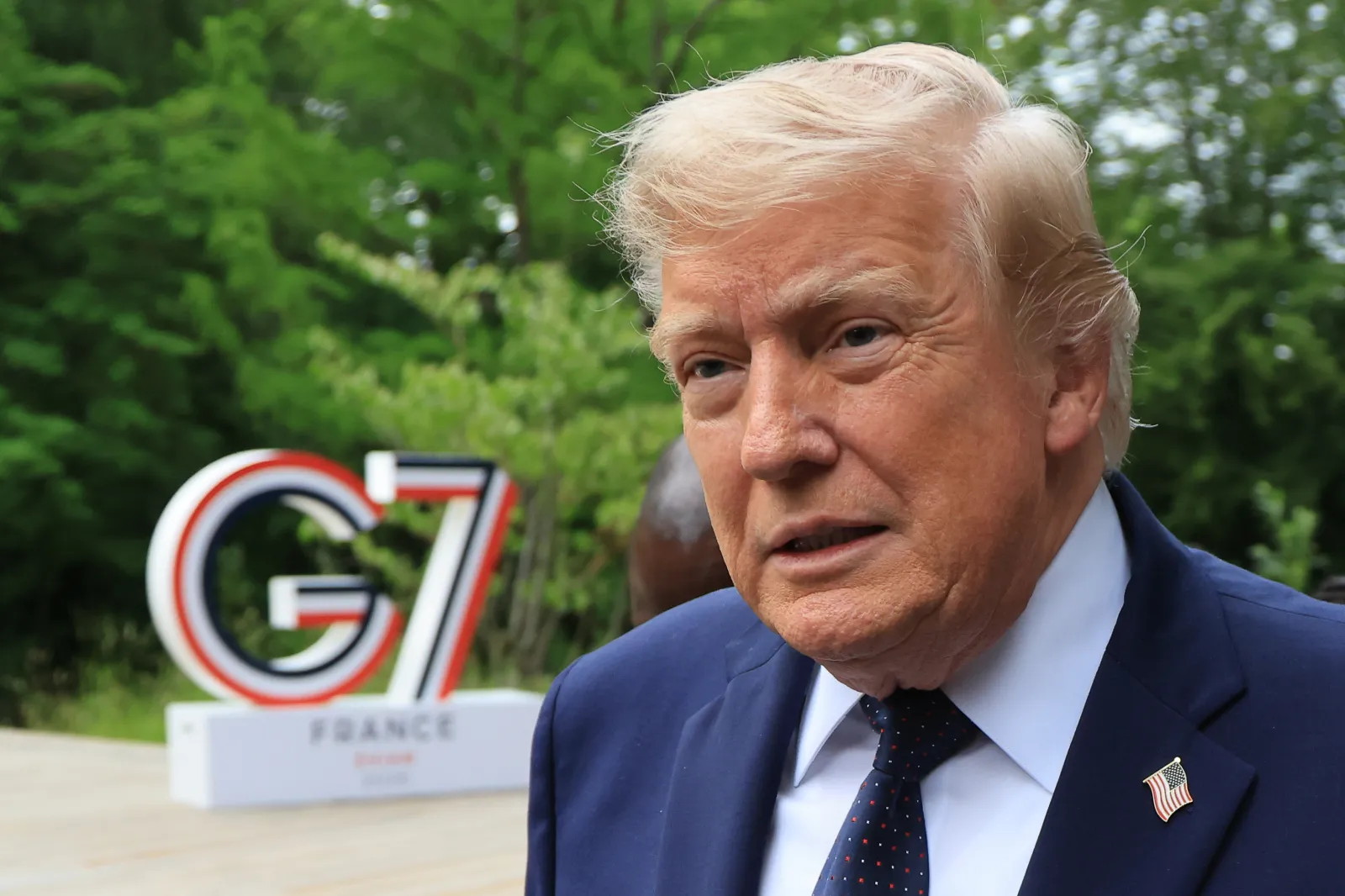
President Donald Trump and other Group of Seven (G7) leaders have launched an action plan to secure critical mineral supply chains after China moved to further tighten its control over many of these resources.
As the G7 summit in France drew to a close Wednesday, members the United States, United Kingdom, Japan, France, Italy, Germany and Canada pledged to develop a road map to advance "standards-based markets for critical minerals," including rare earth elements vital to industries ranging from clean energy and advanced manufacturing to defense technologies.
The move comes as the United States and its partners seek to reduce their reliance on Chinese rare earths, a dependency they view as a long-term national security risk. The East Asian country accounts for roughly 70 percent of global rare earth mining and about 90 percent of processing capacity.
Newsweek reached out to the White House and Chinese embassy in Washington, D.C., by email with requests for comment.
Countering "Non-Market Practices"
U.S. and European officials have raised concerns that extensive state support for Chinese industry distorts global markets, allowing Chinese producers to undercut foreign competitors and discouraging investment elsewhere.
"G7 nations share economic and national security interests that depend on access to resilient critical mineral supply chains governed by market principles," a statement said.
"We recognize that non-market policies and practices in the critical minerals sector threaten our ability to acquire many critical minerals, including the rare earth elements needed for magnets, that are vital for industrial production."
The G7 said it would work toward a road map by the end of 2026.
That effort will include measures to increase investment in future supply chains and support mining, processing and refining projects facing permitting delays, market distortions, price volatility and other barriers that can slow development.
Members also pledged to work with industry, international organizations, mineral-producing countries, Indigenous peoples, local communities and civil society groups to establish criteria for what the bloc called "standards-based markets" and the responsible production of critical minerals.
China Strengthens Grip on Critical Minerals
The statement came two days after a new set of Chinese regulations took effect that aim to bring mineral resources further under state control.
A set of regulations that entered force Monday establishes a more comprehensive reserve system for strategic mineral resources and grants the State Council—the Communist Party-led Cabinet—broad authority over their exploration, mining, processing, storage, and import and export.
The move marks another step in Beijing's efforts to tighten control over critical minerals as competition over supply chains and strategic resources intensifies.