 2 days ago
19
2 days ago
19
Peru’s presidential race between right-wing Keiko Fujimori and left-wing Roberto Sánchez is still extremely close with 97 percent of the votes counted, so much so that ballots cast overseas—especially in Florida—could give one of the candidates the winning edge.
As of Wednesday morning, Sánchez was slightly ahead with 50.05 percent of the vote, while Fujimori had 49.94 percent. The left winger’s modest lead, however, could be quickly reversed once all the votes from the Peruvian diaspora are counted, as a majority of voters overseas support Fujimori.
“It could happen (unprecedented in our history) that Roberto Sánchez receives more votes in national territory but loses the election, because in the total (including votes from abroad), Keiko Fujimori surpasses him,” political analyst Jeffrey Radzinsky wrote on X.
“It’s a scenario, just that, we have to wait for the count and respect the results.”
What Vote Counting Can Tell Us So Far
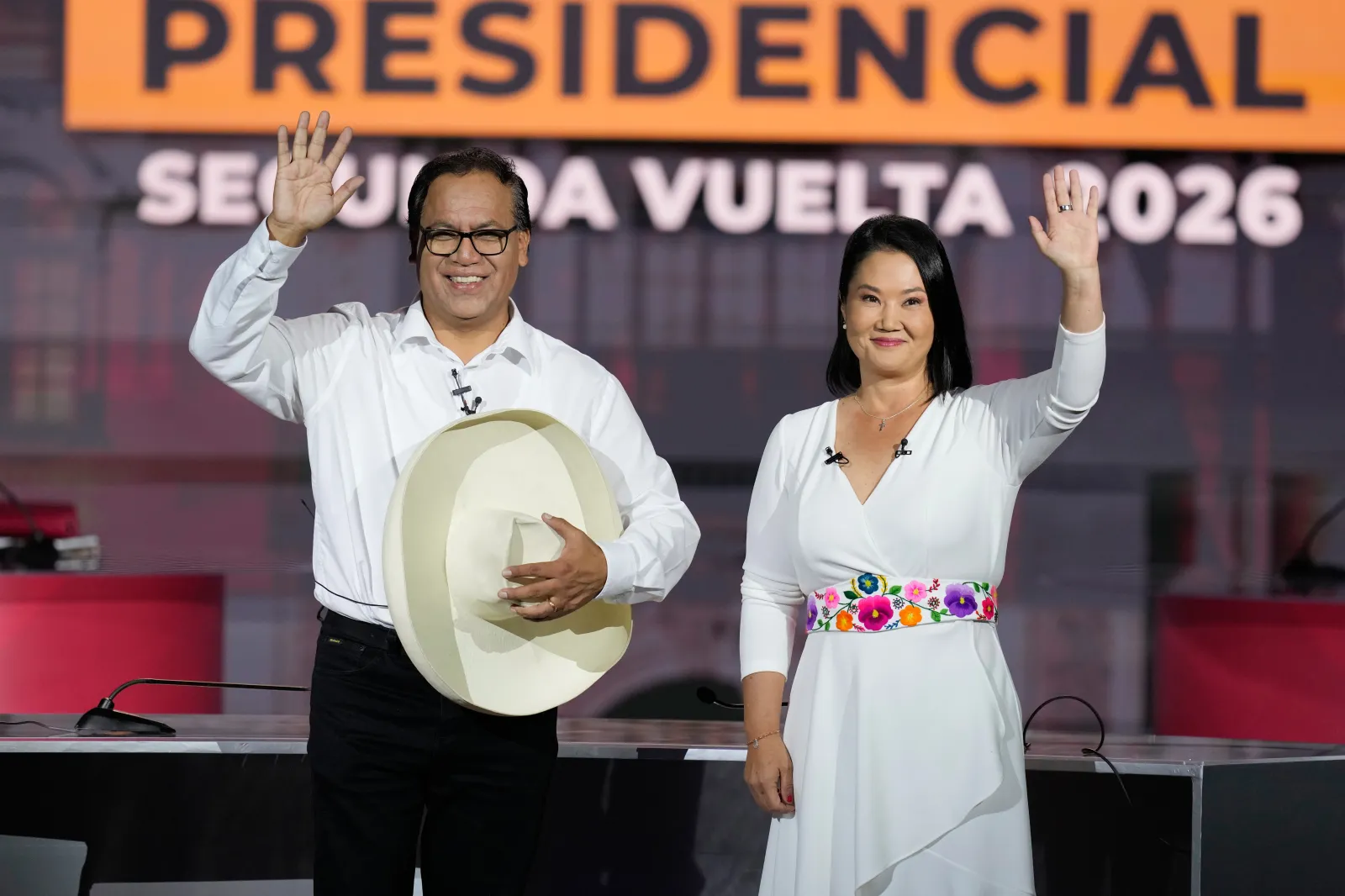
According to Peru’s National Office of Electoral Process (ONPE), 62.5 percent of the vote from Peruvian living abroad has gone in support of Fujimori (132,004 votes), while only 37.5 percent has been cast for Sánchez (79,327).
More than 1.2 million Peruvians living abroad were eligible to vote in the June 7 presidential election’s second round, according to the Latin Times.
Among voters living in the United States, which has the highest number of Peruvians voting from outside Peru, Fujimori’s dominance is even starker. An overwhelming majority of the votes coming from the country was cast for Fujimori, at 76.56 percent, while Sánchez got only 23.43 percent.
At the state level, the vast majority of votes from the United States are coming from Florida, which is home to the largest Peruvian-American population anywhere in the United States.
And in cities across the Sunshine State, voters’ preference for Fujimori is even more evident than at the national level.
In Miami, 88.79 percent of the votes went to the right-wing candidate (9,310 total votes), against 11.21 percent for Sánchez (1,175). In Orlando, Fujimori got 86.60 percent of the vote (929 votes in total), while Sánchez got 13.34 percent (143).
These figures are in line with historical data showing that the Peruvian diaspora tends to be more conservative and more anti-left than Peruvians living in the South American country, especially in rural areas.
Why The Peruvian Diaspora Is Backing Fujimori
Many of those who left the country for the United States, Argentina, Chile, Spain, and Italy did so during the political violence and economic crisis of the 1980s and 1990s and the authoritarian presidency of Alberto Fujimori, Keiko’s father, between 1990 and 2000.
While for some this could be a painful connection as his time in office was marked by extrajudicial killings and human rights violations, for many Peruvians Alberto Fujimori’s presidency—centered around a free market economy, social conservatism, and a crackdown on far-left guerrilla group Shining Path—was a time of reestablishing order in the country.
Sánchez also has his own shadow of the past looming over him. He is a close ally of Castillo, who was removed from office by Peru’s Congress after attempting to impose a state of emergency in 2022 and sentenced to 12 years in prison.
In the 2021 presidential runoff, overseas voters’ support for Fujimori—who has already unsuccessfully run for president in 2011, 2016, and 2021—was not enough to give her a win. Despite their strong support for the right-wing candidate, socialist Pedro Castillo narrowly won the presidency with the crucial support from the Andes and rural regions.
Could Overseas Votes Decide the Election?
Overseas votes are only a tiny share of the electorate and their turnout is usually slower than in Peru. But in a race as tight as the one between Fujimori and Sánchez, it could give the right-wing candidate a slight but significant margin over her political rival—especially as overseas votes are slower coming in than those cast in Peru.
As of Wednesday morning, over 99.09 percent of the votes in Miami had been counted, and 80.95 percent in Orlando. Overall, only 67.47 percent of the votes from Peruvian living abroad had been counted, however, adding to the likelihood that the next votes coming in could tip the race in Fujimori’s favor.
By comparison, 98.21 percent of the votes coming from Peru alone—where Sánchez has a razor thin lead of 50.2 percent over Fujimori’s 49.8 percent—had already been counted as of Wednesday morning.
Sánchez has suggested he will accept whatever result will come out of the election. “As a peaceful people, as a people who respect the electoral process, we will walk the path of the official results, but today we are convinced of the support of the popular movement,” he said over the weekend in a statement quoted by Reuters.
Fujimori has called for patience until all the votes are counted.
As of the time of this article’s publication, the race remains too close to be called. The head of Peru’s election supervision agency said that the official proclamation of results could arrive by mid-July, considering the review of disputed ballots and a potential recount, as reported by AS/COA. The presidential inauguration is scheduled for July 28.
According to Dr. Christopher Sabatini, director of the Latin American Programme at London-based Chatham House, Peru is likely to find itself in a fragile situation no matter which candidate wins.
“If elected and confronted by a divided, obstreperous Congress, Sánchez may well seek to call on his base’s support to allow him to steamroll the legislature and avoid the fate of his mentor, Castillo,” he wrote in a recent analysis. “Should Keiko win, other parties may seek revenge for her party’s zero-sum politics.”