
 1 hour ago
8
1 hour ago
8
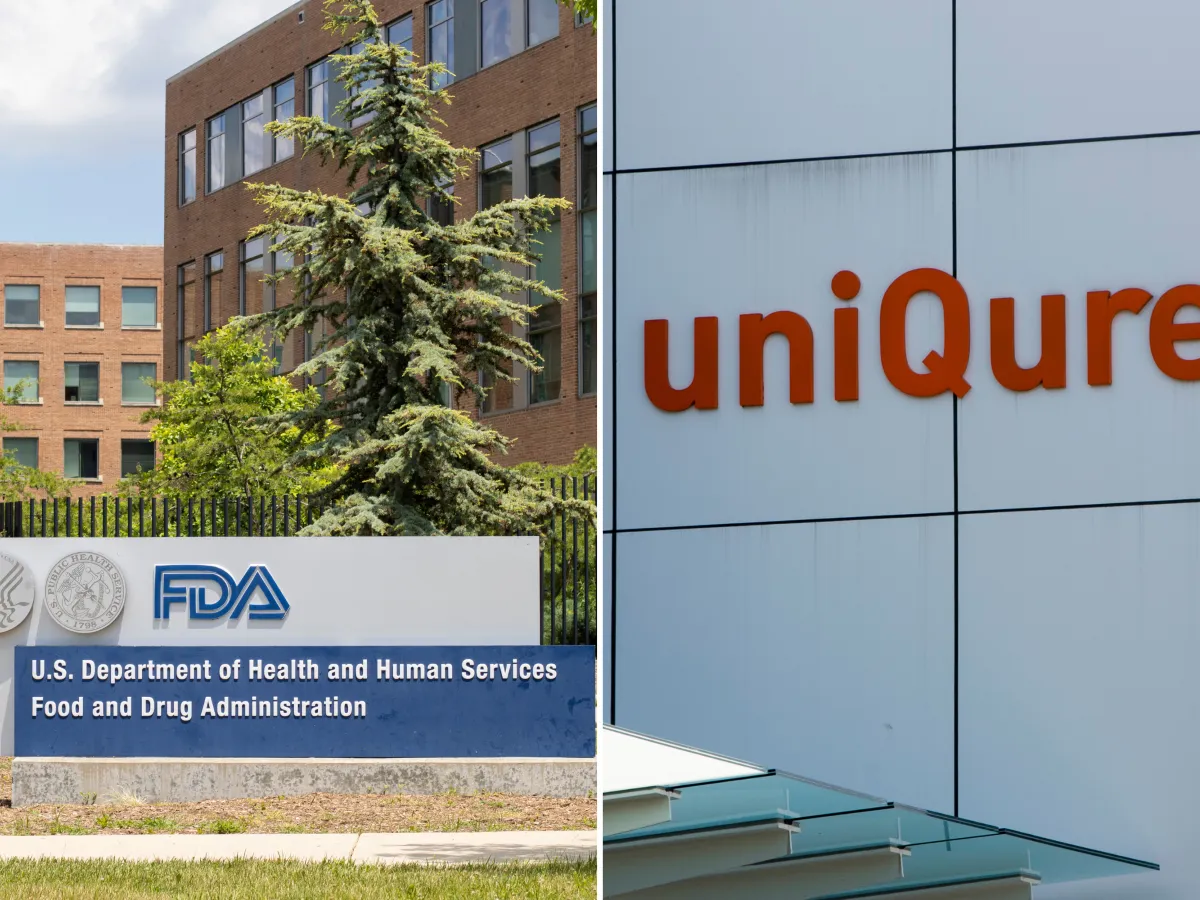
The U.S. Food and Drug Administration (FDA) has changed its stance on a drug to treat a rare disease, giving the manufacturer the green light to seek approval, after officials previously deemed it a "failed product" in March.
The Dutch biotech company uniQure said this week that regulators will now allow it to go after an accelerated approval for its Huntington's disease therapy, AMT‑130, despite a senior FDA official months before telling Reuters on the condition of anonymity the firm's most recent trial lacked necessary data.
The drug is the first of its kind, a treatment that has been found to slow the progression of Huntington's disease, a rare, fatal, neurodegenerative disorder.
UniQure said that the FDA had informed them that a three-year analysis from an earlier stage clinical trial would be acceptable as the primary basis of a Biologics License Application (BLA), needed for the accelerated approval of its closely-watched drug. The company hopes to submit the application in the third quarter of 2026.
A Department of Health and Human Services (HHS) spokesperson told Newsweek that the FDA "remains committed to working with uniQure to identify a regulatory pathway that serves patients with Huntington's disease and their families, while upholding the agency's commitment to gold-standard science."
The announcement has been celebrated by rare disease communities, with the Huntington’s Disease Society of America (HDSA) saying the move "offers renewed hope to thousands of families who have been waiting far too long for treatment options."
This comes as rare disease advocates have long been calling for more treatments to be approved, a movement which gained strength after the FDA rejected a series of therapies this year—some advocates previously told Newsweek 23 therapies had been rejected between January and March.
Newsweek has contacted uniQure, the Huntington's Disease Society of America (HDSA), Huntington's Disease Foundation, and the Huntington Study Group for comment via email outside of regular working hours.
What Is Huntington's Disease?
Huntington’s disease is a rare, inherited neurological disorder that progressively damages nerve cells in the brain, affecting movement, cognition and behavior.
Up to 40,000 Americans have Huntington’s, which is caused by a mutation in a single gene, and each child of a parent with the disease has a 50 percent chance of inheriting the condition. There is currently no cure or approved treatment that can slow or halt the disease’s progression.
Patients typically experience worsening symptoms over time, including involuntary movements, cognitive decline and changes to mood, leading to loss of independence and eventually death.
What Is UniQure's Drug?
AMT‑130 is an experimental gene therapy designed to reduce the production of the harmful protein, huntingtin, in the brain.
It has been granted a Regenerative Medicine Advanced Therapy (RMAT) designation by the FDA—the first RMAT designation for Huntington’s disease—as well as a Breakthrough Therapy designation and Fast Track designation.
The treatment is delivered through a one-time surgical procedure directly into the brain, and early clinical data suggest patients receiving higher doses experienced significantly slower decline compared with expected disease progression.
If approved, AMT‑130 could become the first treatment to alter the course of Huntington’s disease, representing a major milestone in gene therapy and rare disease medicine.
The update has also meant the uniQure's U.S.-listed shares went up over 75 percent, hitting a seven-month high, on Wednesday.
What Does This Mean for Patients?
For patients and families affected by Huntington’s disease, the FDA’s reversal renews hope. Advocacy groups have emphasized that the decision reflects growing recognition within the agency of the urgent need for treatments, even when clinical data may be limited.
The HDSA said in a statement: "Today, we celebrate an important milestone and the hope it brings to families across the country. We are encouraged by this momentum and stand ready for the work to come."
The shift also removes a key barrier that had drawn criticism earlier this year. The FDA had previously demanded uniQure run an entirely new clinical trial involving a controversial "sham surgery" control, which would have required some patients to undergo invasive procedures without receiving the active treatment.
The HHS told Newsweek that the FDA has agreed with uniQure on "a path for submission of a marketing application and accelerated approval of the therapy based on the existing clinical data," and that the "accelerated approval pathway is designed to allow earlier approval of drugs that treat serious conditions to address an unmet medical need."
While the update has received widespread support, experts caution that approval is not guaranteed. Even under the accelerated pathway, the FDA will require confirmatory studies to verify that the therapy delivers meaningful clinical benefits over time.
The HDSA said that "while today is a milestone worth celebrating, there is important work ahead. This announcement opens the door for a future submission, but it is also the beginning of a regulatory process that includes designing and executing a necessary confirmatory study."
The HDSA also emphasized how hard it has been working to see an update like this come to fruition, saying it previously sent a petition to the FDA with over 47,000 signatures, and sent more than 11,000 messages to Congress, calling for more to be done to get Huntington's disease treatments to patients.
Trump-Administration FDA U-Turns
This is not the first time the Trump-administration FDA has U-turned during a drug approval process. In February 2026, the agency initially refused to review Moderna’s mRNA flu vaccine, despite prior agreement on trial design, but quickly reversed course after company pushback and agreed to evaluate it, setting a decision deadline later in the year.
A similar U‑turn occurred with Sarepta’s Duchenne gene therapy Elevidys last year: the FDA first moved to halt shipments after safety concerns and reported deaths, then partially reinstated its use for ambulatory patients just days later after reassessing the risks.
These cases reflect a broader trend of drugmakers reporting that the FDA has reversed earlier guidance or shifted evidentiary standards mid‑process. The shifts have raised concerns about regulatory consistency, particularly for emerging technologies like mRNA vaccines and gene therapies.