 3 days ago
16
3 days ago
16
The Democratic Legislative Campaign Committee (DLCC) on Tuesday released a new strategy outlining the state legislative battlegrounds it believes will be critical to future redistricting fights, as Democrats seek to expand their power in statehouses and counter Republican-led revision efforts.
The strategy identifies more than a dozen states where Democrats are targeting to flip legislative chambers or expand existing majorities in an effort to put Democrats “on offense or defense against GOP efforts to rig maps," the Tuesday memo says.
“Redistricting is no longer a once-in-a-decade conversation. If you care about federal power, state legislatures matter now and they matter in every single election,” the DLCC said in a new memo.
The strategy comes as state lawmakers across the country have moved to redraw congressional maps mid-cycle in an effort to strengthen the party in power, with Texas and California at the center of that battle last year. It also comes weeks after the Supreme Court weakened the Voting Rights Act and just five months ahead of the 2026 midterm elections, which will determine control of Congress.
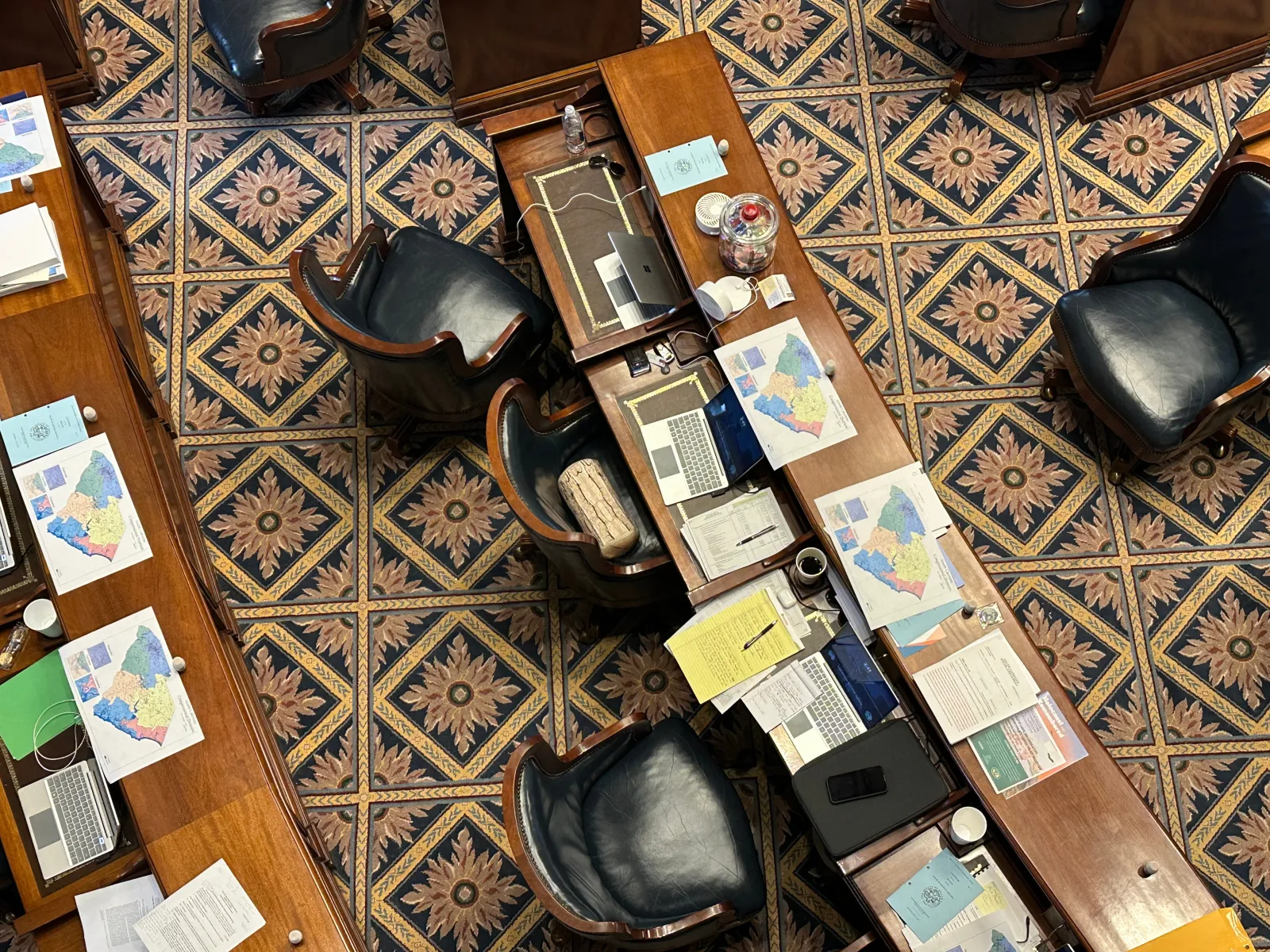
The DLCC’s Strategy
The DLCC identified 13 key target states, with a focus on six as its core battlegrounds, arguing that control of their legislatures could have the greatest impact on congressional and legislative maps ahead of the 2028 and 2030 election cycles.
- Arizona
- Michigan
- Minnesota
- New Hampshire
- Pennsylvania
- Wisconsin
In the Tuesday memo, the DLCC said, “Building power for Democrats in these states is essential for putting all options on the table for Democrats or for cutting off Republicans’ ability to further gerrymander.”
Democrats hold a very narrow majority in three of the chambers, Michigan State Senate, Minnesota State Senate and Pennsylvania State House. In Pennsylvania and Minnesota, Democrats only have a one-seat advantage, and two in Michigan. In the Minnesota State House, the parties are tied with 67 seats each.
All the other chambers are controlled by Republicans, with the GOP holding a significant lead in New Hampshire’s State House.
The DLCC also identified three additional states in which Democratic supermajorities “are a benchmark of power for redistricting implications for 2028 or 2030.”
- Nevada
- Oregon
- Washington
While Democrats already hold majorities in both legislative chambers in all three states, the memo notes that supermajorities are needed to advance redistricting changes, either through constitutional amendments or overcome vetoes.
The committee identified four states where Democratic majorities already exist and may be the easiest to influence redistricting efforts.
- Colorado
- Maryland
- New York
- New Jersey
Beyond the 13 states highlighted in the memo, the DLCC's target map includes 36 states where the panel believes Democrats have opportunities to gain legislative seats and expand their influence in state government. The map showcases where the party needs to "strengthen our firewall in state legislatures and counter the MAGA extremism."
The full list of target states include:
- Alaska
- Arizona
- California
- Colorado
- Connecticut
- Delaware
- Florida
- Georgia
- Hawaii
- Illinois
- Indiana
- Iowa
- Kansas
- Maine
- Maryland
- Massachusetts
- Michigan
- Minnesota
- Missouri
- Nebraska
- Nevada
- New Hampshire
- New Jersey
- New Mexico
- New York
- North Carolina
- Ohio
- Oregon
- Pennsylvania
- Rhode Island
- South Carolina
- Texas
- Vermont
- Virginia
- Washington
- Wisconsin
Where Has Redistricting Occurred?
Last year, Texas lawmakers approved a mid-cycle congressional redistricting plan pushed by Republicans after encouragement from President Donald Trump, a move to help the GOP gain five seats. California Democrats, led by Governor Gavin Newsom, responded with their own map designed to give the party five additional seats.
Republicans have gained an edge in a nationwide redistricting battle after the Supreme Court in May rejected Virginia’s bid to restore a congressional map that would have given Democrats a chance to pick up four seats in the closely divided House of Representatives.
At the moment, Republicans believe they could win up to 15 additional seats from new districts in Texas, Alabama, Florida, Missouri, North Carolina, Ohio, Louisiana and Tennessee. Democrats think they could gain up to six seats from new districts in California and Utah.
However, those tallies presume past voting patterns hold in November, and historically, the president’s party tends to lose seats in the midterms.
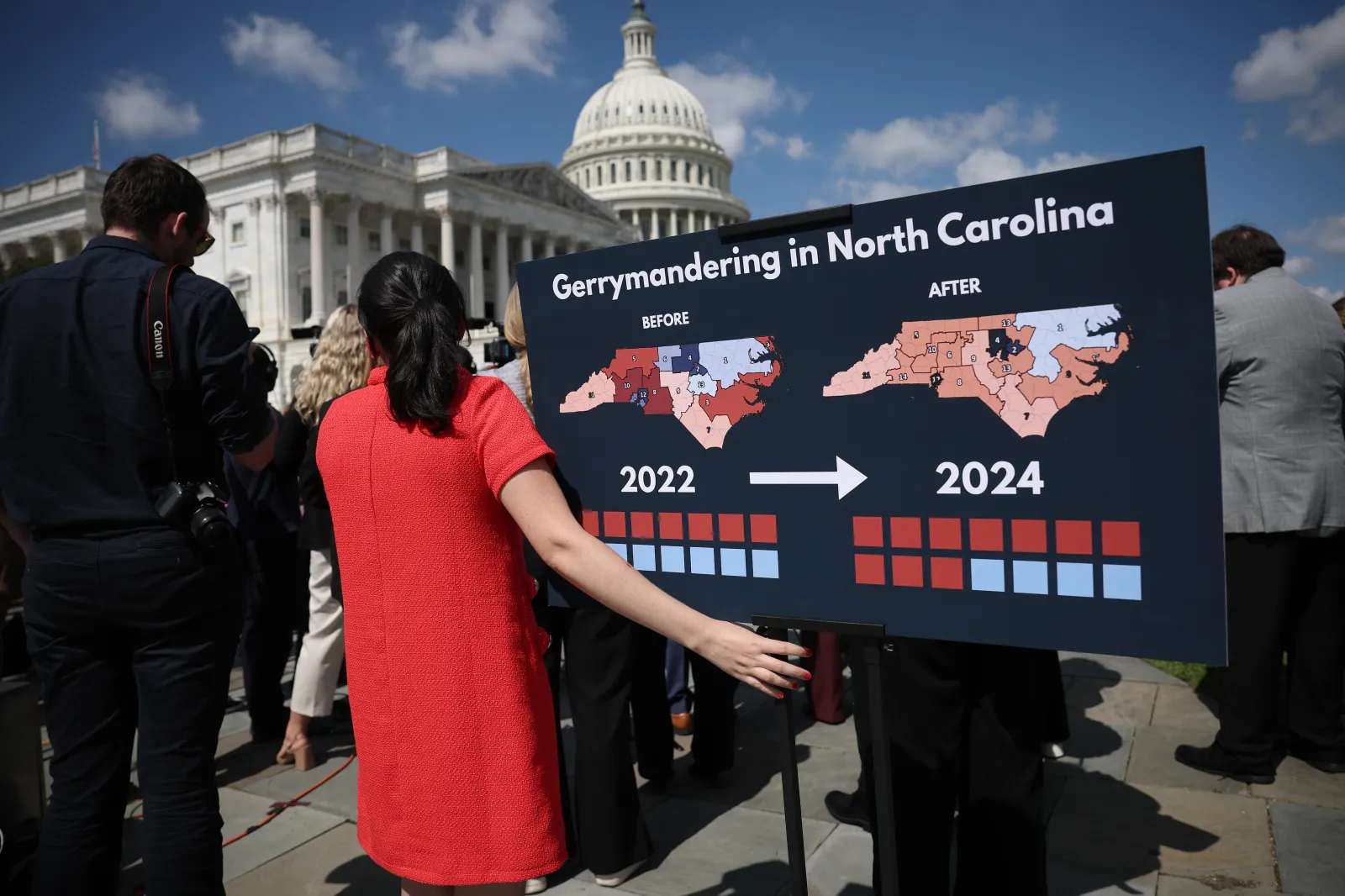
Democrats need to gain just a few seats in November to gain control of the House from Republicans, while the Senate is a tougher map for the party.
An April YouGov/Economist poll found that most Americans think partisan gerrymandering should not be allowed, and more Americans believe their congressional districts have been drawn unfairly than fairly.
The poll found 71 percent of Americans believe partisan gerrymandering should not be allowed, 22 percent unsure and 7 percent believe it should be. About 32 percent of Americans think their own congressional districts have been unfairly drawn while 24 percent think they have been fairly outlined. The poll was conducted from April 24-27.
What Did the Supreme Court Rule on Voting Rights Act?
- The Voting Rights Act, passed in 1965, is a landmark federal law aimed at eliminating racial discrimination in voting and protecting the rights of disenfranchised communities across the U.S.
- In late April, the Supreme Court ruled in Louisiana v. Callais that Louisiana’s congressional map amounted to an unconstitutional racial gerrymander, finding the state relied too heavily on race when drawing a second majority-Black district. The majority opinion said, "Compliance with §2 [of the Voting Rights Act] thus could not justify the State’s use of race-based redistricting here. The State’s attempt to satisfy the Middle District’s ruling, although understandable, was an unconstitutional racial gerrymander."
- The case stemmed from Louisiana’s effort to redraw its congressional districts following population changes identified in the 2020 census.
- In 2022, Louisiana enacted a congressional map that maintained only one majority-Black district, despite Black residents making up roughly one-third of the state’s population. Civil rights groups sued, arguing the map diluted Black voting power in violation of the Voting Rights Act.
- After multiple legal challenges, Louisiana adopted a revised map known as SB8, which added a second majority-Black district stretching from Baton Rouge to Shreveport.
- A separate group of plaintiffs then challenged SB8, arguing the district was drawn predominantly on the basis of race and violated the Equal Protection Clause. Lower courts sided with the challengers before the case reached the Supreme Court.
- Writing for the majority, Supreme Court Justice Samuel Alito said Louisiana’s attempt to comply with the Voting Rights Act did not justify the state’s use of race-based redistricting.
- The ruling intensified national debates over voting rights and redistricting, particularly in Southern states where legal disputes have centered on how congressional maps affect Black political representation.
- “The gutting of the Voting Rights Act by the Supreme Court is a grievous erosion of civil rights, reversing generations of progress toward a fair and equal democracy. Alongside Trump’s mid-decade redistricting push, the Callais decision has increased the urgency and importance of building state power like never before, and our statehouses are now the most critical battlegrounds for the future of our democracy. The DLCC’s strategy and Target Map chart the path in this new landscape, prioritizing opportunities to build power both now and for the future. By winning key races, flipping majorities, and putting more Democrats in power, the DLCC is building the power needed to counteract GOP gerrymandering,” DLCC President Heather Williams said in the Tuesday press release.