 8 hours ago
14
8 hours ago
14
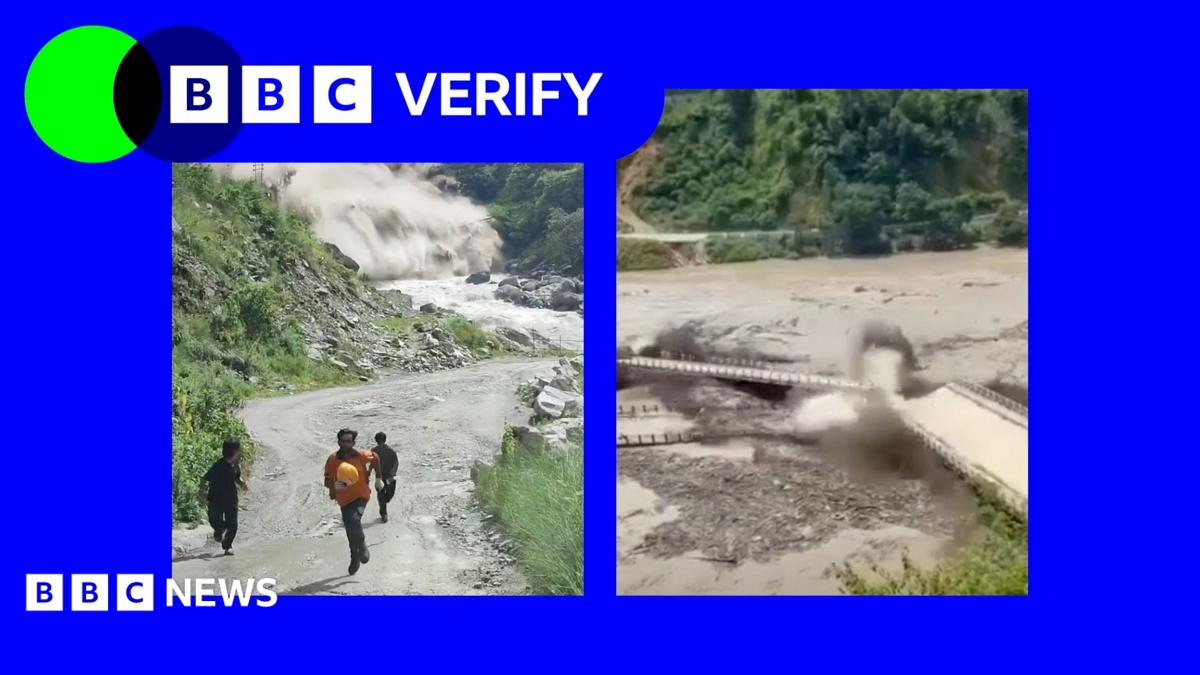
It is still unclear what caused the glacier to collapse on Wednesday.
Searle said that Langsang Lirung, like the rest of the Himalayas, has been slowly rising due to long-term tectonic movement, where one plate has been pushing another plate up. "It's like putting a jack under the car, and then jacking it up."
"As the mountain is rising, the glacier gets steeper and steeper, and it's inevitable that parts of it fall off."
But usually these are smaller chunks which temporarily block the rivers, and are easily flushed out, he said. However, in this disaster, the whole glacier seems to have collapsed "in one go", which Searle said is "very unusual". "These floods happen all the time, but not at this scale."
He said Wednesday's event likely happened because of "two different processes - tectonics with the Himalayas uplifting, and then climate change with increasingly high temperatures and melting of glaciers.
"The whole thing is combining to form these catastrophic disasters that we are now seeing at a regular basis."
Scientists for years have warned of melting ice and permafrost, which is centuries-old frozen soil, in the Himalayas due to climate change.
One analysis released by ICIMOD, external earlier this year found that the Hindu Kush Himalaya glaciers are now losing ice at double the rate since 2000. This in turn exacerbates dangers such as flooding.
Dr Cook pointed out that there have been similar incidents of floods and landslides caused by glacier collapses in India, Switzerland and Italy in recent years.
In 2021, a large chunk of a Himalayan glacier collapsed in the valley of Chamoli in northern India, sending a cascade of debris and water downstream that killed 200 people. Scientists later estimated that the impact of the collapse was equivalent to 15 atomic bombs.
Even in Nepal, the same region saw flooding last year caused by a glacial lake in Tibet bursting.