 1 week ago
25
1 week ago
25
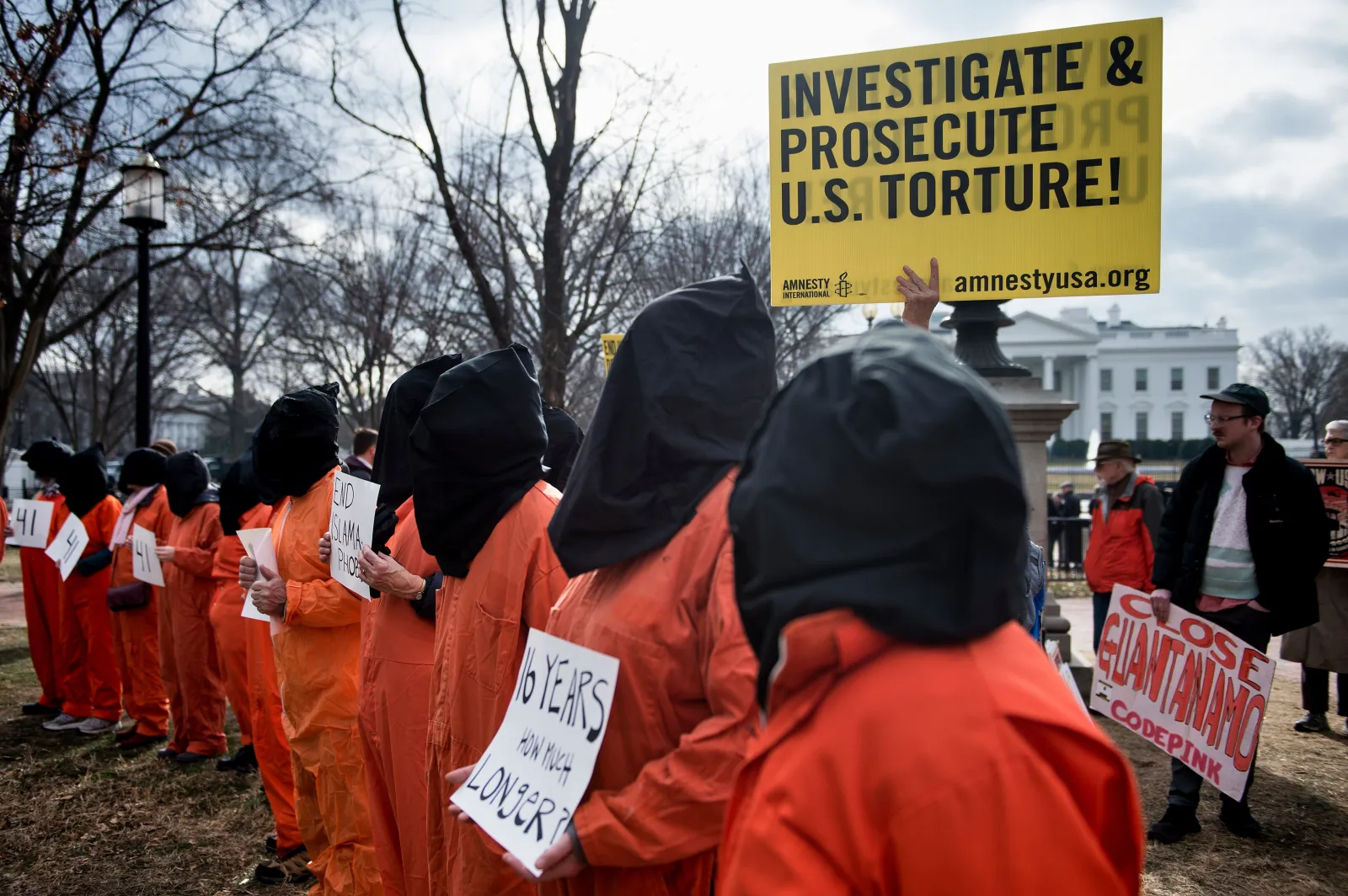
On January 11, 2002, the first detainees arrived at Guantanamo Bay. Nearly a quarter-century later, the United States is still struggling to bring some of them to trial. This is not simply a story about justice delayed. It is a story about decisions—legal, political and moral—that compromised justice at its foundation.
At the center of that story is a flawed belief: that coercion, even torture, could produce truth. And that demonstrating omnipotence over a person would result in truthful outcomes. It cannot and did not. The consequences of that mistake are still unfolding and have once again been on display in recent weeks.
The jury selection for the USS Cole and 9/11 trials had been expected to begin in June but was delayed—again. The timing matters as June 26 marks the United Nations International Day in Support of Victims of Torture, a date that will arrive this year with the trials still unresolved and the question of accountability for sanctioned abuse still unanswered.
In the aftermath of the 9/11 attacks, President George W. Bush signed in November 2021 a military order declaring the federal court system “impracticable” for trying suspected terrorists. Responsibility shifted away from the Department of Justice and the FBI—institutions with a demonstrated record of successfully prosecuting terrorism cases—and toward the Department of Defense (DOD) under Secretary Donald Rumsfeld. The Office of Military Commissions (OMC) and DOD Criminal Investigation Task Force (CITF) were established.
I was appointed deputy commander and special agent-in-charge of the Pentagon’s CITF, working with OMC, and reporting to Rumsfeld’s Office of General Counsel. As we prepared for detainees to arrive at Guantanamo Bay, we were still debating basic questions: What rights would these prisoners of the war on terror have? Could we call them prisoners of war? Did they have the right to a lawyer? What rules of evidence would apply? Would statements obtained through coercion be admissible?
Those were not abstract concerns. They went to the heart of whether justice would be possible under the rule of law.
From the outset, we refused to rely on evidence obtained through abuse. CITF and the OMC declined to prosecute cases built on coerced statements, including those of Mohammed al-Qahtani, alleged to be the “20th hijacker,” and Mohamedou Ould Slahi. In 2009, the military commissions’ convening authority acknowledged that Qahtani’s case was not prosecutable because of torture. Slahi, after years of detention without charge, was ultimately released by federal court order..
Years later, President Barack Obama formally ended the CIA’s “interrogation” program and acknowledged what had occurred: “We tortured some folks.”
Yet the legal and moral consequences of those actions remain unresolved and mired in delays. The government continues to hide, redact or classify anything that would lead to accountability for those complicit. Those involved have been able to survive, evade, resist and escape accountability.
Today, military commission proceedings continue at Guantanamo, including capital cases tied to the USS Cole bombing and the September 11 attacks. Even now, courts are still litigating whether statements obtained through torture can be used. Despite consistent calls to close Guantanamo and notwithstanding convening authorities and prosecutors believing justice cannot be served at Guantanamo, without exposing torture, prosecutors have proposed January 2027—aligned with the 25th anniversary of Guantanamo’s opening—for the start of the 9/11 trial.
The result is a system of suspended justice and paralysis. Some defendants face the death penalty, while others remain indefinitely detained without charge. The delay is not incidental—it is structural, rooted in decisions that compromised the integrity of the process from the beginning.
Central to those decisions was the misuse of psychological theory.
The concept of learned helplessness, developed by psychologist Martin Seligman, emerged from experiments showing that dogs exposed to uncontrollable stressors eventually stop trying to escape—even when escape becomes possible. The theory's intent was to explain aspects of depression and behavioral response, not to serve as an interrogation model or national policy.
After 9/11, however, Vice President Dick Cheney said the gloves were coming off and lied about torture’s effectiveness. Psychologists were weaponized and elements of the theory of learned helplessness were repurposed.
The CIA contracted psychologists James Mitchell and Bruce Jessen to design what it termed “Enhanced Interrogation Techniques”—a euphemism for a family of interrogational abuses intended to break detainees psychologically. These conditioning techniques sought to induce “debility, dependency and dread,” creating a state of total control and compliance.
What began as a scientific effort to understand suffering was transformed into a system designed to produce it.
From my experience as an NCIS special agent, and as detailed in my book Unjustifiable Means—which has been banned from the Guantanamo prison library—this transformation was not simply a misapplication of science. It was a systemic failure—ethical, legal and strategic.
The empirical record is clear.
Investigations by the Senate Armed Services Committee (2008) and the Senate Select Committee on Intelligence (2014) documented how coercive interrogation practices migrated from CIA black sites to Guantanamo Bay and Abu Ghraib. These methods produced unreliable intelligence, tainted evidence and long-term damage to U.S. credibility.
Research in neuroscience reinforces this conclusion. Extreme stress impairs memory, cognition and decision-making, increasing the likelihood of false or misleading information. Torture does not enhance intelligence collection—it degrades it.
Strategically, the consequences extended far beyond black sites and dark prisons. Abuse at Guantanamo and Abu Ghraib became a recruiting tool for extremist organizations. Practices justified in the name of national security ultimately undermined it.
Equally troubling is the institutional framework that sustained the program.
Mitchell and Jessen’s firm received tens of millions of dollars to implement these techniques, raising serious conflicts of interest. Senior officials approved or failed to stop practices despite mounting evidence of their ineffectiveness. The American Psychological Association’s independent review (2015) found troubling coordination between psychologists and government officials in ways that compromised ethical standards.
There has been impunity for those accountable.
Efforts to expose the full scope of the program remain constrained by classification, redactions and prepublication review—a process that can delay or shape what the public is allowed to see—including the words in this article. The result is an incomplete historical record and a persistent lack of transparency. Ironic, considering the OMC motto is: “Fairness, Transparency and Justice.”
Legally and morally, the program stands in direct tension with the United Nations Convention Against Torture, which prohibits cruel, inhuman or degrading treatment under any circumstances. As well as the Eight Amendment, which prohibits cruelty. Attempts to redefine or justify these practices through legal or psychological frameworks do not change their fundamental character—cruelty as policy.
The damage extends beyond law and policy.
The normalization of these cruel practices required institutional acquiescence—professionals who remained silent, leaders who prioritized vengeance, and systems that adapted rather than resisted. In that sense, learned helplessness became more than a theory applied to detainees. It became a metaphor for institutional failure.
Today, as military commission trials inch forward, torture itself is effectively on trial.
I have been identified as a witness in both the USS Cole and September 11 cases—not by prosecutors, but by defense counsel for individuals I once helped investigate. Their cases will test more than individual guilt. They will test whether a justice system built on compromised evidence can deliver legitimate outcomes.
More than two centuries ago, George Washington warned that abuse of prisoners would bring “shame, disgrace and ruin to themselves and their country.” That warning remains relevant today.
The question is not only whether justice can be achieved in these cases. It is whether the United States is willing to confront the decisions that made justice so difficult to obtain.
Until it does, the legacy of those choices will endure—not only in courtrooms, but in the nation’s conscience. The question the courts must answer is whether this alternative system of justice has also learned helplessness.
Mark Fallon is the director of ClubFed LLC and is a former Naval Criminal Investigative Service special agent, counter-terrorism expert from the United States, who was the deputy commander of the Criminal Investigation Task Force at the U.S. military's Guantanamo detention camp.
Note: The author’s writings in the media, including this article, are subject to pre-publication review by the U.S. government as part of a court ruling on the censorship of books, like Unjustifiable Means, that exposed torture at Guantanamo. The views expressed in this article are those of the author and do not reflect the official policy or position of the Department of Defense or the U.S. government.