 1 week ago
30
1 week ago
30
California voters head to the polls on Tuesday in a high-stakes primary that will determine who could be the state's next governor, as well as a series of other contests, all of which will shape the political future of America’s largest state. Yet while ballots are cast, the outcome of each contest may not be known for days, or even weeks.
California prides itself on being the world’s fourth-largest economy, but when it comes to counting votes, it lags behind. Democracies with bigger populations and, in some cases, fewer resources, like Japan, India and the United Kingdom, regularly produce clear election results within hours or by the following day. In California, the process can take far longer, and it has become known as having the slowest ballot-counting process in the U.S.
That delay matters not just for politicians but for voters and public trust, leaving the matter of who will be taking charge across counties and the state itself unsettled long after election night has passed. Campaigns can also be left in limbo, having implications on policy action.
System Built for Accuracy and 'Maximum Participation'—Not Speed
States each follow different procedures for counting votes, largely because the Constitution sets out broad principles for electing a national government but leaves the details to the states. This causes disparities in ballot-counting speed across states. California, the nation's most populous state, is usually among the slowest to report results, while Florida, the third-largest state, is often significantly faster.
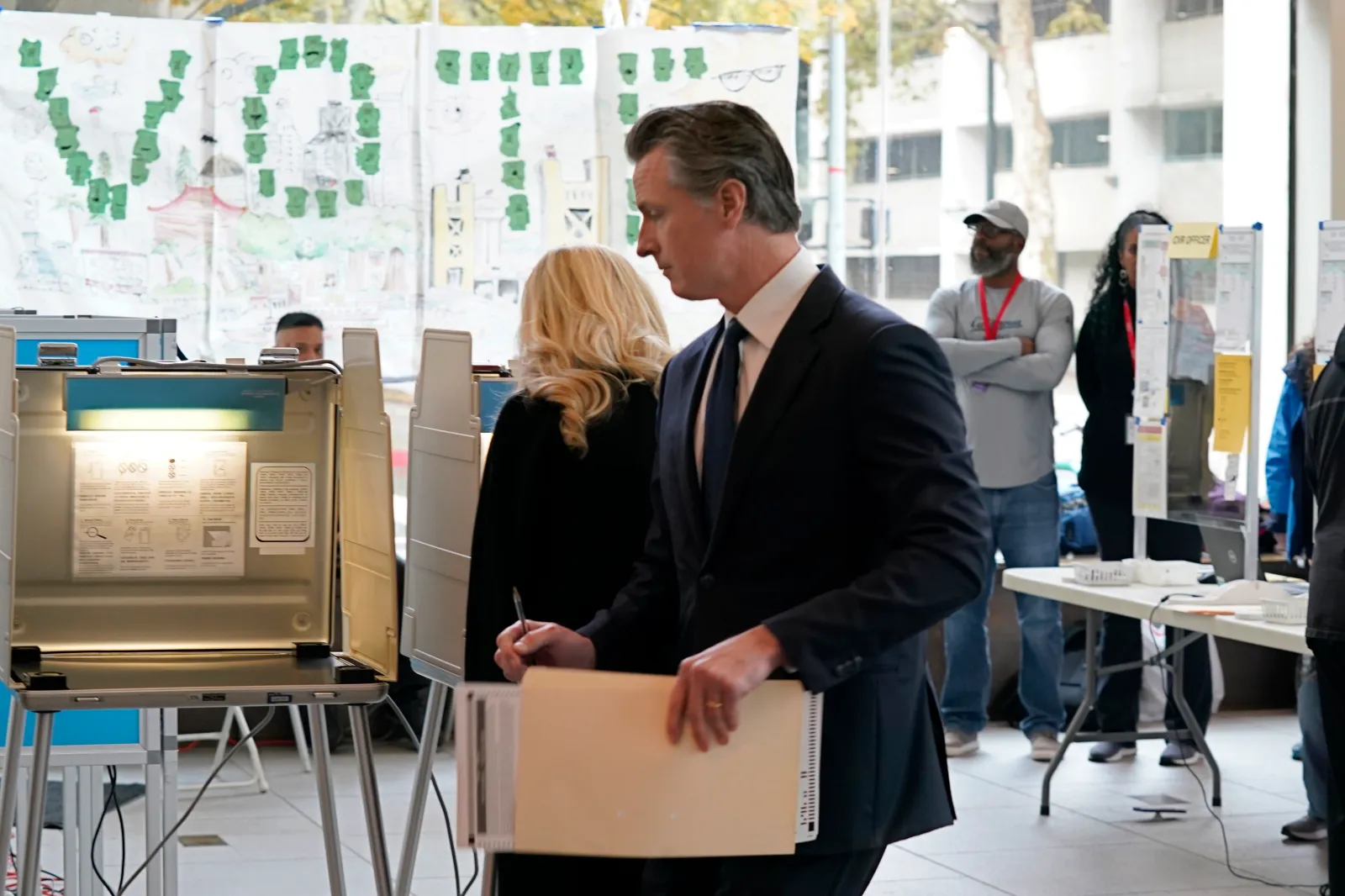
The way California counts its ballots follows a series of measures designed to give residents as much time as possible to vote, as lawmakers in the state have previously said that they hope to prioritize "maximum participation" of voters. The state has had a history of absentee voting, which also prompted it to move toward all-mail elections.
The process begins by California mailing a ballot to every registered voter—and most people now vote that way. Under state law, ballots can arrive up to seven days after Election Day as long as they are postmarked on time.
Every ballot must then be verified. Election officials compare signatures against existing records, sometimes flagging mismatches for further review—a process that can include notifying voters and giving them time to correct problems.
Even after that, provisional ballots must be checked, late registrations confirmed, and damaged ballots manually assessed. Only then does the final stage begin: a legally required audit and certification process that gives counties up to 30 days to complete the official count.
"California’s Legislature has decided to listen to election rights groups more than other states in an effort to make sure that every vote counts," Charles Stewart III, a professor of political science and director of the Massachusetts Institute of Technology Election Data and Science Lab, told Newsweek.
"It has pulled back a bit, by requiring the count mostly to be done within 13 days, but it still has made a decision to give every ballot every opportunity to be counted."
Cost of Waiting
While supporters of California's system argue that its current method results in "maximum" participation, studies have found that California's voter turnout has recently decreased.
After historically high turnout in the 2020 presidential election, the state's voter turnout decreased by nearly 5 percentage points in 2024, according to a study from the Center for Inclusive Democracy at the University of Southern California.
In an election in which roughly 16 million voters cast a ballot, the drop equated to more than 1 million fewer registered Californians voting in the November 2024 elections than in 2020.
It raises questions about whether, in the pursuit of enhanced accuracy and maximizing participation, California's slow ballot-counting process has taken a toll on voter enthusiasm, potentially leaving Americans less motivated to cast their ballot as the excitement around voting day does not have the same momentum as it would in other states.
In a world increasingly becoming more "real-time" with financial markets reacting in seconds, news cycles moving in minutes and other democracies announcing the outcomes of major votes much faster, California’s election system could be seen by some as from a bygone era.
However, whether California's slower ballot-counting process has any impact on voter enthusiasm is up for debate. Stewart said that he didn't think it would have any impact.
"The delay in counting happens after the election is over, whereas voter enthusiasm happens before the election," he said.
What it does affect is "the narrative around the legitimacy of the election, and gives energy to those who think that fraud is going on," he said.
He added that it can affect campaigns because "they have to allocate resources to the post-election period to 'chase' ballots and registrations that need to be cured."
June Primary Outcomes Could Take Time to Emerge
On Tuesday, Californians are casting ballots statewide in a wide range of contests. With Governor Gavin Newsom term-limited, new candidates have been vying to replace him. At the same time, voters are casting ballots for dozens of congressional races and local elections that will influence policy in cities from Los Angeles to San Francisco.
After votes are cast on June 2, results may trickle in through the night, but the full picture of the state's primaries may take far longer to emerge.